
Global Oil Prices Have Fallen Sharply While Stock Markets Rallied

Frank Ocansey
Editor, PulseView
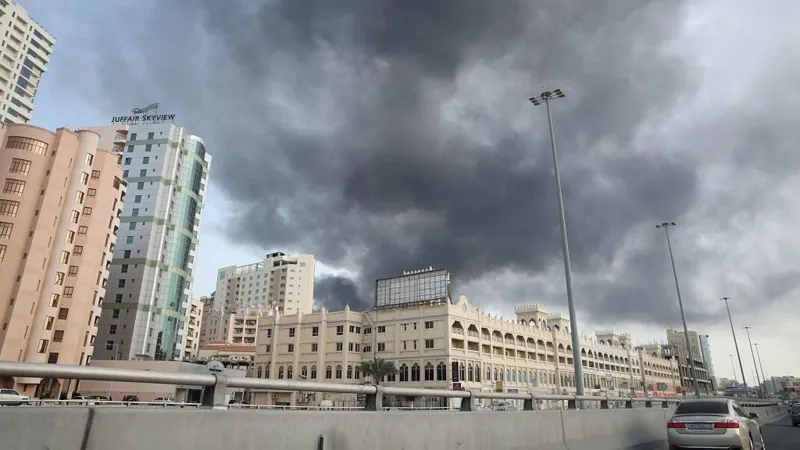
Global oil prices have fallen sharply while stock markets rallied after the United States and Iran agreed to a conditional two-week ceasefire that includes reopening the strategically vital Strait of Hormuz.
Benchmark Brent crude oil dropped by more than 15% to below $92 per barrel, with West Texas Intermediate crude following a similar trend, falling to just under $94. Despite the decline, prices remain significantly higher than pre-conflict levels of around $70 per barrel recorded before tensions escalated on 28 February.
Global Oil Prices: Market relief amid fragile ceasefire
The easing of tensions has brought relief to global financial markets, which had been rattled by fears of prolonged disruption to Middle Eastern oil supplies. The Strait of Hormuz, a narrow but crucial waterway through which a large portion of the world’s oil supply passes, had become a focal point of the crisis after Iran threatened to target vessels in retaliation for US and Israeli airstrikes.
Stock markets responded positively across major economies. In the United States, the Dow Jones Industrial Average and S&P 500 both surged more than 2.5%, while the Nasdaq Composite jumped 3.3%.
European markets followed suit, with the FTSE 100 rising 3%, France’s CAC 40 gaining 4.9%, and Germany’s DAX climbing over 5%.
In Asia, Japan’s Nikkei 225 closed up nearly 5.4%, South Korea’s Kospi jumped 6.8%, Hong Kong’s Hang Seng Index rose 3%, and Australia’s ASX 200 gained 2.5%.
Ceasefire terms and political signals
The agreement was announced by Donald Trump, who stated that the United States would suspend military action for two weeks, conditional on Iran ensuring the “complete, immediate, and safe” reopening of the Strait of Hormuz.
Iran’s Foreign Minister, Abbas Araghchi, signaled conditional acceptance, stating that Tehran would agree to a ceasefire if attacks against Iran ceased, while also indicating that safe passage through the strait would be restored.
Economic impact still lingering
Although the ceasefire has calmed markets, analysts warn that the economic damage from the conflict could persist. Energy infrastructure across the Middle East has suffered significant disruption, with reduced oil and gas output affecting global supply chains.
Major energy companies, including ExxonMobil, have already reported declines in production, while key facilities such as Qatar’s Ras Laffan industrial hub have experienced reduced export capacity.
Experts estimate that it could take months—or even years—for full production to resume, with repair costs potentially exceeding $25 billion. Even during the ceasefire, uncertainty remains high, as isolated attacks have reportedly continued, raising doubts about the durability of the agreement.
Global ripple effects
The impact of the conflict has been particularly severe in Asia, where many countries depend heavily on energy imports from the Gulf. Rising fuel costs have forced airlines to increase fares and cut flights, while governments have struggled to manage fuel shortages.
While the ceasefire offers short-term relief, analysts caution that oil markets will only stabilize fully if a lasting peace agreement is reached. Until then, volatility is expected to remain a defining feature of the global energy landscape.
Source: BBC.com
Also read: Trump’s $100bn Venezuela Oil Push Meets Industry Resistance
Continue Reading
Ghana’s producer inflation edges up to 1.5% in March amid mixed sector performance
Producer inflation: Producer price inflation (PPI) in Ghana recorded a marginal increase in March 2026, rising to 1.5% from 1.4% in February, according to the latest data released by the Ghana Statistical Service (GSS). The slight 0.1 percentage point uptick reflects a modest increase in the cost of goods and services at the factory gate, […]
Frank Ocansey
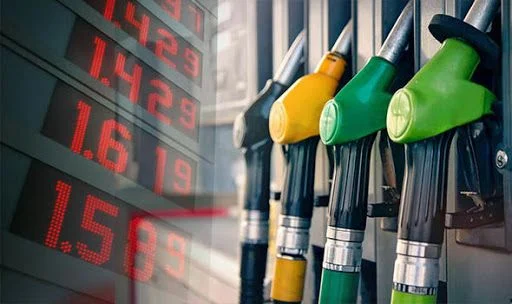
Government announces reduction in fuel price as intervention takes effect April 16
Reduction in fuel price: The Government of Ghana has announced a reduction in the prices of petrol and diesel, set to take effect from April 16, 2026, as part of measures to cushion consumers against rising global fuel costs. Under the new directive, petrol will see a reduction of GH¢0.36 per litre, while diesel prices […]
Frank Ocansey

Gary Neville Urges Arsenal to Stay Calm Ahead of Title-Deciding Clash with Manchester City
Title-Deciding Clash: The Premier League title race has taken another dramatic turn, with Arsenal FC now under increasing pressure ahead of a crucial showdown against Manchester City. Former England defender Gary Neville has warned the Gunners that emotional control could be the key factor in determining the outcome of their season. With just a handful […]
 Junior Kojo