
AI data centers: Big Tech pledges to shoulder AI power costs as electricity prices rise

Frank Ocansey
Editor, PulseView
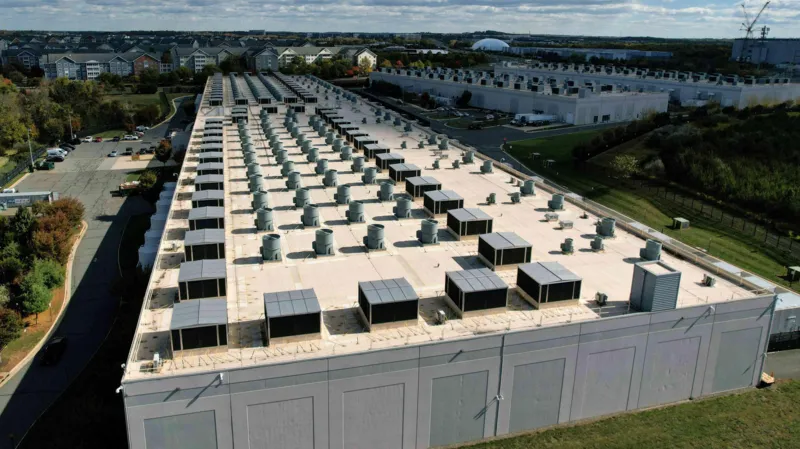
AI data centers: Google, Meta and other tech giants promise to fund new power infrastructure for AI data centres — but analysts question whether the pledge will lower household electricity bills.
Technology firms including Google and Meta have pledged to shoulder the energy costs associated with powering AI data centers, as the White House faces mounting pressure over rising electricity prices.
US President Donald Trump has strongly embraced the expansion of the AI sector, describing it as central to American economic leadership. But the rapid growth of energy-hungry data centers has intensified strain on the country’s electric grid, pushing power demand higher at a time when utility bills are already a top cost-of-living concern for voters ahead of November’s midterm elections.
At a recent meeting at the White House, tech executives signed what the administration calls a “ratepayer protection pledge,” an agreement first unveiled by Trump last month. The pledge is intended to reassure Americans that the AI boom will not come at the expense of household electricity affordability.
However, questions remain about how the pledge will be enforced — and whether it will meaningfully reduce costs for consumers.
What the companies promised
Seven major technology firms have signed onto the agreement: Google, Microsoft, Meta, Oracle, xAI, OpenAI, and Amazon, according to administration officials.
Under the pledge, companies agreed to:
- Build, bring online or purchase new electricity generation capacity to support AI data centres
- Pay for necessary grid and infrastructure upgrades
- Negotiate electricity rate structures at the state level
- Hire local workers in areas where data centres are constructed
Trump told executives at Wednesday’s meeting that the commitments “will help keep down utility bills very substantially,” while acknowledging that the impact would “take a little bit of time.”
US Energy Secretary Chris Wright said the administration remains committed to leading the AI boom but intends to do so “without raising electricity prices for Americans.”
AI data centers: Rising energy pressure
The pledge comes amid growing scrutiny of the AI industry’s electricity demands. Data centres — especially those designed to train and operate large AI models — consume enormous amounts of power. As companies race to build more facilities, grid operators in several regions have warned of supply strain.
Electricity costs have already been rising. According to the US Energy Information Administration, residential electricity prices increased by about 6% on average in 2025.
Several factors are driving higher prices:
- Increased power demand from data centres
- Rising natural gas prices (natural gas fuels nearly half of US electricity generation)
- Expanded natural gas exports to meet global demand
- Infrastructure upgrades and grid modernization costs
Geopolitical tensions — including the war involving the US and Israel and Iran — could further complicate energy markets by disrupting supply chains and pushing global oil and gas prices higher.
Enforcement concerns
Despite the announcement, energy analysts question how binding the agreement truly is.
John Quigley, a senior fellow at the Kleinman Center for Energy Policy at the University of Pennsylvania, noted that electricity markets involve multiple layers of oversight — including federal regulators, state utility commissions, regional grid managers and private utility companies.
Because rate structures and infrastructure approvals are largely determined at the state level, it remains unclear what mechanisms exist to ensure companies follow through on their commitments.
“The burden of proof is on them,” Quigley said of administration officials, arguing they must demonstrate the pledge is more than symbolic.
Politics and public perception
On the campaign trail, Trump pledged to cut energy bills in half during his first year back in office. Instead, electricity prices have risen — a reality that has heightened political sensitivity around the AI industry’s energy footprint.
The president also acknowledged that technology companies “need some PR help” amid growing local resistance to data centre developments. In several communities across the country, residents have raised concerns about:
- Increased electricity demand
- Water usage for cooling systems
- Noise pollution
- Land use changes
As AI development accelerates, the tension between economic growth and infrastructure strain is becoming more visible.
Will households see relief?
Whether the pledge leads to lower utility bills remains uncertain.
In theory, if tech companies fully fund new power generation and grid upgrades — rather than passing costs onto ratepayers — the financial burden on households could be reduced. However, energy markets are complex, and overall electricity prices are influenced by fuel costs, regulatory decisions, global supply dynamics and local infrastructure needs.
For now, the agreement signals an attempt by the administration and major tech firms to align AI expansion with voter concerns about affordability.
But as AI demand grows and global energy markets remain volatile, the real test will be whether electricity bills stabilise — or continue to climb despite the promise.
Source: BBC.com
Also read: Epstein Files: Bill Gates Pulls Out of India AI Impact Summit Amid Epstein Files Controversy
Continue Reading

PS5 Price Hike 2026: Sony Raises Console Prices by £90 Amid Global Pressures
PS5 Price Hike 2026: Sony has announced a sharp increase in the price of the PlayStation 5, raising it by £90 in the UK and $100 in the US, citing “continued pressures in the global economic landscape.” The gaming giant Sony said the changes, which will take effect from 2 April, will affect several of […]
Frank Ocansey

Parents Should Monitor Children ‘24/7’ on Roblox, Warns Developer
Roblox continues to be the most popular gaming platform for children aged eight to 12 in the UK, attracting millions of young players every day. The platform allows users to create and play games in an open-world environment, encouraging creativity and social interaction. However, despite its widespread appeal, concerns are growing over the safety of […]
Frank Ocansey

Meta social media addiction: LA Jury Rules Against Meta and YouTube
Meta social media addiction: In a groundbreaking decision, a Los Angeles jury has awarded $6 million in damages to a young woman, known as Kaley, who sued Meta and YouTube over her childhood addiction to social media. The verdict found that the companies intentionally designed addictive platforms that harmed her mental health. Meta, which owns […]
Frank Ocansey