
Arsenal’s Collapse at Molineux: How and Why They Let Wolves Back Into the Title Race

Junior Kojo
Editor, PulseView
Arsenal’s 2-2 draw away at Wolverhampton Wanderers wasn’t just two dropped points. It was a psychological tremor in the Premier League title race.
Leading 2-0 against the bottom club, the Gunners looked comfortable, composed, and in control. By full-time, they looked rattled, reactive, and uncertain.
This wasn’t about one mistake. It was about a shift in mentality, tempo, and authority. Here’s a deeper tactical and psychological breakdown of how Arsenal unravelled — and what it means for their title ambitions.
The Game State: From Control to Panic
When Arsenal went 2-0 up, the script seemed written. They were:
- Circulating possession confidently
- Finding space between the lines
- Forcing Wolves into defensive transitions
At that stage, the match demanded maturity — slowing the tempo, recycling the ball, frustrating the opposition.
Instead, Arsenal allowed the game to speed up.
The first Wolves goal changed the emotional dynamic more than the tactical one. Suddenly:
- The crowd lifted.
- Wolves pressed higher.
- Arsenal rushed decisions.
Elite teams recognise those moments and smother them. Arsenal fed them.
Second-Half Numbers That Tell the Story
In the second half:
- Wolves completed more passes than Arsenal.
- Arsenal’s possession became less controlled and more vertical.
- Turnovers increased in midfield.
That statistic alone is revealing. A team built around positional dominance lost its grip on the ball when it mattered most.
Rather than:
- Stretching Wolves horizontally
- Resetting through the goalkeeper
- Building through controlled phases
Arsenal opted for:
- Risky forward balls
- Low-percentage passes under pressure
- Quick transitions they didn’t need
It wasn’t bravery — it was impatience.
Game Management: The Missing Ingredient
Championship-winning teams understand game states. They know when to:
- Kill rhythm
- Draw fouls
- Slow restarts
- Win territory rather than chase goals
Arsenal did none of that until stoppage time, when their attempts to delay restarts felt desperate rather than deliberate.
That hesitation between attacking and protecting cost them. They neither pushed for a third goal nor truly shut the game down.
It was indecision disguised as ambition.
Defensive Communication Breakdown
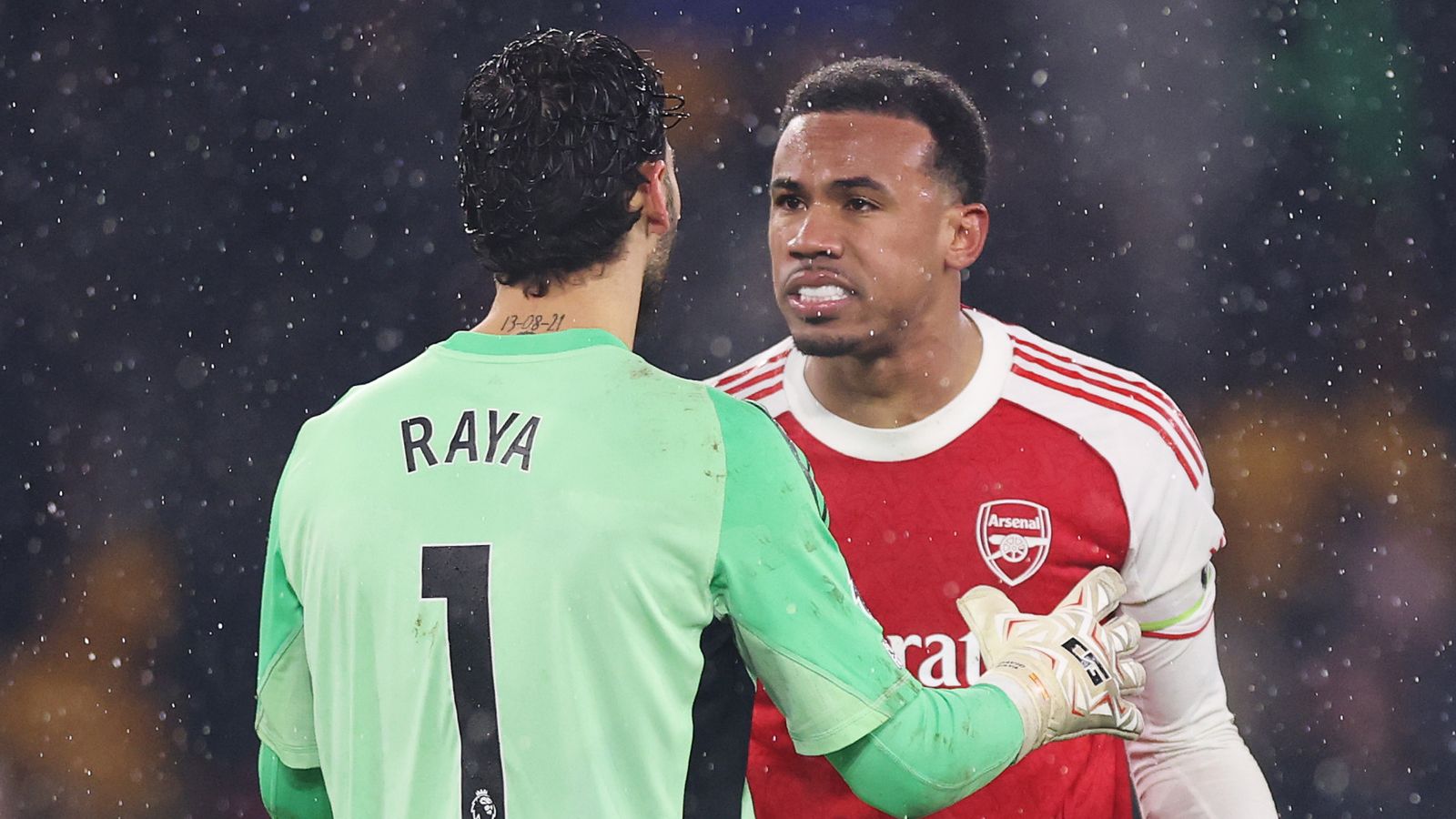
The equaliser — involving a clash between David Raya and Gabriel Magalhães — symbolised the wider problem.
Yes, it was a defensive error.
But it stemmed from:
- Rising pressure
- Repeated waves of Wolves attacks
- A defensive unit pinned deeper than usual
When a team loses midfield control, defensive mistakes become more likely. That moment wasn’t isolated — it was the final consequence of 20 minutes of instability.
The Psychological Element: Title Pressure?
Arsenal have grown under Mikel Arteta. They have matured tactically and physically. But moments like this revive familiar questions:
- Can they close under pressure?
- Do they overthink when protecting leads?
- Is there still a fragility when momentum turns?
The reaction after Wolves’ first goal felt tense. Passes were forced. Clearances were rushed. The calm positional structure that defines Arteta’s side became chaotic.
You could see it on the touchline — arms outstretched, visible frustration, instructions for composure that weren’t being absorbed.
In a title race, mentality is as important as tactics.
Tactical Patterns That Favoured Wolves
Once Wolves sensed vulnerability, they:
- Pressed higher and narrower
- Forced Arsenal wide
- Targeted second balls
Arsenal, meanwhile:
- Became compact and reactive
- Lost midfield spacing
- Failed to stretch play
Instead of pulling Wolves around the pitch, they allowed themselves to be compressed.
The energy flipped. The initiative changed hands. And Arsenal never fully wrestled it back.
Why This Result Feels Pivotal
On paper, it’s one draw.
In context, it’s bigger.
- Arsenal surrendered a two-goal lead.
- They allowed the bottom team belief.
- They lost control of a match they dominated.
Momentum in February can shape May. If rivals sense vulnerability, pressure intensifies.
Title races are often decided not by brilliance — but by composure in messy moments.
This was messy.
What Mikel Arteta Must Address
1. Tempo Intelligence
Arsenal need clearer triggers for when to:
- Slow down
- Keep the ball
- Force opponents to chase
2. Leadership in Key Phases
When games turn chaotic, someone must:
- Demand possession
- Organise spacing
- Calm teammates
3. Ruthless Control
At 2-0:
- Either score the third
- Or suffocate the game
Drifting between the two is costly.
4. Defensive Structure Under Pressure
When protecting a lead:
- Lines must remain compact but brave
- Midfield cannot collapse onto the back four
- Communication must be proactive
Final Thoughts: A Warning, Not a Collapse — Yet
Arsenal’s title challenge isn’t over because of one draw.
But this match exposed areas that champions cannot ignore:
- Emotional management
- Game-state awareness
- Composure under momentum swings
Molineux didn’t prove Arsenal can’t win the league.
It proved they still have to learn how to.
The response in the next few fixtures will determine whether this was a minor stumble — or the night doubt crept back into the dressing room.
Source: Skysports.com.
Also read: Cocoa Price Cut Sparks Debate: Ghana Slashes Producer Price to GH¢2,587
Continue Reading

Ozempic and Mounjaro Not Banned by WADA in 2027: But Athletes Face Warning
Athletes will remain permitted to use weight-loss drugs such as Ozempic and Mounjaro under World Anti-Doping Agency rules in 2027, but WADA is continuing to monitor the medications amid concerns about possible performance benefits, health risks and misuse in elite sport. The rapidly growing use of GLP-1 weight-loss medications has created a new challenge for […]
 Frank Ocansey

Chelsea Spent £349m: So Why Are Two Right-Backs Playing in Midfield?
Chelsea spent £349 million during the summer transfer window and signed 10 first-team players, yet their 2-1 defeat by Arsenal ended with Reece James and Malo Gusto two players who began their careers as right-backs operating together in midfield. It was a striking image that raised a difficult question: have Chelsea rebuilt almost everywhere except […]
Frank Ocansey

How Harry Kane Scored 73 Goals by Dropping Deeper Than Ever for Bayern Munich
Harry Kane has just produced the most prolific season of his career, scoring 73 goals for club and country. What makes that achievement even more remarkable is that the Bayern Munich striker has been operating deeper than ever before sometimes appearing in midfield and even close to his own penalty area. Rather than reducing his […]
Frank Ocansey