
China and Canada Agree to Lower Tariffs in Major Reset of Bilateral Relations

Frank Ocansey
Editor, PulseView
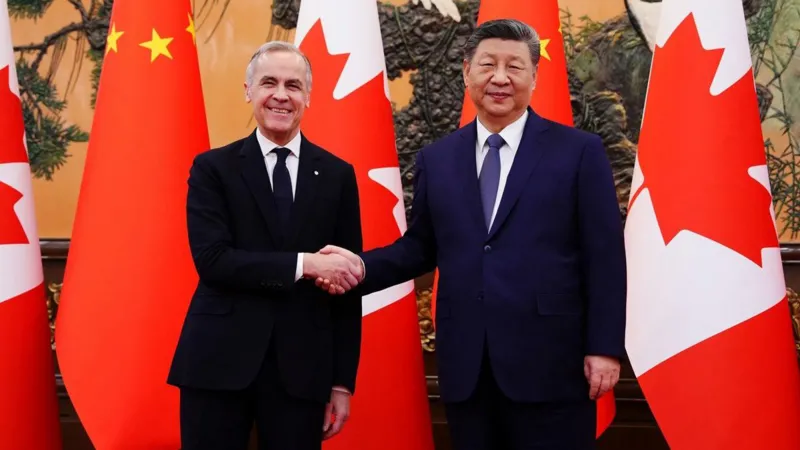
China and Canada have announced a significant reduction in tariffs, signalling a major reset in diplomatic and trade relations following high-level talks in Beijing between Chinese President Xi Jinping and Canadian Prime Minister Mark Carney.
The agreement marks the most substantial breakthrough between the two countries in years, after a prolonged period of strained ties and retaliatory trade measures.
Under the new arrangement, China is expected to reduce tariffs on Canadian canola oil from 85% to 15% by March 1, while Canada will apply a 6.1% most-favoured-nation tariff on Chinese electric vehicles (EVs). Prime Minister Carney confirmed the details while speaking to reporters during his official visit to Beijing.
A Breakthrough After Years of Trade Tensions
The tariff reductions come after years of escalating trade disputes. In 2024, Canada imposed 100% tariffs on Chinese electric vehicles, mirroring similar measures taken by the United States. China responded by placing tariffs on more than $2 billion worth of Canadian agricultural and food products, including canola seed and oil. As a result, Chinese imports of Canadian goods declined by 10% in 2025.
President Xi hailed the latest agreement as a “turnaround” in China-Canada relations, emphasizing that a stable and healthy partnership would contribute to global peace, development, and prosperity. For Carney, the visit represents a diplomatic win, making him the first Canadian leader to visit China in nearly a decade.
Diversifying Trade Away from the United States
The deal also reflects Canada’s broader effort to diversify its trade relationships, particularly amid uncertainty caused by on-again, off-again tariffs from the United States under former President Donald Trump. Canada remains heavily dependent on the US as its largest trading partner, but Carney has made it clear that reducing this reliance is a strategic priority.
Carney suggested that Washington’s trade unpredictability has pushed some of America’s closest allies to explore deeper engagement with Beijing. He described Canada-China relations in recent months as more “predictable,” adding that discussions with Chinese officials had been “realistic and respectful.”
Guardrails, Red Lines, and Human Rights Concerns
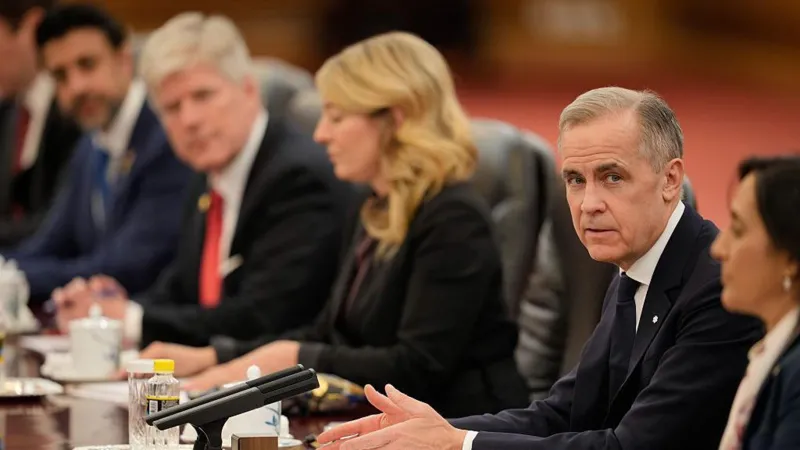
Despite the improved tone, Carney emphasized that Canada does not agree with China on all issues. He said he clearly outlined Ottawa’s “red lines”, including concerns about human rights, election interference, and the need for clear guardrails in the relationship.
Sensitive issues such as Taiwan, Hong Kong, and the imprisonment of pro-democracy activist Jimmy Lai were raised during broader discussions. Carney also acknowledged that Canada and China operate under fundamentally different political systems, which limits the scope of their cooperation.
“To have an effective relationship, we have direct conversations. We don’t grab a megaphone and have the conversations that way,” Carney said.
Economic Details of the Agreement
As part of the deal, Canada will allow up to 49,000 Chinese electric vehicles into its market at the reduced 6.1% tariff rate. The cap was introduced to address concerns from Canadian automakers about a potential flood of lower-priced Chinese EVs.
In addition to canola oil, tariffs on Canadian lobsters, crabs, and peas will also be reduced, providing relief to key export sectors. While China is Canada’s second-largest trading partner, it still lags far behind the United States in trade volume.
Growing Chinese Engagement With Western Economies
Observers say Carney’s visit could serve as a model for other countries affected by US trade policies. China, for its part, has been positioning itself as a stable and pragmatic global partner, promoting what Beijing describes as “win-win” cooperation.
In recent weeks, the South Korean president and Irish prime minister have both visited Beijing, with the UK prime minister and German chancellor expected to follow soon. During his three-day visit, Carney also met senior executives from major Chinese firms, including an EV battery manufacturer and an energy conglomerate, and signed several agreements on energy and trade cooperation.
A Relationship with a Complex Past
The last Canadian prime minister to visit China was Justin Trudeau in 2017, before relations deteriorated sharply in 2018 following Canada’s arrest of Huawei executive Meng Wanzhou at the request of the US. China later detained Canadians Michael Kovrig and Michael Spavor, a move widely viewed as retaliatory. All three were released in 2021.
Former diplomat Michael Kovrig cautioned ahead of the Xi-Carney meeting that engagement with China must be handled carefully, urging Ottawa to continue advocating for Canadians currently detained in China.
Prime Minister Mark Carney described the visit as a recognition that “the world has changed dramatically” and that Canada’s global positioning will shape its future for decades. While modest in ambition, the tariff agreement represents a realistic and strategic reset of China-Canada relations balancing economic cooperation with political caution in an increasingly fragmented global trade environment.
Source: BBC.com
Also read: Trump’s $100bn Venezuela Oil Push Meets Industry Resistance
Continue Reading

Court of Appeal Restores GN Savings and Loans Licence in Major Victory for Defunct Financial Institution
Court of Appeal restores the licence of GN Savings and Loans after ruling that the revocation was unfair and unreasonable, ordering the receiver to hand over company assets and operations to shareholders. In a landmark ruling that could reshape Ghana’s financial sector clean-up debate, the Court of Appeal has unanimously overturned an earlier High Court […]
 Samuel Stefano

Global tensions rise as US weighs hypersonic missile deployment, Strait of Hormuz crisis deepens
Global tensions: A new report suggests the United States may deploy a hypersonic missile in the Middle East for the first time, signalling a potential escalation in efforts to pressure Iran into reaching a diplomatic agreement. The development comes as a key deadline passed for former US President Donald Trump to secure authorisation from Congress […]
Frank Ocansey
Civil society coalition petitions National Petroleum Authority to cut fuel supply to illegal mining operations
A coalition of civil society organisations has formally petitioned the National Petroleum Authority (NPA) to take urgent regulatory action to halt the flow of fuel to illegal mining operations, warning that continued access to diesel is sustaining widespread environmental destruction across Ghana. In a petition dated April 18, 2026, the Coalition Against Galamsey in Ghana […]
Frank Ocansey