
GoldBod Losses: IMF Reaffirms $214 Million but Maintains Optimism for Ghana’s Economy

Frank Ocansey
Editor, PulseView
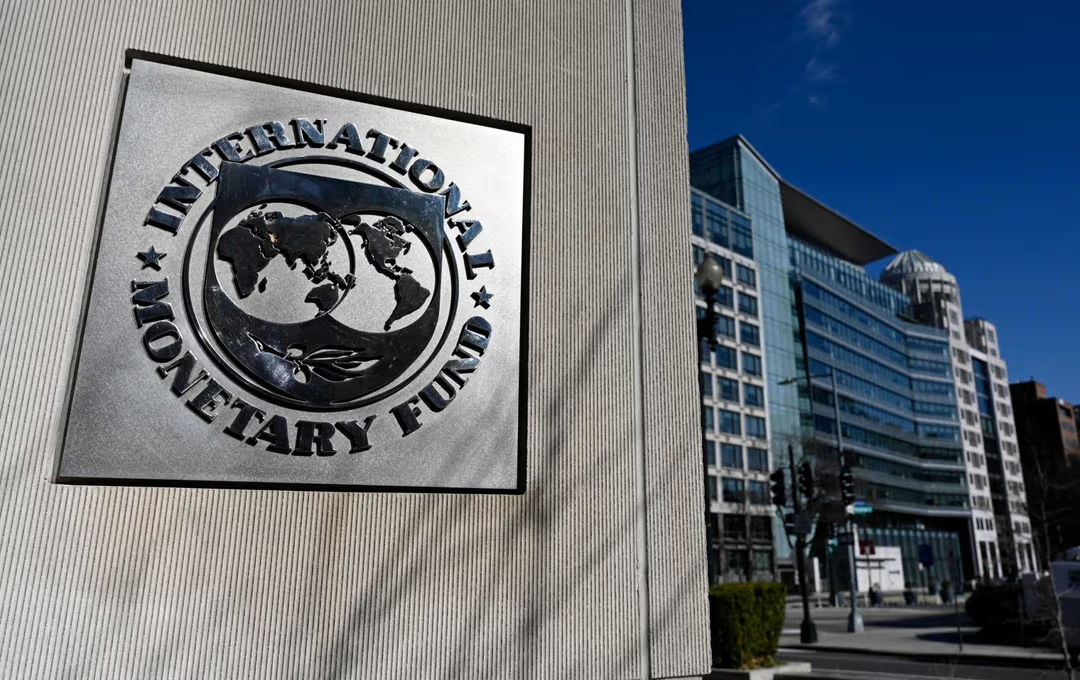
GoldBod Losses: The International Monetary Fund (IMF) has reaffirmed its earlier assessment that Ghana’s Gold Board (GoldBod) incurred losses of approximately US$214 million, insisting that its position on the matter remains unchanged. The figure, first highlighted in the IMF’s Staff Report for the Fifth Review of Ghana’s IMF-supported economic programme, has sparked public debate over its implications for Ghana’s fiscal stability.
At a press briefing on Thursday, January 15, 2026, IMF Director of Communications Julie Kozack provided clarification, noting that the Fund stands firmly by its analysis.
“While the GoldBod-linked domestic gold purchase programme delivered important economic benefits, it also resulted in significant quasi-fiscal losses for the state,” Kozack explained.
Economic Benefits vs Quasi-Fiscal Losses
The IMF acknowledged that the domestic gold purchase programme brought notable benefits to Ghana’s economy. According to Kozack, the initiative contributed to the buildup of international reserves and eased pressure on the foreign exchange market during a challenging period.
However, she emphasized that the programme carried financial costs.
“The report quantified what we call a quasi-fiscal loss. Quasi-fiscal means it is not directly on the fiscal balance sheet, but ultimately it is a fiscal loss. That loss was US$214 million, quantified by the IMF team,” Kozack said.
The losses were primarily driven by trading activities, associated fees, and fluctuations in exchange rates. Although they are not currently reflected in government accounts, the IMF stressed that they ultimately represent a financial burden on the state.
IMF Recommendations for Ghana
To address the situation, the IMF has recommended enhanced transparency, governance, and risk management measures, particularly for operations linked to the GoldBod under the domestic gold purchase initiative.
Kozack also urged the government to formally recognize these losses on the national fiscal balance sheet, rather than leaving them recorded solely on the Bank of Ghana’s books.
“We strongly recommend that the losses should be brought on the balance sheet rather than held on the balance sheet of the Central Bank. This is important to ensure that the Bank of Ghana remains well,” she explained.
Positive Outlook for Ghana’s Economy
Despite concerns over the GoldBod losses, the IMF expressed cautious optimism about Ghana’s overall economic performance in 2025. IMF Resident Representative in Ghana, Dr Adrian Alter, stated that the country’s economy had performed better than many analysts had anticipated.
“Ghana’s programme remains solid and on track with the fifth review being completed, and disbursement being done at the end of December,” Dr Alter said.
The Fund highlighted improvements in key macroeconomic indicators, including inflation control, currency stability, and fiscal consolidation. These gains, the IMF noted, reflect the effectiveness of ongoing economic reforms and policy interventions.

Sustaining Fiscal Discipline
While the IMF maintains a positive outlook, it has also emphasized the importance of continued discipline, accountability, and transparency in managing public resources. Proper fiscal management, particularly the recognition and oversight of quasi-fiscal losses like those incurred by GoldBod, is crucial for sustaining economic stability and public confidence.
The IMF’s guidance underlines the need for Ghana to adopt strong risk management frameworks for public sector interventions in the gold sector and other critical economic areas. By doing so, the country can safeguard its reserves, maintain market confidence, and ensure that state-backed initiatives contribute positively to long-term growth.
The IMF’s reaffirmation of the US$214 million GoldBod losses has clarified the scope and nature of the quasi-fiscal impact on Ghana. At the same time, the Fund’s cautious optimism highlights the progress made under Ghana’s economic programme, particularly in stabilizing the currency, controlling inflation, and consolidating fiscal reforms.
As Ghana continues its economic recovery, the IMF’s recommendations on transparency, governance, and fiscal recognition serve as key guiding principles to ensure sustainable growth and accountability in public resource management.
Source: 3news.com
Also read: Ghanaians and Experts Voice Mixed Views on Mahama’s First Year in Office
Continue Reading

Chelsea 4-3 Brighton: Blues Survive Seven-Goal Thriller to Maintain Xabi Alonso’s Perfect Start
Chelsea continued their impressive start under new manager Xabi Alonso with a dramatic 4-3 victory over Brighton at Stamford Bridge on Sunday. In a match packed with goals, momentum swings and attacking football, the Blues raced into a commanding three-goal lead before Brighton mounted a spirited comeback. Romeo Lavia, Pedro Neto and Joao Pedro put […]
 Junior Kojo

Former Cambridge Professor Jason Arday Found Dead at 41 After Plagiarism Controversy
Former University of Cambridge professor Jason Arday has died at the age of 41, just days after resigning from his position amid allegations of plagiarism and intense scrutiny of his academic career. Professor Jason Arday, the British academic whose rise to become one of the youngest Black professors at the University of Cambridge attracted widespread […]
Frank Ocansey

Jason Arday Dies at 41: Tributes Pour In as UK Leaders Call for Reflection
The death of former Cambridge professor Jason Arday at the age of 41 has prompted an outpouring of tributes and renewed debate about media scrutiny, racism in academia and the human consequences of public criticism. British political and academic figures have expressed shock and sadness following the death of Professor Jason Arday, the prominent academic […]
Frank Ocansey