
Trump warns Iran over Strait of Hormuz shipping threats

Frank Ocansey
Editor, PulseView
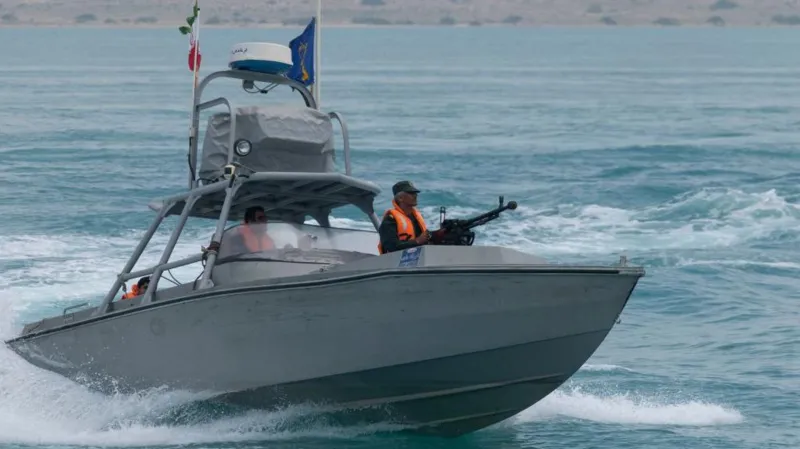
Strait of Hormuz: The US warns Iran against disrupting global oil shipments through the Strait of Hormuz as tensions raise fears of rising energy prices worldwide.
US President Donald Trump has issued a strong warning to Iran, cautioning that any attempt to disrupt oil shipments through the Strait of Hormuz would provoke a powerful military response.
Posting on the social media platform Truth Social, Trump said the United States would respond “twenty times harder” if Iran interfered with the flow of oil through the critical waterway.
The warning comes amid rising tensions linked to the ongoing Iran–Israel conflict, which has already disrupted shipping routes and pushed global oil prices sharply higher.
Why the Strait of Hormuz matters
The Strait of Hormuz is one of the most important maritime routes in the world. Located between Iran to the north and Oman and the United Arab Emirates to the south, the narrow channel connects the Persian Gulf to the Arabian Sea.
Despite being only about 50 kilometres wide at its entrance and exit, and roughly 33 kilometres wide at its narrowest point, it carries a massive share of global energy supplies.
According to the US Energy Information Administration, roughly 20 million barrels of oil move through the strait every day — representing nearly 20% of global oil consumption and energy trade worth hundreds of billions of dollars each year.
Oil transported through the passage comes not only from Iran but also from major Gulf producers such as Saudi Arabia, Iraq, Kuwait, Qatar and the United Arab Emirates.

Shipping traffic already disrupted
Although Iran has not officially blocked the strait, the conflict has significantly reduced shipping traffic.
Iranian officials have warned that ships attempting to pass through the strait must be “very careful,” raising concerns among shipping companies and insurers. The risk of missile or drone attacks has made insurers reluctant to cover vessels travelling through the area.
Energy analysts say that even without a physical blockade, these security threats can effectively halt traffic.
Arne Lohmann Rasmussen, chief analyst at energy consultancy Global Risk Management, noted that many vessels are avoiding the route due to the dangers involved.
The uncertainty has pushed oil prices above $100 per barrel before falling slightly to around $90 following comments from Donald Trump suggesting the conflict could soon ease.
Impact on the global economy
Any disruption to the Strait of Hormuz could have major consequences for the global economy.
Major Asian economies such as China, India and Japan rely heavily on oil shipments passing through the strait.
In fact, around 82% of crude oil transported through the channel is destined for Asian markets. China alone buys the majority of Iran’s oil exports.
If oil shipments were interrupted, prices of fuel, transportation and manufactured goods around the world could rise sharply.
Shipping costs have already increased. Data from the London Stock Exchange Group shows that hiring a supertanker to transport oil from the Middle East to China has nearly doubled, reaching record levels above $400,000.
How Iran could close the strait
Experts say Iran could attempt to close the Strait of Hormuz using several military strategies.
These could include deploying naval mines with fast attack boats or submarines, launching anti-ship missile attacks, or targeting commercial vessels using drones.
Iran’s naval forces — including the Islamic Revolutionary Guard Corps Navy — operate fast patrol boats, submarines and missile-equipped vessels that could threaten shipping in the region.
However, analysts say such moves could trigger direct military retaliation from the United States, which maintains a strong naval presence in the Gulf.
Alternative routes offer limited relief
Over the years, Gulf countries have built pipelines to bypass the strait in case of disruptions.
For example, Saudi Arabia operates a pipeline capable of transporting about five million barrels of oil per day across the kingdom.
The United Arab Emirates also has a pipeline connecting inland oilfields to the port of Fujairah on the Gulf of Oman.
However, these alternative routes cannot fully replace the massive volume of oil normally transported through the strait. Experts estimate that if the strait were completely blocked, global oil supply could drop by eight to ten million barrels per day.
Such a disruption would likely send energy prices soaring and place significant strain on the global economy.
Source: BBC.com
Also read: Iran War: Two Drones Intercepted Near RAF Akrotiri as Tensions Escalate
Continue Reading

Ghana’s producer inflation edges up to 1.5% in March amid mixed sector performance
Producer inflation: Producer price inflation (PPI) in Ghana recorded a marginal increase in March 2026, rising to 1.5% from 1.4% in February, according to the latest data released by the Ghana Statistical Service (GSS). The slight 0.1 percentage point uptick reflects a modest increase in the cost of goods and services at the factory gate, […]
Frank Ocansey
Government announces reduction in fuel price as intervention takes effect April 16
Reduction in fuel price: The Government of Ghana has announced a reduction in the prices of petrol and diesel, set to take effect from April 16, 2026, as part of measures to cushion consumers against rising global fuel costs. Under the new directive, petrol will see a reduction of GH¢0.36 per litre, while diesel prices […]
Frank Ocansey

Gary Neville Urges Arsenal to Stay Calm Ahead of Title-Deciding Clash with Manchester City
Title-Deciding Clash: The Premier League title race has taken another dramatic turn, with Arsenal FC now under increasing pressure ahead of a crucial showdown against Manchester City. Former England defender Gary Neville has warned the Gunners that emotional control could be the key factor in determining the outcome of their season. With just a handful […]
 Junior Kojo