
WHO Warns Ebola Vaccine May Take 9 Months as DR Congo Death Toll Continues to Rise

Frank Ocansey
Editor, PulseView

Ebola Vaccine: The World Health Organization (WHO) has issued a fresh warning over the worsening Ebola outbreak in the Democratic Republic of Congo (DR Congo), revealing that it could take up to nine months before a vaccine targeting the Bundibugyo strain becomes available.
The alarming announcement comes as suspected Ebola cases and deaths continue to climb across eastern DR Congo and neighbouring Uganda, raising fears of a prolonged regional health crisis.
Health officials say the outbreak is being driven by the rare Bundibugyo strain of Ebola, a strain for which there is currently no approved Ebola vaccine or targeted treatment.

Ebola Cases and Deaths Continue to Increase
Speaking during a press briefing in Geneva, WHO Director-General Dr Tedros Adhanom Ghebreyesus said there have now been approximately 600 suspected Ebola cases and 139 suspected deaths linked to the outbreak.
However, officials believe the true numbers may be significantly higher because of delays in detecting infections and confirming laboratory results.
So far, 51 Ebola cases have been officially confirmed in DR Congo, while neighbouring Uganda has confirmed two imported cases in the capital, Kampala. One of those infected individuals has already died.
“We know the scale of the epidemic in DRC is much larger,” Dr Tedros warned, expressing particular concern over the growing number of healthcare workers becoming infected.
WHO Declares International Emergency
Last week, the WHO officially declared the outbreak a Public Health Emergency of International Concern (PHEIC), though it stopped short of describing the crisis as a pandemic-level emergency.
Dr Tedros explained that after reviewing the situation, WHO experts concluded that the outbreak currently poses:
- A high risk nationally and regionally
- A low risk globally
The declaration allows international agencies and governments to mobilise emergency funding, resources, surveillance systems, and rapid-response teams.
Ebola Vaccine Development Faces Major Challenges
One of the biggest concerns surrounding the current outbreak is the absence of a proven vaccine for the Bundibugyo strain.
WHO advisor Dr Vasee Moorthy confirmed that two experimental candidate vaccines are currently under development. However, neither has completed full clinical trials.
According to Moorthy, the most promising vaccine candidate could still take between six and nine months before it becomes ready for use.
“This needs to be prioritised as the most promising Bundibugyo strain candidate vaccine,” he explained.
The second potential vaccine, based on the same platform used for the AstraZeneca Covid-19 vaccine, is still undergoing animal testing.
Moorthy said doses for clinical trials could potentially become available within two to three months, though significant uncertainty remains about its effectiveness.
No Approved Treatment for Bundibugyo Strain
In addition to the vaccine challenge, there are currently no approved drugs specifically designed to treat the Bundibugyo strain of Ebola.
This makes managing severe infections much more difficult for already overwhelmed health systems in eastern DR Congo.
Although experts believe vaccines developed for the more common Zaire Ebola strain may provide some level of partial protection, this has not yet been fully confirmed.
Hospitals Struggling to Cope
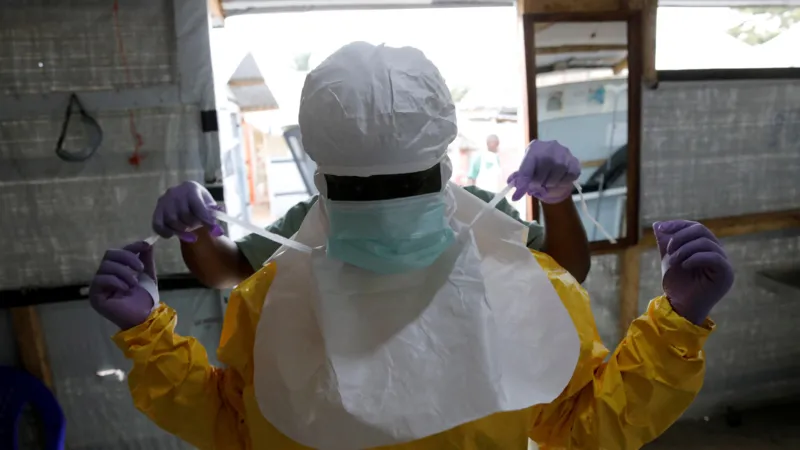
Medical workers on the ground say hospitals and treatment centres are rapidly becoming overwhelmed as suspected Ebola patients continue arriving in large numbers.
Trish Newport, an emergency programme manager with Médecins Sans Frontières (MSF), described the situation as chaotic.
“We are full of suspect cases. We don’t have any space,” she quoted health workers as saying.
“This gives you a vision of how crazy it is right now,” she added.
Although shipments of personal protective equipment (PPE) have begun arriving, frontline healthcare staff say many facilities still lack adequate protective gear.
Outbreak Began with Nurse’s Death
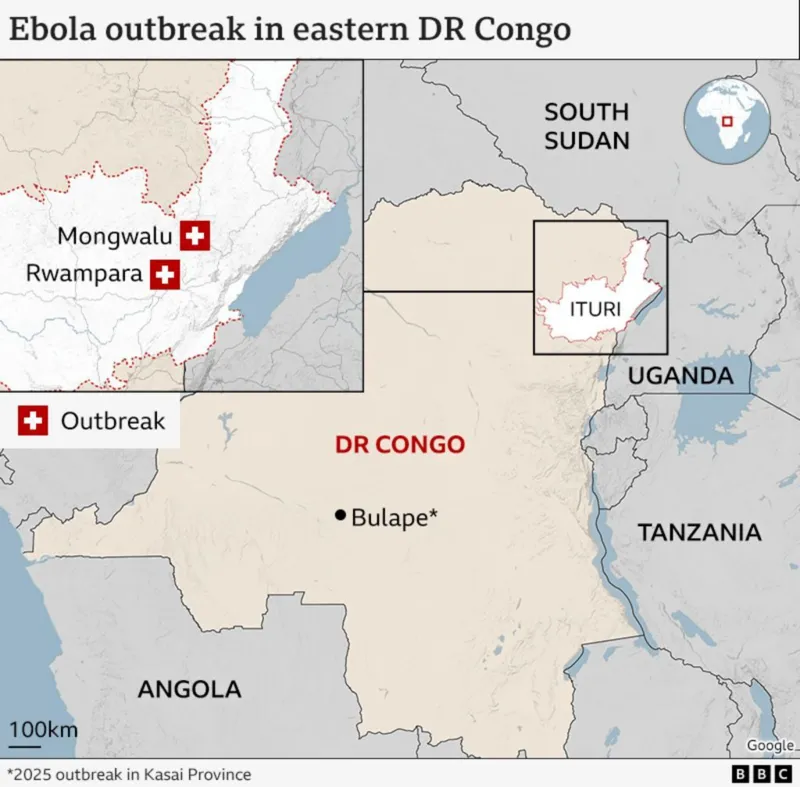
The outbreak was first identified after a nurse in Bunia, the provincial capital of Ituri, developed Ebola symptoms and died on 24 April.
Her body was later transported to Mongwalu, one of two gold-mining towns where the majority of infections have since been recorded.
Authorities now fear the virus may have circulated undetected for weeks before that first confirmed case was identified.
Communities Living in Fear
Residents across affected areas say fear is spreading quickly as communities struggle to understand how to protect themselves.
Araali Bagamba, a lecturer living in Bunia, said daily social habits have already changed dramatically.
“For the last three days I haven’t shaken anyone’s hand,” she told the BBC.
“It’s our habit to shake hands all the time… [but] the habit has changed.”
Bagamba added that many residents believe the outbreak could worsen before conditions improve because people initially failed to recognise the disease as Ebola.
Conflict and Insecurity Complicating Response
Eastern DR Congo remains heavily affected by years of armed conflict, displacement, and humanitarian crises.
The insecurity has made it extremely difficult for health workers and emergency teams to conduct surveillance, isolate cases, and provide treatment.
Frequent movement of people between mining communities and across borders is also increasing the risk of regional spread.
What Is Ebola?
Ebola is a highly infectious viral disease first discovered in 1976 in what is now DR Congo.
The virus spreads through direct contact with infected bodily fluids such as:
- Blood
- Vomit
- Sweat
- Urine
- Saliva
- Contaminated surfaces
Common Symptoms of Ebola Include:
- Fever
- Severe headache
- Fatigue and weakness
- Muscle pain
- Vomiting
- Diarrhoea
- Skin rash
- Internal and external bleeding
- Organ failure in severe cases
Initial symptoms often resemble malaria or typhoid fever, making early diagnosis difficult in many African settings.
The Rare Bundibugyo Strain
The current outbreak is being caused by the Bundibugyo species of Ebola, which is much rarer than the Zaire strain.
Bundibugyo has only been responsible for two previous outbreaks:
- Uganda in 2007
- DR Congo in 2012
During those outbreaks, roughly one-third of infected individuals died.
While less deadly than some other Ebola species, its rarity means scientists have fewer medical tools available to contain it.
Global Health Concerns Grow
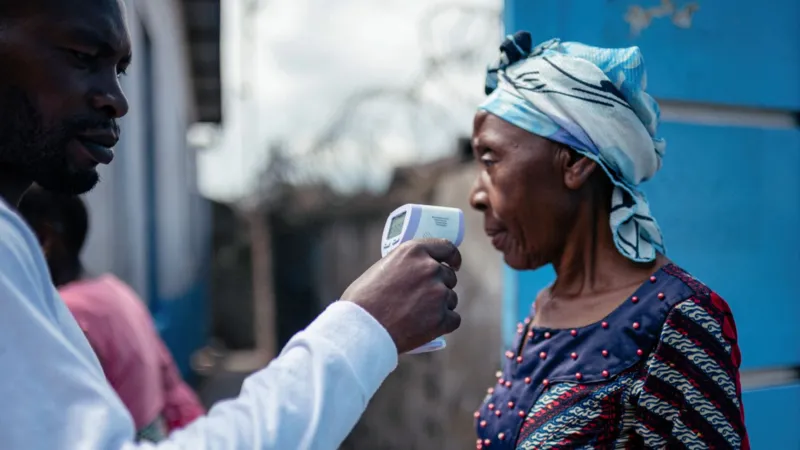
Several African countries are already tightening border screening measures and preparing hospitals for possible imported infections.
Health experts warn that unless the outbreak is quickly contained, it could evolve into one of the region’s most dangerous Ebola crises in recent years.
Source: BBC
Also read: Signs and Symptoms of Ebola: What You Need to Know
Continue Reading
UN Warns of Powerful El Niño That Could Trigger Extreme Weather, Food Crises and Record Global Temperatures
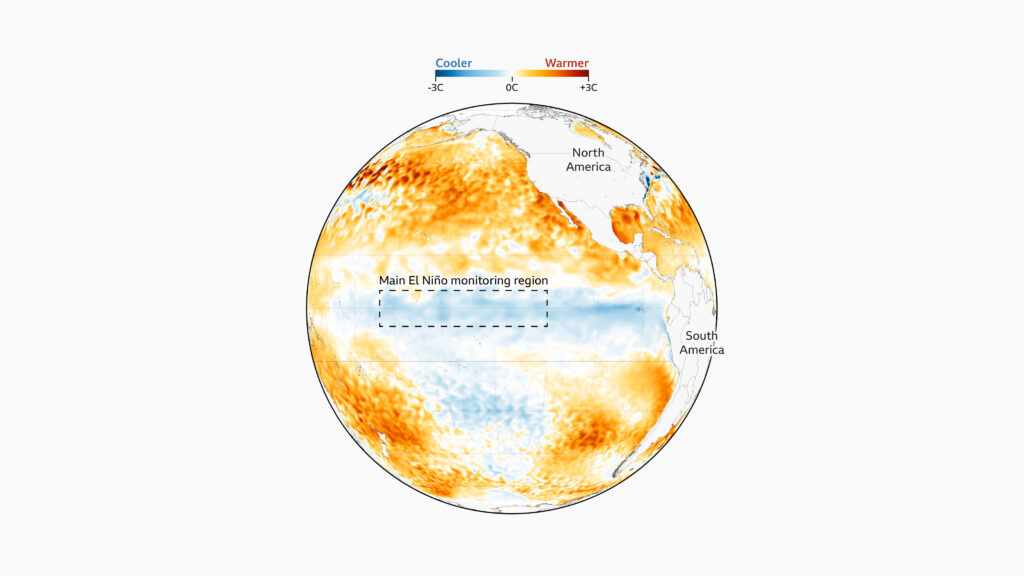
The United Nations has issued a stark warning that a new El Niño weather phenomenon could begin within weeks and potentially develop into one of the strongest events recorded in modern history. Scientists fear the combination of a powerful El Niño and ongoing human-induced climate change could reshape weather patterns across the globe, bringing devastating […]
Frank Ocansey

Bowel Cancer: Warning Signs, Causes, Prevention and Why Early Detection Could Save Life
Bowel cancer is one of the most common cancers worldwide, and health experts are increasingly concerned about a rise in cases among younger adults. While the disease has traditionally been associated with older people, recent research shows that diagnoses are increasing among individuals in their 20s, 30s, and 40s, prompting scientists to investigate the possible […]
Frank Ocansey

Prostate Cancer Screening Restricted to High-Risk Men as Experts Warn of Potential Harm from Widespread Testing
Prostate Cancer: Health authorities have recommended that routine prostate cancer screening should only be offered to a small group of men at very high genetic risk, arguing that the potential harms of widespread testing currently outweigh the benefits. The recommendation, issued by the United Kingdom’s National Screening Committee (NSC), marks the culmination of an extensive […]
Frank Ocansey