
Ebola Has Tortured Us: WHO Warns Deadly DR Congo 2026 Outbreak May Be Far Worse Than Feared

Frank Ocansey
Editor, PulseView
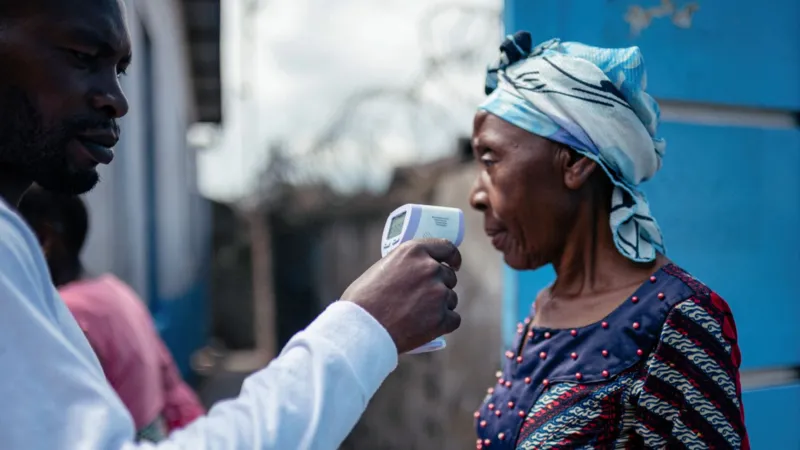
DR Congo Outbreak: Fear and uncertainty are spreading rapidly across eastern Democratic Republic of Congo (DR Congo) as health officials warn that the latest Ebola outbreak could be much larger and more dangerous than initially believed.
Residents living near the epicentre of the outbreak in Ituri province say communities are overwhelmed by panic as infected individuals reportedly die within days after showing symptoms.
The World Health Organization (WHO) has now raised fresh concerns that the virus may already have spread across borders and into several additional provinces, making containment increasingly difficult.
Ebola Cases and Death Toll Continue to Rise
According to health officials, the outbreak has already killed at least 136 people in DR Congo, while more than 514 suspected cases have been recorded.
Uganda has also confirmed one Ebola-related death involving a traveller from DR Congo, raising fears of a wider regional health emergency.
The WHO declared the outbreak an international emergency last week after growing evidence suggested the virus was spreading more aggressively than expected.
Dr Anne Ancia of the WHO told the BBC that investigations have revealed the outbreak has likely expanded beyond the originally affected areas.
“The more we are investigating this outbreak, the more we realise that it has already disseminated at least a little bit across border and also in other provinces,” she explained.
Scientists Fear Hundreds of Cases May Be Undetected
Researchers are now warning that the official figures may represent only a fraction of the true scale of infections.
A modelling study conducted by the London-based MRC Centre for Global Infectious Disease Analysis suggested there may already be more than 1,000 Ebola cases in reality due to significant under-detection.
The researchers described the outbreak as “larger than currently ascertained” and warned that the true magnitude of the crisis remains uncertain.
Experts fear the virus may have circulated silently for several weeks before authorities officially detected the first known case on 24 April.
People Are Really Scared
Residents in affected communities say fear is growing as families struggle to understand how to protect themselves from the deadly virus.
A man identified only as “Bigboy” told the BBC that Ebola has devastated local communities.
“People are really scared,” he said. “Ebola has tortured us.”
He explained that many residents are attempting basic preventive measures such as frequent handwashing with clean water. However, communities lack critical protective supplies including face masks and medical equipment.
Another resident, Alfred Giza, said people were aware of the danger but did not know what to do if relatives became infected.
“We are waiting for face masks,” he explained, adding that many families remain confused about how to respond if symptoms appear.
Conflict and Population Movement Complicate Response
Health experts say the outbreak is particularly dangerous because it is occurring in a region already destabilised by years of violence and humanitarian crises.
Large parts of Ituri province remain insecure due to armed conflict involving multiple militia groups. Hospitals and clinics have been damaged or destroyed, while millions of people have been displaced from their homes.
Many displaced people are living in overcrowded and unsanitary conditions, increasing the risk of transmission.
The region also hosts more than 11,000 refugees fleeing violence in South Sudan, alongside heavy population movements linked to gold mining activities.
Dr Anne Ancia described Ituri as “a very unsecured area with lots of movement of population,” making disease surveillance and containment extremely difficult.
Ebola Spreads to Major Urban Centres
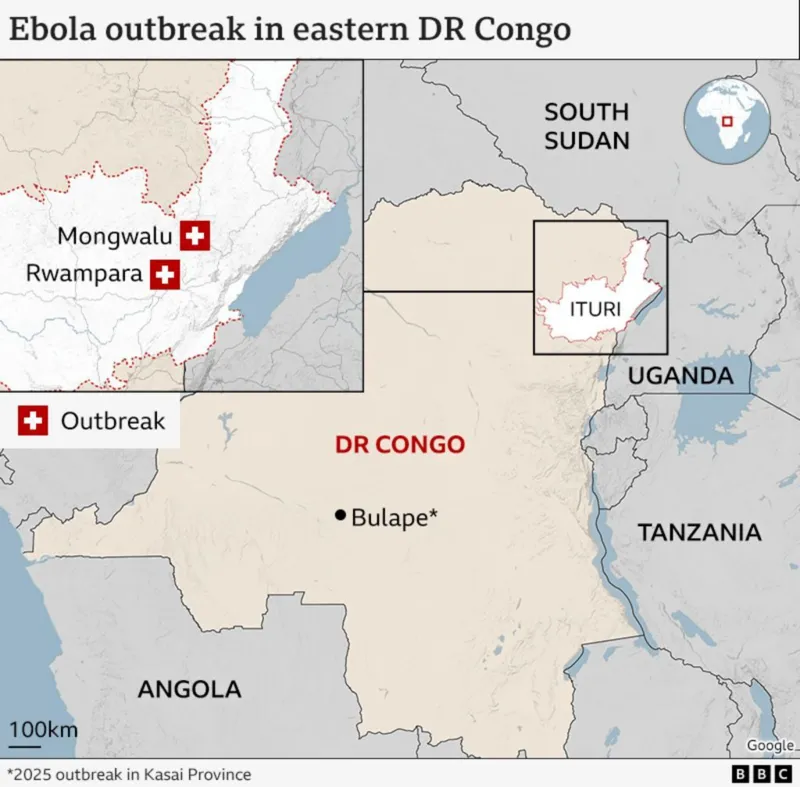
The virus has now reportedly spread beyond Ituri into South Kivu province and the major eastern city of Goma, raising fears of a much wider outbreak.
Goma, which has a population of around 850,000 people, is a critical transport and commercial hub near the Rwandan border.
The city is currently under the control of Rwanda-backed rebel forces, further complicating emergency response operations.
WHO officials warn that high levels of insecurity and constant movement of people between provinces and neighbouring countries significantly increase the likelihood of further spread.
Neighbouring Countries Tighten Border Measures
Several African countries have already begun implementing emergency preventive measures in response to the outbreak.
Rwanda has closed its border with DR Congo, while Uganda has advised citizens to avoid handshakes and physical contact such as hugging.
Health authorities across the region are also increasing border screenings and preparing hospitals for potential imported cases.
WHO Releases Emergency Funds
The WHO has already released nearly $4 million to support emergency response operations, though officials say significantly more resources will likely be needed.
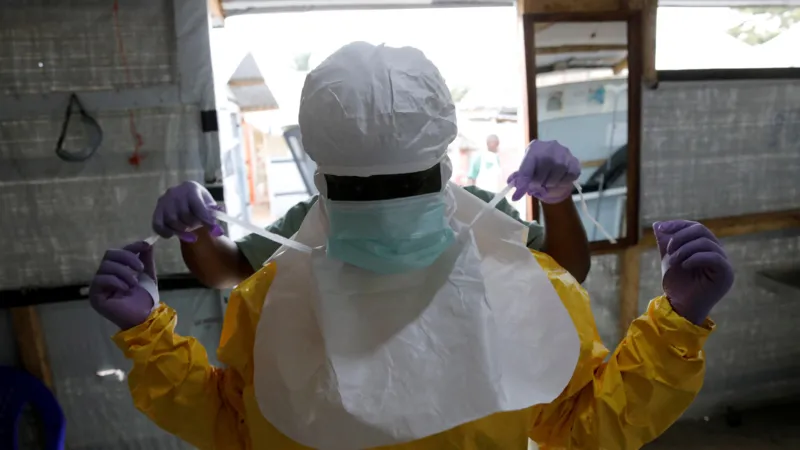
Medical supplies including personal protective equipment (PPE), medicines, and testing kits are currently being transported into affected regions.
WHO Director-General Tedros Adhanom Ghebreyesus expressed deep concern about the outbreak’s scale and speed.
“I am deeply concerned about the scale and speed of the epidemic,” he warned.

No Approved Vaccine for Current Ebola Strain
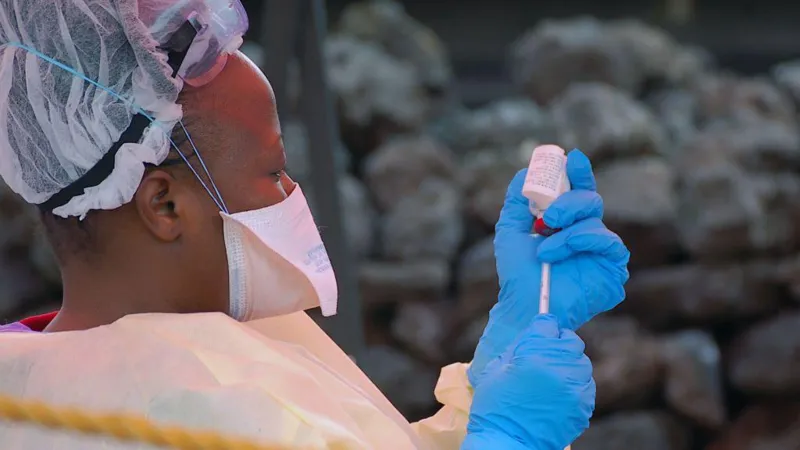
One of the most worrying aspects of the outbreak is the absence of an approved vaccine for the Bundibugyo strain currently driving infections.
The Bundibugyo strain is relatively rare and has previously caused only two known outbreaks worldwide.
WHO officials are now evaluating whether existing Ebola treatments and experimental drugs could provide some level of protection against the virus.
What Is Ebola?
Ebola is a highly infectious viral disease first discovered in 1976 in what is now DR Congo.
The virus spreads through direct contact with infected bodily fluids such as blood, vomit, sweat, saliva, urine, or contaminated surfaces.
Common Symptoms of Ebola Include:
- Fever
- Severe headache
- Muscle pain
- Weakness and fatigue
- Sore throat
- Vomiting
- Diarrhoea
- Skin rash
- Internal and external bleeding
- Organ failure in severe cases
The disease often begins with flu-like symptoms before progressing into life-threatening complications.
A History of Deadly Ebola Outbreaks
DR Congo has experienced multiple Ebola outbreaks over the past five decades, including the country’s deadliest epidemic between 2018 and 2020, which killed nearly 2,300 people.
Globally, the worst Ebola outbreak occurred in West Africa between 2014 and 2016, infecting more than 28,600 people and killing over 11,000 across Guinea, Sierra Leone, Liberia and beyond.
Health authorities fear the current outbreak could become another major regional crisis unless urgent containment measures succeed quickly.
Source: BBC
Also read: Ebola Outbreak in Eastern DR Congo Kills 80 as Health Officials Warn of Wider Spread
Continue Reading
UN Warns of Powerful El Niño That Could Trigger Extreme Weather, Food Crises and Record Global Temperatures
The United Nations has issued a stark warning that a new El Niño weather phenomenon could begin within weeks and potentially develop into one of the strongest events recorded in modern history. Scientists fear the combination of a powerful El Niño and ongoing human-induced climate change could reshape weather patterns across the globe, bringing devastating […]
Frank Ocansey

Bowel Cancer: Warning Signs, Causes, Prevention and Why Early Detection Could Save Life
Bowel cancer is one of the most common cancers worldwide, and health experts are increasingly concerned about a rise in cases among younger adults. While the disease has traditionally been associated with older people, recent research shows that diagnoses are increasing among individuals in their 20s, 30s, and 40s, prompting scientists to investigate the possible […]
Frank Ocansey

Prostate Cancer Screening Restricted to High-Risk Men as Experts Warn of Potential Harm from Widespread Testing
Prostate Cancer: Health authorities have recommended that routine prostate cancer screening should only be offered to a small group of men at very high genetic risk, arguing that the potential harms of widespread testing currently outweigh the benefits. The recommendation, issued by the United Kingdom’s National Screening Committee (NSC), marks the culmination of an extensive […]
Frank Ocansey