
Data Centre Backlash: Why AI’s Rapid Expansion Is Facing Local Opposition

Frank Ocansey
Editor, PulseView

Artificial intelligence is developing at extraordinary speed, but the infrastructure powering that revolution is creating a problem that is much more local and increasingly political.
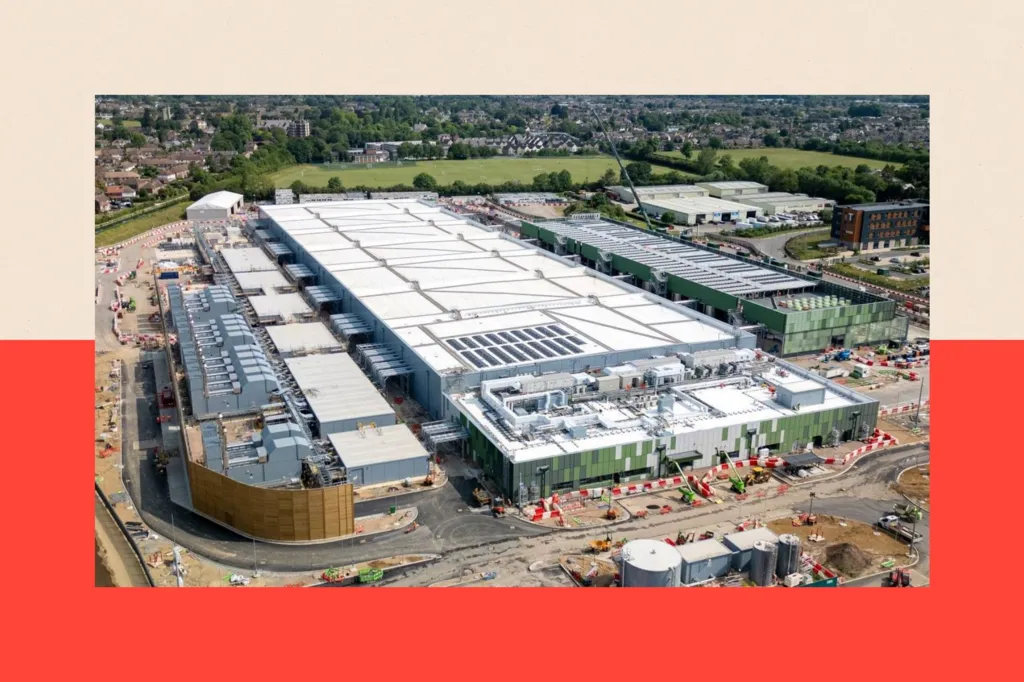
Behind every artificial intelligence-generated image, video or answer are enormous data centres filled with powerful computer chips. These facilities require vast amounts of electricity, generate substantial heat and, depending on their cooling systems and location, can place pressure on water supplies.
Now, communities in the United States and the United Kingdom are increasingly questioning whether the economic benefits of Artificial Intelligence justify the environmental and local costs associated with building the infrastructure needed to run it.
The debate could become one of the biggest challenges facing the continued expansion of artificial intelligence.
Why Data Centres Need So Much Power
A modern data centre may contain tens of thousands of computer chips performing trillions of calculations every second.
Those calculations power many of the Artificial Intelligence services people now use for generating text, images, video and other digital content.
The computing itself is effectively silent. The sound associated with large data centres comes largely from the thousands of cooling fans needed to prevent servers from overheating, as well as transformers and other electrical infrastructure supplying power to the facilities.
As Artificial Intelligence models become more powerful, their computing requirements are also increasing.
That means the infrastructure supporting Artificial Intelligence is becoming larger, more energy-intensive and more visible to the communities where new facilities are being constructed.
Local Communities Are Beginning to Push Back
For technology companies, data centres are essential infrastructure. For some residents, however, they can represent higher pressure on electricity networks, increased water consumption, noise, lighting and changes to the character of their communities.
Polling in the United States illustrates the scale of the concern.
A Gallup poll published in May found that 71% of Americans opposed having a data centre in their local area, including 48% who strongly opposed it. Opposition was even higher than that recorded for nuclear power stations in the same poll.
The issue has also generated protests in parts of the UK, including Buckinghamshire, Berkshire and London’s Brick Lane.
In some locations, residents are questioning whether land and infrastructure should be devoted to computing facilities when communities also face pressures around housing, local businesses and public services.
The Opposition Is Not Limited to One Political Party
One particularly significant development in the United States is that opposition to data centres does not fall neatly along traditional political lines.
While some of the strongest criticism has come from Democrats on the political left, opposition is also emerging among Republican voters and politicians.
Some local councils have faced political consequences over data-centre policies, while states controlled by both parties have considered restrictions or bans.
The debate has therefore moved beyond a simple argument about whether someone supports or opposes Artificial Intelligence.
Increasingly, the question is who pays for the infrastructure and who receives the benefits?

Electricity Bills Have Become a Major Flashpoint
One of the biggest concerns in the United States is the effect large data centres can have on electricity infrastructure and household bills.
When a major facility is built, significant investment may be needed to expand the electricity network that supplies it.
Residents in some communities have questioned whether they should bear those costs while technology companies receive the economic benefits.
The political sensitivity is particularly strong because electricity systems in the United States operate substantially at local and state levels, meaning the consequences of infrastructure decisions can be felt directly by consumers.
This has forced politicians who previously welcomed technology investment to reconsider how data-centre expansion should be managed.
Big Tech Tried to Address the Criticism
In March, seven major technology CEOs appeared alongside Donald Trump to sign what was described as a Ratepayer Protection Pledge.
The companies promised to build, bring or purchase their own energy supplies and prevent the costs from being passed on to ordinary households.
But the pledge was non-binding, and it did not eliminate public concerns about new facilities.
Some states have subsequently moved towards stronger requirements, including new energy tariffs for data centres and greater disclosure of their energy and water consumption.
That signals a shift from voluntary corporate promises towards regulation.
Texas Shows How Quickly the Politics Can Change
Texas provides an especially striking example of the changing political landscape.
The state has traditionally competed aggressively for data-centre and technology investment because of the economic activity associated with major projects.
Yet Ken Paxton, a Republican Senate candidate and Texas attorney general, has criticised data centres, campaigned against tax incentives for them and proposed stronger legal consequences for operators under certain circumstances.
The contrast is significant because Texas had previously positioned itself as one of the most business-friendly destinations for data-centre development.
The lesson for the technology industry is clear: political support for Artificial Intelligence infrastructure cannot necessarily be taken for granted.
Jobs Are Another Complicated Part of the Debate
Technology companies frequently present data centres as engines of economic development.
Construction projects can create substantial employment and generate investment in surrounding areas.
But once a facility becomes operational, it may employ relatively few people compared with the size and value of the infrastructure.
The source notes that a functioning data centre may require only a few dozen permanent employees, while the largest facilities may employ a few hundred.
That creates a difficult political argument.
Residents may be asked to tolerate noise, security lighting, land use changes and pressure on electricity and water supplies in exchange for an economic project that creates relatively few permanent local jobs.
At the same time, some of the companies operating these facilities are among the world’s most valuable technology businesses.
The UK Faces Its Own Data Centre Debate
The controversy is not confined to America.
The United Kingdom already has one of the world’s largest concentrations of data centres and ranks third globally by number of facilities, behind the United States and ahead of China.
Slough is Europe’s largest data-centre cluster, but residents there have begun questioning whether the rapid expansion has delivered enough benefits for the local population.
More than 500 people reportedly signed a petition calling for a pause in new development and arguing that the town should not become an uncontrolled testing ground for data-centre expansion.
In other parts of the country, proposed developments have raised concerns about green-belt land, housing and environmental impacts.

Data Centres and the Housing Question
One particularly sensitive issue is what happens to land that could potentially be used for housing or other community purposes.
In one UK example cited in the source, a site originally designated for around 1,000 homes was eventually sold to a data-centre company as part of a council’s efforts to address its finances.
That kind of decision can intensify public debate.
For residents struggling with housing shortages, seeing valuable land allocated to computing infrastructure can raise difficult questions about government priorities.
Why Water Is Becoming Part of the AI Debate
Electricity is not the only resource under scrutiny.
Water consumption is also becoming an increasingly important issue because some data centres require water for cooling.
Technology companies argue that their water requirements need to be considered in the wider context of national and regional water use, including losses from ageing infrastructure.
Environmental and water organisations, however, have questioned whether governments are adequately incorporating water availability into AI expansion strategies.
Water UK has argued that government AI growth planning has not sufficiently addressed the country’s future water requirements.
The issue could become even more important as climate change increases pressure on water resources in some regions.
The UK Wants Data Centres to Become Critical Infrastructure
The British government has taken a different approach from simply allowing market forces to determine where new facilities are built.
Data centres have been designated as critical national infrastructure, reflecting their importance to public services, national security and the wider digital economy.
The government argues that expanding data-centre capacity is necessary to attract investment and ensure Britain remains competitive in the global technology economy.
But this creates a tension between national priorities and local decision-making.
A project may be considered strategically important by the national government, while residents and local authorities object to its environmental or social consequences.
The Green Belt Dispute Shows the Difficulty
A proposed Buckinghamshire data centre demonstrated just how complicated the issue can become.
The project had previously faced repeated rejection at the local level because it involved development on green-belt land.
National ministers eventually granted permission, but campaigners challenged the decision in court over environmental considerations.
The government subsequently acknowledged errors and cancelled its own approval. The developer later accepted that binding clean-energy obligations would need to be agreed with the local council.
The episode demonstrates the broader conflict: governments want rapid AI infrastructure development, while local communities and environmental groups want stronger safeguards.
Britain Wants to Triple Data Centre Capacity
The UK’s ambitions for AI infrastructure are substantial.
The country is considering an expansion of existing data-centre capacity to approximately 6 gigawatts of continuous capacity by 2030, roughly three times current capacity according to the source.
That raises a major question about how such an expansion can be reconciled with Britain’s net-zero ambitions.
More computing infrastructure means more demand for electricity.
If that electricity comes from carbon-intensive sources, AI expansion could make climate targets more difficult to achieve. If it comes from cleaner sources, the infrastructure required to generate and distribute that power must also keep pace.
AI Growth Zones Are Part of the Solution
The UK has attempted to direct new data-centre development towards locations where the infrastructure is more suitable.
These so-called AI Growth Zones are being considered based on factors including brownfield land availability, existing electricity connections and access to energy generation.
The intention is to concentrate development where it can produce economic benefits while reducing some of the environmental and infrastructure pressures associated with unsuitable locations.
Even then, disagreements can arise.
The source describes a dispute in Teesside over whether a site should be used for low-carbon hydrogen infrastructure or a large AI data centre, illustrating the competition between different versions of Britain’s future energy economy.
The AI Industry Says the Technology Could Help Solve Bigger Problems
Technology companies have a powerful counterargument.
They argue that AI could eventually transform productivity, scientific research, healthcare and climate technology.
Nvidia chief executive Jensen Huang has argued that data centres are essential to the reindustrialisation of the United States.
The broader argument from the technology sector is that the infrastructure costs of AI should be judged against the potential value generated by the technology itself.
But that argument can be difficult to communicate to people who experience the immediate costs in their own communities.
As the source points out, promising national economic benefits or even claims that AI could contribute to solving major diseases may not convince residents who are dealing with higher infrastructure demands or changes to their neighbourhood.
The UK Has Another Reason to Build AI Infrastructure
Britain’s debate has an additional dimension: data sovereignty.
If a country depends almost entirely on foreign companies and foreign infrastructure for critical computing capacity, it may have less control over the technology underpinning important parts of its economy.
AI is increasingly relevant to areas such as healthcare, financial services, government and national security.
The argument for domestic infrastructure is therefore not simply about commercial growth. It is also about maintaining strategic control over essential digital systems.
The Real Challenge: Who Benefits and Who Pays?
The data-centre debate ultimately exposes a fundamental problem with the AI boom.
The benefits of artificial intelligence can be global, while many of the costs of building the infrastructure are intensely local.
A company may develop an AI product used by millions of people around the world, but the electricity demand, water consumption, construction activity, noise and land-use consequences of the data centre supporting it are concentrated in particular communities.
That creates a mismatch.
The economic benefits may be widely distributed, while the environmental and infrastructure burdens can be geographically concentrated.
Governments and technology companies will therefore need to demonstrate not only that AI infrastructure is necessary, but also that communities hosting it receive meaningful benefits and that environmental costs are properly managed.
Could the Data Centre Backlash Slow the AI Boom?
The growing resistance does not necessarily mean the AI revolution is coming to an end.
Instead, it could force the industry into a new phase.
The first stage of the AI boom was dominated by technological capability: build bigger models, acquire more chips and construct more computing capacity.
The next stage may be dominated by infrastructure, energy, water, planning and public acceptance.
Governments will have to determine where data centres can be built, how much electricity they can consume, who pays for network upgrades, how water use is managed and what environmental standards developers must meet.
Technology companies, meanwhile, may have to prove that their infrastructure investments produce tangible benefits beyond the companies themselves.
The Future of AI May Depend on Infrastructure
The biggest threat to AI expansion may not come from a competing technology.
It may come from something much more ordinary: the electricity grid, water supply, planning system and local politics.
AI requires enormous physical infrastructure, and that infrastructure cannot be built in the cloud. It has to occupy land, consume energy, connect to power networks and operate within real communities.
The debate now unfolding in America and Britain suggests that the next chapter of the AI revolution will involve much more than artificial intelligence itself.
It will be about whether governments, technology companies and communities can agree on how much infrastructure is necessary, where it should go, who should pay for it and how its environmental costs should be managed.
The AI race may still be moving at Silicon Valley speed but the communities hosting its infrastructure are demanding a say in where the road leads.
The rapid expansion of AI data centres is facing growing opposition over electricity, water, land use and environmental concerns in the US and UK.
Source: BBC
Also Read: Artificial Intelligence Designs Brand-New Viruses in Scientific Breakthrough
Continue Reading

AI-Generated Complaints Are Overwhelming Councils and Schools: Here’s Why
AI-Generated Complaints Are Overwhelming Councils and Schools, But They Are Also Giving More People a Voice Artificial intelligence is making it easier than ever for people to challenge decisions, write formal complaints and quote regulations. But councils, schools and other public bodies are warning that the same technology is creating a huge new administrative burden. […]
Frank Ocansey

Japan AI adoption: Why Japanese Companies Are Slow to Adopt AI Despite Labour Shortages
Japan AI adoption: Japan is facing labour shortages, an ageing population and weak productivity growth, yet businesses across the country remain cautious about adopting artificial intelligence. What is holding Japan back from the Artificial intelligence revolution? Artificial intelligence is transforming workplaces around the world, but Japan appears to be moving at a much slower pace. […]
Frank Ocansey

AI Clones Are Here: How Digital Doubles Could Change Work, Business and Identity
AI clones are moving from science fiction into everyday business, with CEOs, influencers and ordinary employees creating digital versions of themselves. But as the technology becomes more realistic, concerns about privacy, fraud, jobs and control are growing. Imagine walking into a room and seeing two versions of the same person standing in front of you. […]
Frank Ocansey