
Can We Change How Our Brains Age? What Scientists Are Discovering

Frank Ocansey
Editor, PulseView
Brains Age: For decades, scientists have known that the way we live can influence how well our bodies age. But a more intriguing question is now gaining attention: could technology help us understand and potentially slow the ageing of the human brain?
Researchers are increasingly combining artificial intelligence, brain imaging, sleep tracking, genetics and large datasets to identify patterns that may reveal why some people’s brains appear to age more slowly than others.
The goal is not simply to help people live longer. Scientists are increasingly interested in extending healthspan, the number of years people can remain physically and mentally healthy.
Research from the community of Seventh-day Adventists in Loma Linda, California, offers one example of how lifestyle may contribute to healthier ageing, while emerging AI-powered brain analysis is opening another door: the possibility of identifying accelerated brain ageing before serious symptoms appear.
What Does It Mean for a Brain to Age?
Ageing does not happen at exactly the same rate for everyone.
Two people may be the same chronological age while having very different levels of brain health. One person’s brain may show patterns associated with healthy ageing, while another may display changes associated with neurological disease.
This is where researchers believe artificial intelligence could become particularly useful.
Andrei Irimia, an associate professor of gerontology and computational biology at the University of Southern California, has developed computer models that analyse MRI scans alongside data from thousands of brains.
His work uses information from approximately 15,000 brain scans to identify patterns associated with healthy ageing as well as disease processes such as dementia.
Rather than relying solely on what doctors can see, AI systems can examine enormous amounts of data and identify subtle relationships that may otherwise be difficult to detect.
AI Could Help Reveal Your ‘Brain Age’
One of the most interesting developments is the concept of brains age.
Instead of simply saying that someone is 50 or 70 years old, researchers can use brain imaging to estimate how old the brain appears biologically.
That does not mean the resulting number is a definitive measure of health.
For example, when journalist Lara Lewington underwent a functional MRI scan, Irimia’s analysis estimated that her brain was about eight months older than her chronological age. However, he stressed that the result fell within an estimated two-year margin of error.
Another company produced a different estimate, illustrating an important limitation of the technology: brain-age measurements are still developing and different systems can produce different results.
Nevertheless, the underlying idea could eventually become valuable.
If doctors can identify unusual patterns earlier, they may have more opportunities to investigate potential risks and intervene before significant decline occurs.
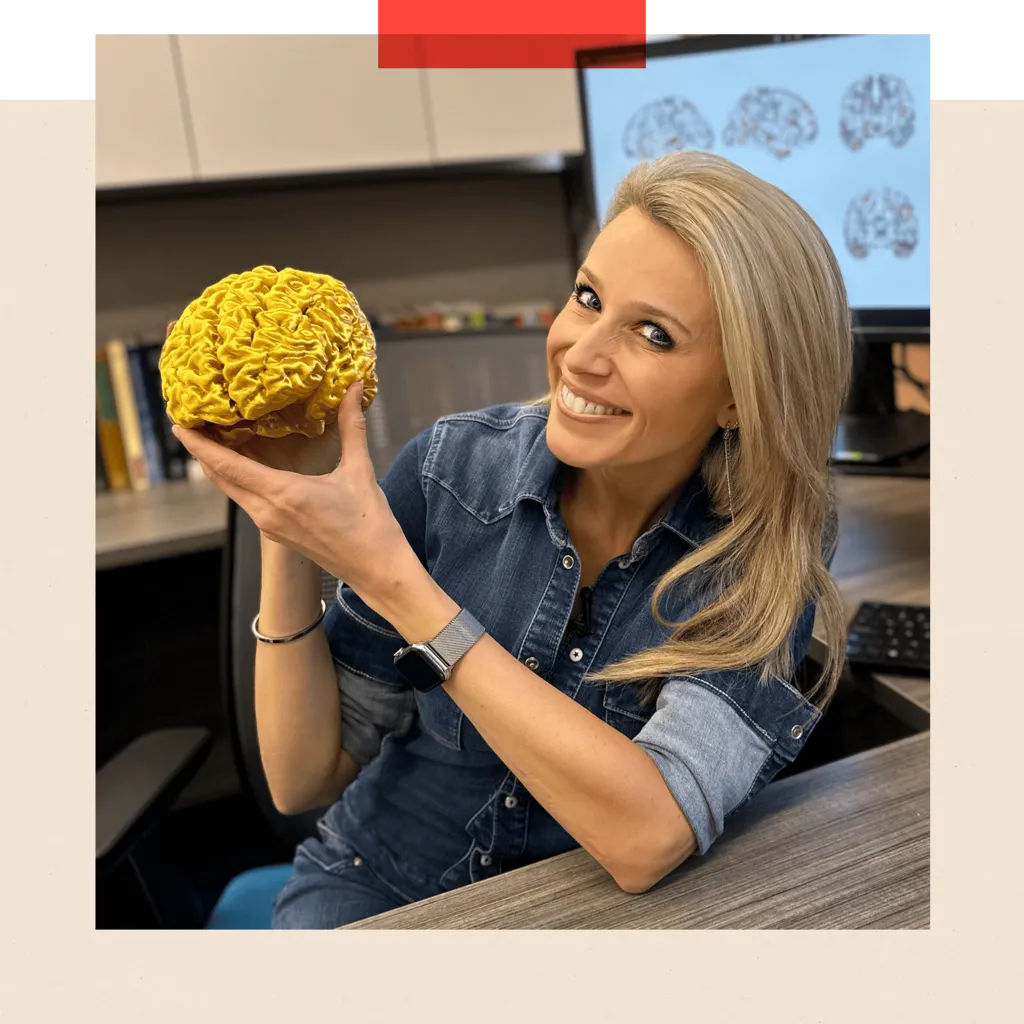
Why Early Detection Could Change Brain Health
Healthcare is increasingly moving towards a model that emphasises prediction, prevention and personalised treatment.
Instead of waiting for someone to develop obvious symptoms, doctors may eventually be able to identify individuals whose biological markers suggest that their brains are ageing unusually quickly.
This could make it possible to monitor changes over time and determine whether lifestyle changes or treatments are having an effect.
The technology could therefore serve another purpose beyond diagnosis: measuring whether an intervention is actually working.
However, it is important not to confuse promising research with proven medical treatment. The ability to estimate brain age does not currently mean scientists can simply reset someone’s biological age or prevent dementia.
Loma Linda Offers a Different Lesson About Healthy Ageing
While technology is providing new tools for understanding the brain, researchers continue to emphasise something much less futuristic: lifestyle.
Loma Linda, California, has attracted decades of research because members of its Seventh-day Adventist community tend to live longer than average.
The community’s lifestyle commonly includes a predominantly vegetarian or vegan diet, avoiding alcohol and caffeine, regular physical activity and a strong emphasis on taking care of the body.
According to Dr Gary Fraser of Loma Linda University, members of the community can experience several additional years of healthy life not simply additional years of survival.
That distinction matters.
Living longer is not necessarily the same as remaining independent, mentally alert and physically healthy for longer.
Social Connection May Be Part of the Brain-Health Equation
Nutrition and physical activity are often discussed when people talk about healthy ageing, but social interaction may be just as important.
Residents of Loma Linda’s community participate in lectures, exercise sessions, musical activities and regular conversations.
For older adults especially, maintaining meaningful social connections can help protect against the effects associated with isolation and loneliness.
The idea is straightforward: the brain remains active when people communicate, learn, solve problems, participate in communities and maintain relationships.
One resident interviewed in the source described socialisation as an important part of keeping the brains active. Science has also long recognised the importance of social interaction and the potential harms associated with loneliness.
Sleep Could Be One of the Most Important Brain-Health Habits
Technology may be advancing rapidly, but one of the strongest messages from neuroscience remains remarkably simple: get enough sleep.
Matthew Walker, professor of neuroscience and psychology at the University of California, Berkeley, describes sleep as one of the most important daily processes for maintaining brain and body health.
During sleep, the brain’s waste-clearance processes become particularly active. Research discussed by Walker links this system with the removal of proteins including beta-amyloid and tau, which are associated with Alzheimer’s disease.
Sleep patterns may also provide useful information about long-term brain health.
Importantly, changes in sleep do not necessarily begin when people reach old age. They can emerge much earlier, potentially making sleep monitoring an interesting area for midlife prevention research.
Could Brain Monitoring Help Prevent Dementia?
Dementia remains one of the major challenges associated with population ageing.
As people live longer, age-related neurological diseases become increasingly important. Researchers are therefore exploring whether dementia could be delayed by identifying risk factors and biological changes earlier.
Irimia suggests that one long-term objective is to push dementia-related decline further into old age, potentially beyond the point at which it significantly affects a person’s expected lifespan.
But that remains a research goal rather than an established medical reality.
Scientists Are Even Studying Animals for Clues
Some researchers are looking beyond humans for clues about how the brain might repair itself.
Fauna Bio, a biotechnology company, is studying ground squirrels during hibernation. During this state, the animals experience dramatic reductions in body temperature and metabolism while apparently retaining the ability to rebuild certain neural connections.
Researchers hope that understanding these biological mechanisms could eventually contribute to new approaches to human neurological treatment.
It is an ambitious idea, but it demonstrates how broad the search for solutions to ageing has become.
Scientists are not looking at only one pathway. They are studying sleep, lifestyle, brain imaging, artificial intelligence, mental health, genetics and even unusual biological processes in animals.
Depression May Also Be Linked to Brain Ageing
Mental health is another important part of the picture.
Researchers at Stanford University have been investigating methods of using MRI scans to identify patterns associated with certain forms of depression.
The potential benefit is twofold: better understanding of the biological mechanisms involved in depression and a possible way to measure whether treatment is producing changes in the brain.
This could eventually contribute to more personalised approaches to mental healthcare, although the technology remains an area of ongoing research.
The Rise of the ‘Biological Age’ Industry
The interest in reversing or slowing ageing is no longer limited to universities and research laboratories.
Technology companies and entrepreneurs are increasingly investing in biological-age testing, longevity programmes and personalised health monitoring.
One of the more prominent examples is technology entrepreneur Bryan Johnson, who has invested heavily in an aggressive programme involving dietary restrictions, exercise, supplements and other interventions in an attempt to reduce his biological age.
Such approaches have generated significant public interest, but they also highlight an important distinction between scientific investigation and proven longevity medicine.
Not every treatment marketed as an anti-ageing intervention has been demonstrated to extend human healthspan.
The Future May Combine Technology With Simple Habits
Perhaps the most important message emerging from this research is that the future of brain health may not be about choosing between technology and lifestyle.
It could involve both.
AI and advanced MRI technology may help scientists identify subtle changes in the brain. Sleep tracking could reveal potentially important changes in behaviour. Biomarkers may help researchers monitor disease risk.
But these technologies do not eliminate the importance of everyday habits.
A healthy diet, regular physical activity, adequate sleep, mental stimulation, meaningful relationships and overall wellbeing remain central themes in research into healthy ageing.
Can We Really Change How Our Brains Age?
The evidence presented by researchers offers an exciting possibility but not a guarantee.
Scientists are becoming increasingly capable of measuring how brains change over time and identifying patterns that may distinguish healthy ageing from disease-related decline.
AI could make it easier to detect subtle changes. Better brain imaging could provide more detailed information. Sleep monitoring and other digital health technologies could produce continuous data rather than occasional snapshots.
But measuring brain ageing is not the same as reversing it.
There is still much to learn about which changes are causes of brain ageing, which are consequences, and which interventions can genuinely alter the trajectory.
For now, the most reliable message remains relatively simple: looking after your brain throughout life matters.
The emerging technology may eventually make that effort more personalised and measurable, but scientists are still working to determine exactly how much control humans can have over the ageing process.
Can We Change How Our Brains Age? What Scientists Are Discovering
Scientists are using AI, MRI scans, sleep research and lifestyle studies to understand brain ageing and explore whether dementia and cognitive decline could be delayed.
Source: BBC
Also Read: Getting Hands Dirty Could Boost Your Health, Scientists Say
Continue Reading

Getting Hands Dirty Could Boost Your Health, Scientists Say
Getting Hands Dirty: Touching soil, grass, trees and other natural materials may do more than connect us with the outdoors. Emerging research suggests that regular contact with nature can increase the diversity of microbes living on our skin and may influence how the immune system functions. For many people, getting dirty is something to avoid. […]
Frank Ocansey

How to Get Rid of Brain Fog: 9 Simple Ways to Improve Focus and Mental Clarity
Brain fog can make it difficult to concentrate, remember simple things or think clearly. While it is not a medical condition on its own, it can leave you feeling mentally slow and overwhelmed. The good news is that small changes to your daily routine may help improve focus, reduce mental overload and support better brain […]
Frank Ocansey

What Screen Time Really Does to Children’s Brains: What the Science Says
Screen Time: Parents are repeatedly warned that smartphones, tablets, gaming and social media could damage children’s brains. But despite growing concern about screen use, researchers remain divided over how harmful it really is — and whether the amount of screen time matters as much as what children are actually doing online. Screen time has become […]
Frank Ocansey