
AI-Generated Hit Banned from Sweden’s Music Charts Despite Millions of Streams

Frank Ocansey
Editor, PulseView

AI-Generated Hit Banned: A song streamed millions of times in Sweden has been banned from the country’s official music charts after it was revealed to be created using artificial intelligence (AI).
The track, titled “I Know, You’re Not Mine” (Jag vet, du är inte min), has dominated Spotify’s Swedish playlists but has now become the centre of a growing debate over AI-generated music and artistic authenticity.
The folk-pop ballad, credited to an artist named Jacub, tells a melancholic story of lost love. Backed by a finger-picked acoustic guitar, the song paints vivid scenes of heartbreak, broken promises, and emotional distance. Its haunting lyrics and understated production struck a chord with listeners, quickly propelling it to the top of Spotify’s Sweden Top 50, where it amassed more than five million streams in just weeks.
AI-Generated Hit Banned: A Chart-Topper With No Artist
Despite its popularity, questions soon emerged about Jacub’s identity. Journalists investigating the artist found no meaningful social media presence, interviews, live performances, or tour history—highly unusual for Sweden’s biggest song of the year so far.
Investigative journalist Emanuel Karlsten traced the song’s registration to a group of executives linked to Stellar Music, a Denmark-based music publishing and marketing firm. Notably, two individuals involved reportedly work in the company’s AI department, raising further questions about the role of artificial intelligence in the song’s creation.
“Team Jacub” Defends the Creative Process
In response, the producers behind the project—calling themselves Team Jacub—sent a detailed statement defending their work. They rejected claims that the song was the result of a simple automated process.
“We are not an anonymous tech company that just ‘pressed a button,’” they wrote.
“The team behind Jacub consists of experienced music creators, songwriters, and producers who have invested a lot of time, care, emotions, and financial resources.”
According to Team Jacub, AI was used as a tool within a human-controlled creative process, similar to an instrument or production technique. They argued that the song’s success demonstrates its artistic merit.
“The five million Spotify streams prove the song’s long-term artistic value,” they said.
When asked whether Jacub is a real person, the group offered a philosophical answer.
“Jacub is an artistic project developed and carried by a team of human songwriters, producers, and creators. The feelings, stories, and experiences in the music are real, because they come from real people.”
Why Sweden’s Music Charts Banned the Song
That explanation did not satisfy IFPI Sweden, the organisation responsible for the country’s official music charts. The industry body ruled that the song does not qualify for chart inclusion because it is primarily AI-generated.
“Our rule is that if a song is mainly AI-generated, it does not have the right to be on the top list,” said Ludvig Werner, head of IFPI Sweden.
The decision reflects Sweden’s cautious stance as it balances technological innovation with protecting its music creators. Industry experts warn that AI could reduce revenues for Swedish musicians by up to 25% within two years if left unregulated.
A Global Debate Over AI Music
Sweden’s approach contrasts with international chart organisations like Billboard, which allows AI-generated tracks on some charts as long as they meet requirements for sales, streams, and airplay. Billboard argues its rankings are designed to reflect listener behaviour, regardless of how music is created.
Meanwhile, Bandcamp has taken a stricter position, banning music that is “generated wholly or in substantial part by AI,” including tracks using AI composition tools or voice cloning.
Sweden’s Push for Regulation, Not Rejection
Rather than rejecting AI outright, Sweden has also pioneered regulatory solutions. In September, the music rights organisation STIM launched a licensing framework allowing tech companies to legally train AI models on copyrighted music in exchange for royalties.
STIM representative Lina Heyman described it as “the world’s first collective AI licence,” aimed at embracing innovation while safeguarding human creativity.
A Turning Point for the Music Industry
As AI-generated music rapidly expands into a multi-billion-pound industry, the controversy surrounding Jag vet, du är inte min highlights the tension between technology and tradition. While listeners embraced the song, Sweden’s chart ban sends a clear message: human creativity still matters in defining musical achievement.
For now, the debate continues—but Sweden’s decision suggests that, at least on its official charts, machines may help make the music, but humans still call the tune.
Source: BBC.com
Also read: Ofcom probes Elon Musk’s X over alleged misuse of AI tool Grok to create sexualised images
Continue Reading

8 of the world’s best beach escapes, chosen by tourists
Best beach escapes: From secluded inlets on Italy’s volcanic coastlines to remote white-sand stretches in Tasmania, BBC journalists have shared the beach escapes that left a lasting impression on them. The word “beach” often brings to mind sun-drenched sands and calm waters. But across the world, the definition stretches far beyond that – to include […]
Frank Ocansey
12 Best TV Shows to Watch in April 2026: From Euphoria to Half Man
Best TV Shows: From the return of Zendaya and Sydney Sweeney in Euphoria to the highly anticipated new drama Half Man, April’s TV lineup is packed with bold storytelling, star-studded casts and inventive ideas. Streaming platforms including Netflix, Apple TV+ and HBO are rolling out a mix of returning favourites, reboots and brand-new series that […]
Frank Ocansey
AI Videos: TikTok Removes Exploiting Black Women After BBC Investigation
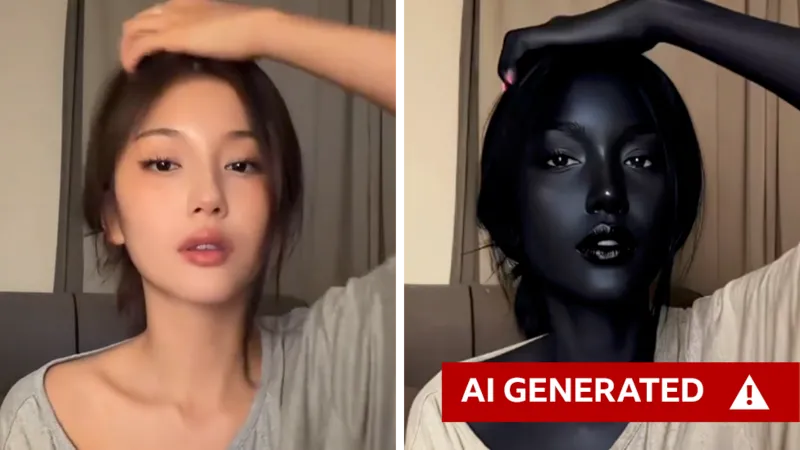
AI Videos: TikTok has banned 20 accounts following a BBC investigation that exposed the use of AI-generated avatars of Black women to drive traffic to sexually explicit websites. The investigation revealed a troubling trend on both TikTok and Instagram, where artificially created digital characters are being used in ways that experts say are racist, exploitative, […]
Frank Ocansey