
UN Chief Warns US Power Is Undermining International Law and Multilateralism

Frank Ocansey
Editor, PulseView
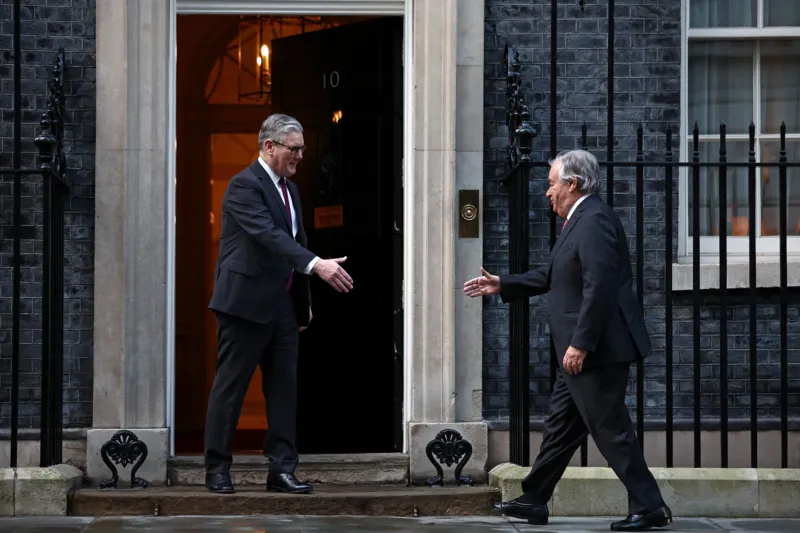
UN Chief Warns US Power: The United States is increasingly acting outside the boundaries of international law, relying on raw power rather than multilateral cooperation, according to United Nations Secretary-General António Guterres.
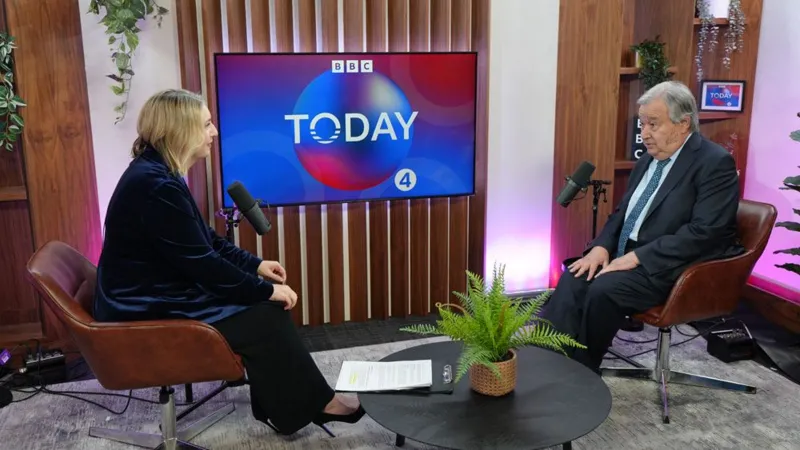
In a candid interview with the BBC, Guterres warned that this approach threatens the very foundations of the global system established after World War II.
His remarks come amid growing international concern over recent US actions, including military intervention in Venezuela, the seizure of its president, and repeated threats by President Donald Trump to annex Greenland. Together, these developments have intensified debates about the future of multilateralism, the authority of the United Nations, and the rule of international law.
“The Law of Power” Versus the “Power of Law”
Speaking on BBC Radio 4’s Today programme, Guterres argued that Washington appears to hold a “clear conviction” that multilateral solutions are no longer relevant. Instead, he said, the United States increasingly believes that what truly matters is the exercise of its power and influence—even when that means acting outside established international legal norms.
According to the UN chief, this shift reflects a broader and dangerous trend: the replacement of the “power of law” with the “law of power.” In such a world, rules apply selectively, and smaller or weaker states are left exposed to the decisions of global superpowers.
Guterres warned that this mindset directly undermines the founding principles of the United Nations, particularly the idea that all member states—large and small—are legally equal under international law.
Rising Tensions Between the US and the United Nations
Relations between the Trump administration and the UN have long been strained. President Trump has repeatedly criticised the organisation, questioning its relevance and effectiveness. In a speech to the UN General Assembly last September, he openly mocked the institution, claiming he had resolved several long-running conflicts without its help.
According to Trump, the UN “did not even try” to assist in ending wars he described as “unendable,” adding that he eventually concluded the organisation was “not there for us.”
Presented with these criticisms, Guterres acknowledged that the UN faces serious limitations. While the organisation works actively to resolve conflicts across the globe, he admitted it lacks the leverage wielded by major powers such as the United States, China, and Russia.
“The big powers have stronger leverage,” he said, raising the critical question of whether that leverage is being used to create lasting peace—or merely short-term political fixes.
Is the UN Security Council No Longer Fit for Purpose?
One of Guterres’s strongest criticisms was directed at the UN Security Council, the body responsible for maintaining international peace and security. He argued that the council no longer reflects the realities of the modern world and has become increasingly ineffective.
At the heart of the problem is the veto power held by the council’s five permanent members: the United States, the United Kingdom, France, China, and Russia. Any one of these countries can block resolutions, even when the majority of the international community supports action.
In recent years, vetoes by the US and Russia have stalled efforts to address major conflicts, including the wars in Ukraine and Gaza. Guterres said this power is often used to protect national interests rather than global stability.
He also criticised the council’s composition, noting that three permanent members come from Europe, while large regions of the world—particularly Africa, Latin America, and parts of Asia—lack permanent representation.
To restore legitimacy and effectiveness, Guterres called for reforms that would expand the council’s membership and limit the use of vetoes to prevent what he described as unacceptable “blockages.”
Gaza: A Case Study in UN Limitations
The war in Gaza has become a stark example of the UN’s constrained role in modern conflicts. Guterres identified Gaza as one of the most pressing crises facing the organisation, acknowledging that the UN was often unable to deliver humanitarian aid due to restrictions imposed by Israel.
For extended periods, international aid agencies—including the UN—were blocked from operating in the territory. At one point, Israel supported an alternative aid mechanism run by a private contractor, sidelining the UN’s long-standing humanitarian role. Hundreds of Palestinians were reportedly killed while trying to access food at aid distribution sites.
When asked whether the UN had been powerless in Gaza, Guterres responded bluntly: yes—but with important context. He explained that the organisation cannot operate where access is denied.
“Whenever we were not allowed to move into Gaza, we couldn’t move,” he said, adding that once a ceasefire was in place and access was granted, the UN was prepared to deliver large-scale humanitarian assistance.
A World “Brimming With Chaos”
As his term as secretary-general approaches its end later this year, Guterres has repeatedly warned that the world is entering a period of profound instability. In his most recent address to the General Assembly, he described a global environment “brimming with conflict, impunity, inequality and unpredictability.”
He identified “brazen violations of international law” as one of the greatest threats to global order. From forced political change in Venezuela to violent crackdowns in Iran and renewed territorial ambitions in Europe’s Arctic region, the challenges facing the UN continue to multiply.
Guterres has also argued that the UN’s structure—designed in 1945—may no longer be capable of solving 21st-century problems. “1945 problem-solving,” he warned, “will not solve 2026 problems.”
Is Multilateralism Dying?
The secretary-general’s comments have reignited debate about whether multilateralism is in decline. As powerful nations increasingly act unilaterally, smaller states and international institutions struggle to enforce rules meant to apply equally to all.
There is also growing concern that many world leaders are reluctant to publicly challenge powerful countries, even when international law is clearly at stake.
Despite these challenges, Guterres remains cautiously optimistic. He believes that speaking truth to power is essential, even when it is uncomfortable.
“People are sometimes reluctant to confront the powerful,” he said. “But if we don’t confront the powerful, we will never be able to build a better world.”
The Future of Global Governance
As António Guterres prepares to step down after nearly a decade leading the United Nations, his warnings leave behind an urgent question: can the international system adapt quickly enough to restrain power, protect sovereignty, and uphold the rule of law?
With geopolitical tensions rising and trust in global institutions eroding, the choices made by the world’s most powerful nations—especially the United States—will shape whether international law remains a meaningful force or fades into irrelevance.
For now, the UN chief’s message is clear: a world governed by power alone is neither stable nor just—and without reform and renewed commitment to multilateralism, the consequences may be felt by all.
UN Chief Warns US Power Is Undermining International Law and Multilateralism
Source: BBC
Also read: Trump Announces 10% Tariffs on European Allies Over Greenland Pressure Campaign
Continue Reading
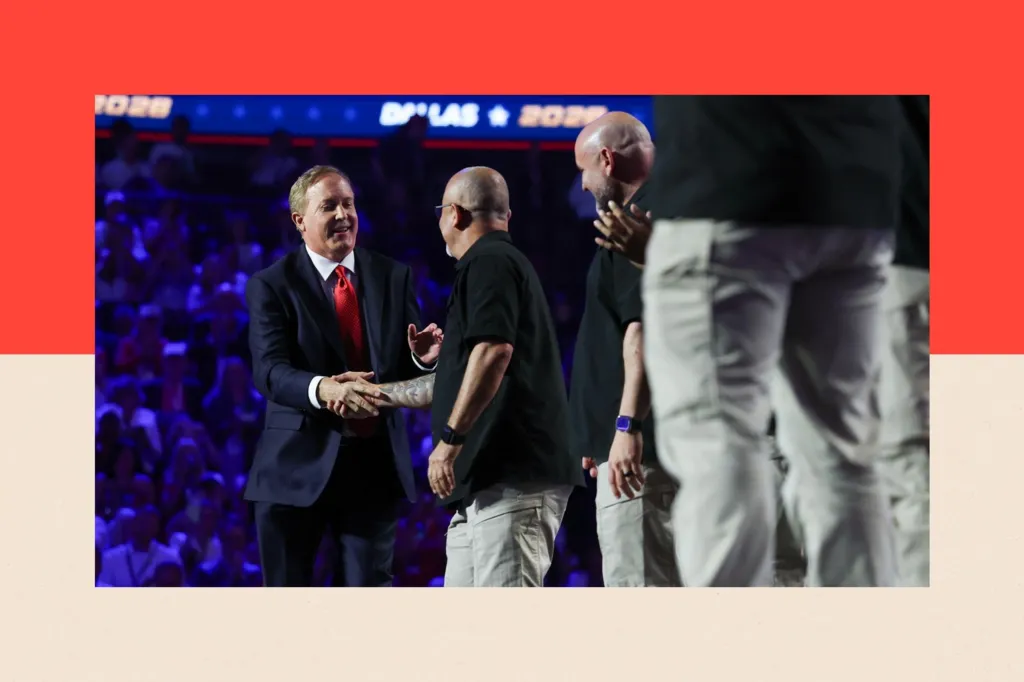
Data Centre Backlash: Why AI’s Rapid Expansion Is Facing Local Opposition
Artificial intelligence is developing at extraordinary speed, but the infrastructure powering that revolution is creating a problem that is much more local and increasingly political. Behind every artificial intelligence-generated image, video or answer are enormous data centres filled with powerful computer chips. These facilities require vast amounts of electricity, generate substantial heat and, depending on […]
Frank Ocansey
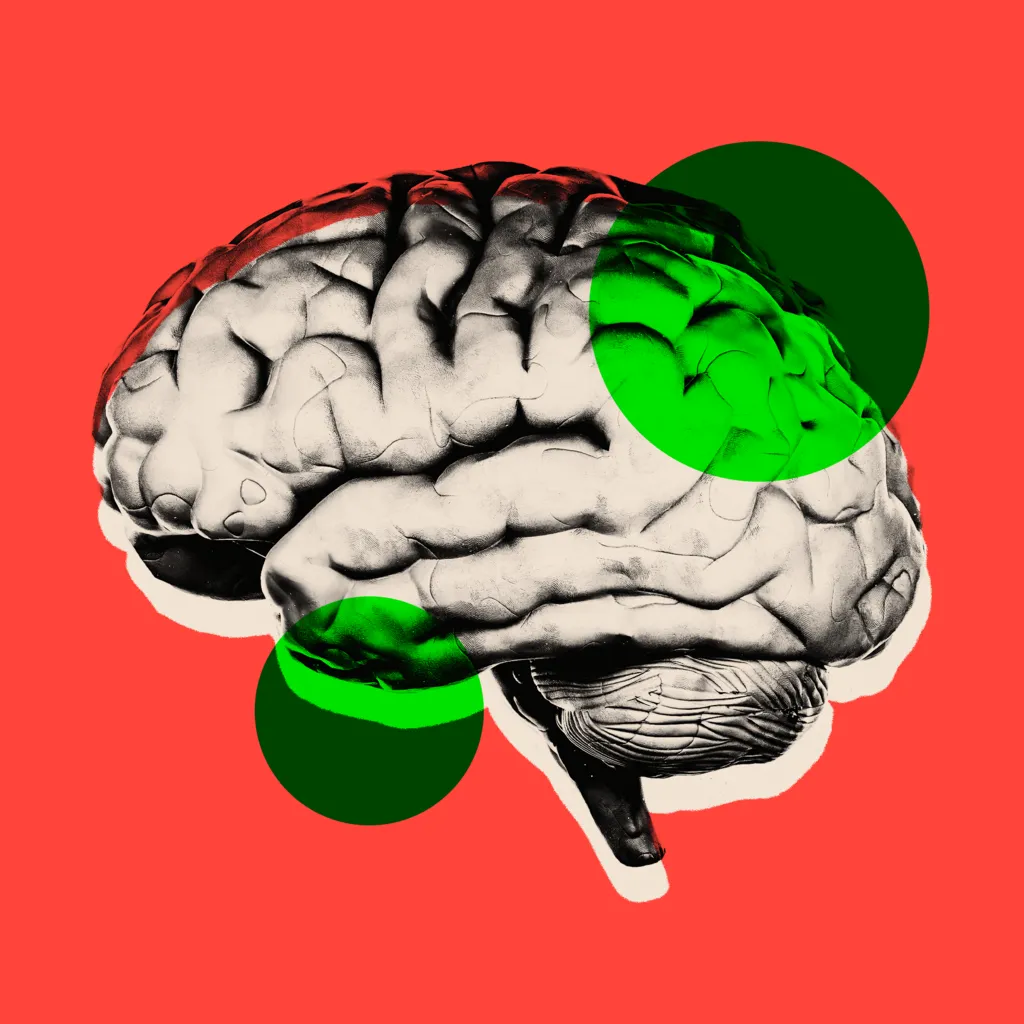
Can We Change How Our Brains Age? What Scientists Are Discovering
Brains Age: For decades, scientists have known that the way we live can influence how well our bodies age. But a more intriguing question is now gaining attention: could technology help us understand and potentially slow the ageing of the human brain? Researchers are increasingly combining artificial intelligence, brain imaging, sleep tracking, genetics and large […]
Frank Ocansey
Getting Hands Dirty Could Boost Your Health, Scientists Say
Getting Hands Dirty: Touching soil, grass, trees and other natural materials may do more than connect us with the outdoors. Emerging research suggests that regular contact with nature can increase the diversity of microbes living on our skin and may influence how the immune system functions. For many people, getting dirty is something to avoid. […]
Frank Ocansey