
How menstrual blood is helping scientists better understand women’s health

Frank Ocansey
Editor, PulseView
For generations, menstrual blood has been treated as something to ignore or hide. But scientists are now discovering that it could be one of the most valuable yet overlooked sources of medical information about women’s health.
Researchers say period blood contains a complex mix of biological material that may help doctors detect diseases earlier, monitor hormone levels and even identify environmental toxins in the body.
For women like Emma Backlund, this research represents hope for a future where painful conditions are diagnosed faster and treated sooner.
Years of unexplained pain
Backlund, a 27-year-old graduate student from Minnesota in the United States, began experiencing severe pain when she had her first period at age 11.
“I thought I was dying,” she recalled. Each month brought intense symptoms — vomiting, severe cramps and stabbing pelvic pain that forced her to miss school and social activities.
It took 13 years before doctors finally diagnosed her with Endometriosis, a condition in which tissue similar to the lining of the uterus grows outside the womb.
The disease affects an estimated 190 million people worldwide and can cause heavy periods, chronic pelvic pain, bladder and bowel problems, and infertility. Yet diagnosis often takes between five and 12 years because confirmation typically requires a surgical procedure called laparoscopy.
Backlund later volunteered to contribute to research by sending samples of her menstrual blood to a California-based biotechnology startup.
A natural monthly biopsy
Scientists say menstrual blood is unique because it contains far more than ordinary blood.
About half of it consists of regular blood, while the rest includes hormones, proteins, bacteria and cells shed from the uterus, cervix, fallopian tubes and vagina. These components offer direct biological clues about the reproductive system.
Researchers at the startup NextGen Jane have been studying menstrual samples since 2014. Volunteers collect samples using specially designed tampons, which are mailed to laboratories for analysis.
According to company co-founder Ridhi Tariyal, menstrual blood functions like a “natural biopsy” that can reveal important information about reproductive organs without surgery.
Because it is produced every month, it also allows doctors to monitor changes in the body over time.
Detecting diseases earlier
Scientists are particularly interested in identifying biomarkers — measurable biological signals — that could help diagnose diseases.
Reproductive biologist Christine Metz of the Feinstein Institutes for Medical Research has spent more than a decade studying menstrual blood to identify markers linked to Endometriosis.
Her research suggests women with the condition often have fewer “natural killer cells,” a type of immune cell that plays an important role in fertility and early pregnancy.
Other studies have identified changes in stromal fibroblast cells that help repair the uterine lining after menstruation. These cells appear more inflammatory in patients with endometriosis and may also be linked to other reproductive conditions such as Polycystic Ovary Syndrome.
Scientists have also identified hundreds of proteins unique to menstrual blood, further highlighting its diagnostic potential.
Researchers hope these discoveries will eventually lead to simple at-home tests capable of diagnosing endometriosis without surgery. Some scientists aim to apply for regulatory approval for such tests within the next few years.
Health clues beyond reproduction
The potential benefits of menstrual blood analysis extend beyond reproductive health.
Studies suggest menstrual blood could help detect:
- Diabetes, through blood sugar measurements
- Cervical Cancer, through detection of high-risk Human Papillomavirus strains
- Sexually transmitted infections such as Chlamydia and Gonorrhoea
- Hormone levels linked to thyroid disease
- Nutritional deficiencies such as low vitamin levels
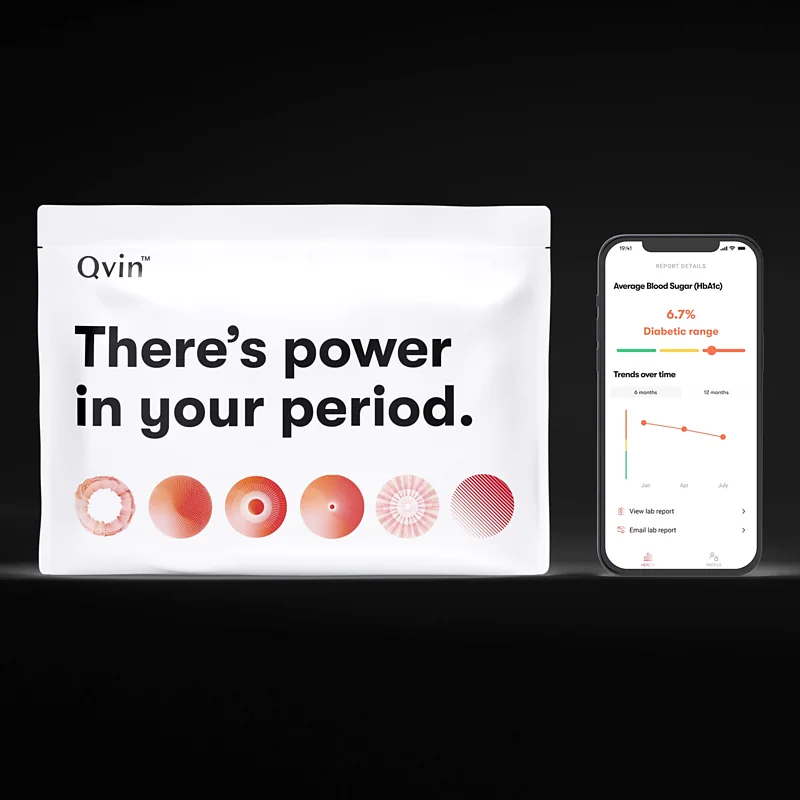
California-based health company Qvin has even developed a sanitary pad called Q-Pad that collects menstrual blood samples for laboratory analysis. In 2024, the product became the first US regulatory-approved test to measure blood sugar levels using menstrual blood.
Early studies have also detected environmental chemicals — including phenols and phthalates — in menstrual samples, suggesting the fluid may reveal information about pollution exposure.
Overcoming stigma in research
Despite its promise, menstrual blood has received little scientific attention historically.
Cultural stigma around menstruation has discouraged research, while medical studies have often focused primarily on male participants. Globally, women’s health accounts for only a small fraction of research funding.
This lack of data means scientists are still learning basic information about menstrual blood — including its full biological composition and how it changes during the menstrual cycle.
Researchers are now working to standardise methods for collecting and analysing samples. Some organisations are even creating menstrual blood biobanks to supply samples for scientific studies.

A new frontier in women’s health
Interest in menstrual research is growing rapidly. Universities and research institutions are investing millions of dollars to better understand how menstrual cycles affect immunity, hormones and disease.
Scientists believe this “menstrual revolution” could transform how women’s health conditions are diagnosed and treated.
For Backlund and millions of others living with painful reproductive disorders, the research offers hope that future generations will not have to wait years for answers.
If menstrual blood testing becomes widely available, doctors may one day diagnose serious conditions quickly, safely and non-invasively — using a biological sample women already produce every month.
Source: BBC.com
Also read: Daily Collagen Supplements May Boost Skin Health — But They Won’t Erase Wrinkles
Continue Reading

How to Get Rid of Brain Fog: 9 Simple Ways to Improve Focus and Mental Clarity
Brain fog can make it difficult to concentrate, remember simple things or think clearly. While it is not a medical condition on its own, it can leave you feeling mentally slow and overwhelmed. The good news is that small changes to your daily routine may help improve focus, reduce mental overload and support better brain […]
Frank Ocansey

What Screen Time Really Does to Children’s Brains: What the Science Says
Screen Time: Parents are repeatedly warned that smartphones, tablets, gaming and social media could damage children’s brains. But despite growing concern about screen use, researchers remain divided over how harmful it really is — and whether the amount of screen time matters as much as what children are actually doing online. Screen time has become […]
Frank Ocansey

Box Breathing for Stress: How the 4-4-4-4 Technique Helps Calm Your Nervous System
Box breathing has become one of the most popular breathing techniques for managing stress, anxiety and moments of intense pressure. Used by athletes, military personnel and people struggling with sleeplessness, the method is remarkably simple: breathe in, hold, breathe out and hold again for equal amounts of time. But what actually happens inside the body […]
Frank Ocansey