
Neurological Disease Treatment: How Artificial Intelligence Could Revolutionise Treatment.

Frank Ocansey
Editor, PulseView
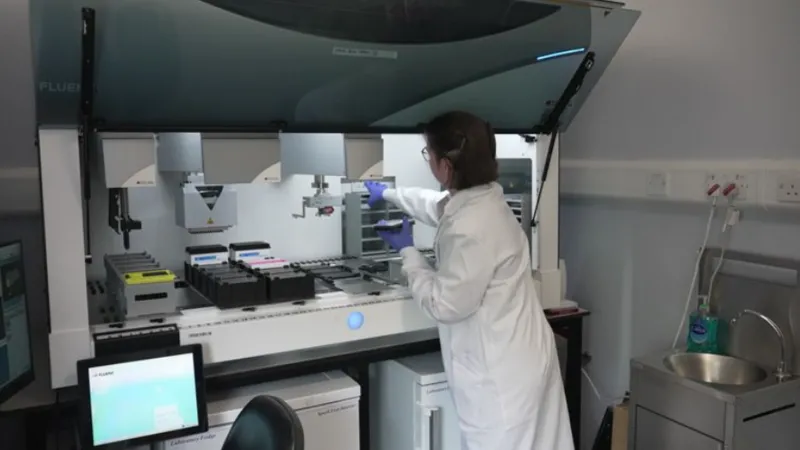
Neurological Disease: Scientists are increasingly turning to artificial intelligence (AI) to speed up the search for treatments for devastating neurological conditions such as dementia, Parkinson’s disease, and motor neurone disease (MND), raising hopes that effective therapies could be discovered far sooner than previously imagined.
Researchers at the UK Dementia Research Institute are using advanced AI systems to analyse enormous amounts of patient data and laboratory-generated brain cells in an effort to identify existing drugs that may already hold the key to treating some of the world’s most difficult brain disorders.
The groundbreaking approach could dramatically shorten the traditionally long and expensive process of drug discovery by repurposing medicines that have already been developed and approved for other illnesses.
Scientists involved in the research believe AI may help uncover hidden treatment possibilities in “years rather than decades.”

A New Hope for Patients Living with MND
Among those participating in the research is Steven Barrett, who was diagnosed with motor neurone disease ten years ago.
MND is a progressive neurological disorder that attacks the nerves controlling movement, gradually affecting a person’s ability to walk, speak, swallow, and breathe. There is currently no known cure.
Before his diagnosis, Barrett had been preparing for an active retirement after a successful career in the civil service. However, what initially appeared to be minor numbness in his leg eventually developed into something far more serious.
“MND is a horrible disease, it strips you of who you are,” Barrett explained. “It rips any sense of future that you may feel that you had planned for yourself.”
Despite the challenges, he describes participating in medical research as a source of hope — not only for himself but for future patients.
“For me the research is much more than taking a tablet,” he said. “It’s taking a tablet with the intention of delivering outcomes that may or may not help me but help others.”
How AI Is Being Used to Search for Treatments
The research process combines several advanced technologies.
Scientists gather detailed patient information including:
- Voice recordings
- Eye and iris scans
- Blood samples
- Clinical histories
- Neurological assessments
Artificial intelligence systems then analyse this massive volume of data to identify subtle patterns linked to disease progression and potential treatment responses.
Researchers are particularly interested in detecting early warning signs of neurological decline that may otherwise go unnoticed by conventional methods.
The institute is also building a large database of volunteers living with conditions such as:
- Dementia
- Parkinson’s disease
- Motor neurone disease
The goal is to train machine learning systems to better understand how these illnesses develop over time.
Growing Human Brain Cells in the Laboratory
One of the most remarkable aspects of the project involves the use of stem cell technology.
Scientists take blood samples from volunteer patients and convert them into stem cells — special cells capable of developing into many different types of tissue.
These stem cells are then cultivated into brain cells known as neurones in laboratory conditions.
Researchers can therefore create living models of diseased brain tissue that closely resemble what is happening inside patients’ brains.
Existing medications are then tested on these lab-grown neurones using robotic systems, laboratory equipment, and AI-powered analysis tools.
AI Searching for Hidden Treatments
The machine learning algorithms are trained to recognise the “signature” of neurological diseases within brain cells.
The AI then searches for drugs capable of changing diseased cells so they behave more like healthy brain tissue.
In simple terms, the system tries to identify medicines that could potentially reverse or slow harmful neurological changes.
Because these medicines already exist and are approved for other conditions, scientists can potentially move them into clinical trials much faster than creating entirely new drugs from scratch.
This approach is known as drug repurposing.
Why Drug Discovery Normally Takes So Long
Developing a brand-new medicine is one of the most difficult and expensive processes in healthcare.
Traditional drug development can take:
- More than 10 years
- Billions of dollars in research funding
- Multiple phases of clinical testing
Many experimental drugs also fail before reaching patients.
Professor Siddarthan Chandran says AI could dramatically accelerate the process.
“The brain is the most complicated organ in the body,” he explained, noting that older research methods were far more limited.
“A combination of AI and new technologies mean we can now do things which would have been unbelievable when I was at medical school.”
The Growing Role of AI in Medical Research
The UK Dementia Research Institute is not alone in using AI to search for treatments hidden within large medical datasets.
Researchers worldwide are increasingly using artificial intelligence in healthcare innovation.
Scientists at Massachusetts Institute of Technology have used generative AI to identify new antibiotic compounds that may help fight dangerous superbugs and neurological conditions.
Meanwhile, researchers at Harvard University developed an AI model called TxGNN designed to identify existing medicines that may work against rare diseases.
The rapid expansion of AI in medicine is creating optimism that some diseases previously considered untreatable may eventually become manageable.
Challenges and Setbacks Remain
Despite growing excitement, neurological research remains extremely difficult.
Some highly anticipated Alzheimer’s drugs, including Lecanemab and Donanemab, have recently faced criticism after studies suggested they only slowed disease progression modestly.
A review involving more than 20,000 volunteers concluded that while the drugs reduced harmful amyloid protein buildup in the brain, the improvement for patients was not significant enough to produce major everyday benefits.
The findings triggered debate within the scientific community about how progress in neurological treatment should be measured.
Nevertheless, Professor Chandran remains optimistic.
He believes neurological science is approaching a major turning point.
“We’re at the tipping point of change,” he said.

Why This Research Matters
Neurological diseases are among the fastest-growing health challenges globally.
Millions of people worldwide currently live with:
- Dementia
- Parkinson’s disease
- Alzheimer’s disease
- Motor neurone disease
Many of these conditions place enormous emotional and financial strain on families and healthcare systems.
The ability to discover effective treatments faster could:
- Improve patient survival
- Slow disease progression
- Enhance quality of life
- Reduce healthcare costs
- Offer hope to millions of families
Researchers believe AI may become one of the most important tools in the future of brain disease research.
Source: BBC
Continue Reading

UN Warns of Powerful El Niño That Could Trigger Extreme Weather, Food Crises and Record Global Temperatures
The United Nations has issued a stark warning that a new El Niño weather phenomenon could begin within weeks and potentially develop into one of the strongest events recorded in modern history. Scientists fear the combination of a powerful El Niño and ongoing human-induced climate change could reshape weather patterns across the globe, bringing devastating […]
Frank Ocansey

Bowel Cancer: Warning Signs, Causes, Prevention and Why Early Detection Could Save Life
Bowel cancer is one of the most common cancers worldwide, and health experts are increasingly concerned about a rise in cases among younger adults. While the disease has traditionally been associated with older people, recent research shows that diagnoses are increasing among individuals in their 20s, 30s, and 40s, prompting scientists to investigate the possible […]
Frank Ocansey

Prostate Cancer Screening Restricted to High-Risk Men as Experts Warn of Potential Harm from Widespread Testing
Prostate Cancer: Health authorities have recommended that routine prostate cancer screening should only be offered to a small group of men at very high genetic risk, arguing that the potential harms of widespread testing currently outweigh the benefits. The recommendation, issued by the United Kingdom’s National Screening Committee (NSC), marks the culmination of an extensive […]
Frank Ocansey