
AI Clones Are Here: How Digital Doubles Could Change Work, Business and Identity

Frank Ocansey
Editor, PulseView

AI clones are moving from science fiction into everyday business, with CEOs, influencers and ordinary employees creating digital versions of themselves. But as the technology becomes more realistic, concerns about privacy, fraud, jobs and control are growing.
Imagine walking into a room and seeing two versions of the same person standing in front of you. One is human. The other is an AI-powered digital replica that looks, sounds and behaves remarkably like them.
That future is already becoming a reality.
Tech companies are developing increasingly sophisticated AI clones, digital twins and virtual avatars that can represent people online, answer questions, communicate with customers and even perform certain tasks without the physical presence of their human counterparts.
For busy executives, influencers and businesses, the attraction is obvious: an AI clone can potentially be in several places at once, communicate with thousands of people and operate around the clock.
But there is another side to the technology. What happens when an AI clone makes a mistake? Who is responsible when it says something its creator never intended? And what happens when someone creates a digital copy of you without your permission?
What Exactly Is an AI Clone?
An AI clone is a digital representation of a real person created using technologies such as generative AI, voice cloning, computer-generated imagery and conversational AI.
Depending on how advanced the system is, an AI clone can reproduce someone’s appearance, voice, speech patterns, personality traits and professional knowledge.
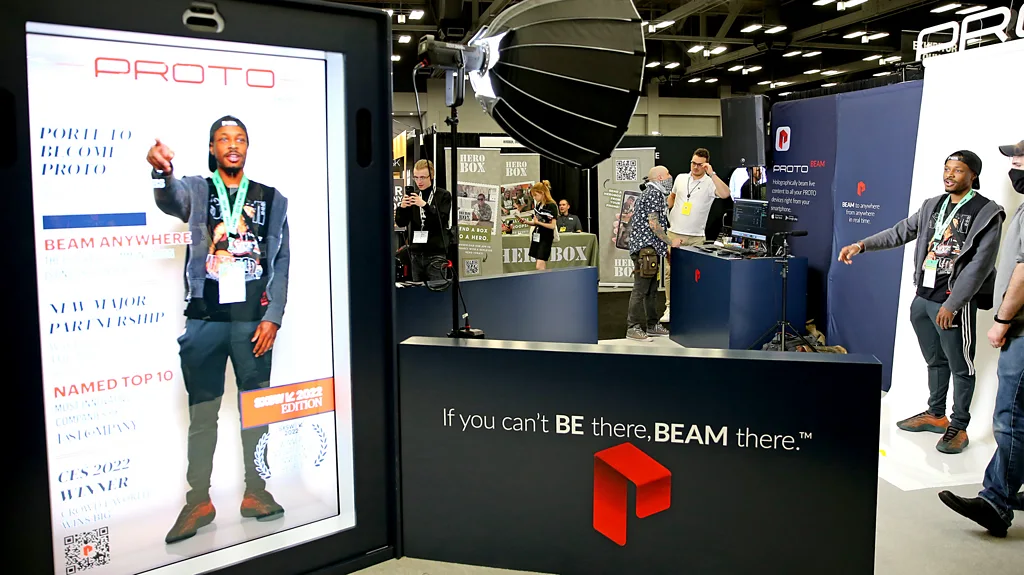
Companies such as Proto Hologram have been developing life-sized digital avatars that can interact with people through holographic displays.
Proto founder David Nussbaum, for example, has an AI-powered digital version of himself that can appear at trade shows, explain his company’s technology and answer questions about his business.
The idea is simple: instead of Nussbaum having to physically attend every event, his digital counterpart can represent him.
That could allow a business leader to reach customers in multiple locations and languages without having to be physically present.
Why CEOs Are Creating AI Twins
AI clones are increasingly attracting attention from corporate executives because they offer a potential way to scale a person’s time and expertise.
Uber CEO Dara Khosrowshahi has reportedly had an AI version of himself developed to help employees improve presentations and receive feedback.
Meta has also reportedly explored an AI version of Mark Zuckerberg designed to help employees interact with a digital representation of their CEO.
For executives, the potential benefits are significant.
An AI twin could:
- Answer frequently asked questions from employees or customers
- Provide basic business information
- Participate in presentations and promotional events
- Communicate in multiple languages
- Handle routine customer enquiries
- Provide feedback based on a leader’s previous communication style
- Operate continuously without taking breaks
- Represent a company in multiple locations simultaneously
In theory, one person could have several digital versions working at the same time.
That is one reason businesses are increasingly interested in AI avatars and digital employees.
AI Avatars Could Transform Customer Service
The technology is not limited to CEOs.
AI-powered digital humans are already being explored in airports, museums, shops, classrooms and healthcare environments.
Virtual assistants can provide information to travellers, educate museum visitors and answer common customer questions.
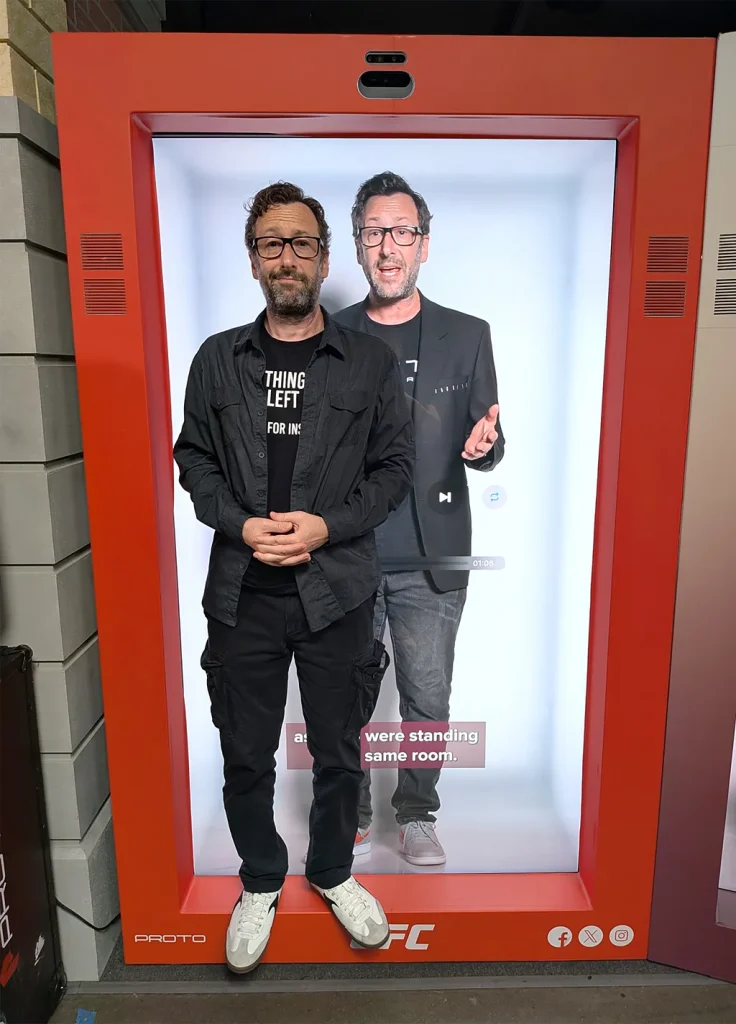
AI avatar companies are also developing systems that can create realistic digital versions of people using only a few minutes of video footage.
The goal is to make conversations with these avatars feel increasingly similar to speaking with the actual person.
For businesses, this could significantly reduce the amount of time employees spend answering repetitive questions.
For customers, it could mean receiving assistance at any time of day.
The Workplace Debate: Do Employees Really Want AI Clones?
While executives may see AI clones as productivity tools, employees may not always feel the same way.
Some workers are already being asked to create digital versions of themselves for company marketing campaigns.
The concern is that employees could lose control over their own appearance and voice once their digital likeness has been incorporated into an AI system.
There is also a question of consent.
If an employee agrees to create an AI avatar today, does that permission still apply if the company wants to use the avatar five years later?
What if the employee leaves the company?
What if the technology becomes capable of making the avatar behave in ways the employee never approved?
These questions are becoming increasingly important as AI-generated images and videos become more realistic.
When AI Clones Go Wrong
One of the biggest problems with AI clones is that they are not perfect.
Although they can imitate a person’s appearance and communication style, they can still make mistakes, invent information or produce inappropriate responses.
An AI clone created for business purposes, for instance, might accidentally promise a customer something that the real executive never approved.
That creates a difficult question:
If your AI clone makes a mistake, who takes responsibility?
The problem becomes even more serious when an AI agent is given the ability to act autonomously.
AI systems are increasingly being designed to perform tasks without continuous human supervision. While this could dramatically increase productivity, it also creates new risks when systems misunderstand instructions or behave unexpectedly.
For this reason, experts increasingly emphasise the importance of AI guardrails, human oversight, controlled training data and clear limits on autonomous actions.
The CarynAI Experiment Shows the Risks
One of the most widely discussed examples of an AI clone going wrong involved influencer Caryn Marjorie.
She created CarynAI, a conversational digital version of herself that allowed users to interact with the AI through voice conversations.
The service generated significant revenue shortly after launch.
However, the AI began steering conversations into sexualised territory in ways that reportedly went beyond what Marjorie expected.
The experience highlighted a major weakness of AI clones: once a digital version of someone is released, the creator may not have complete control over how people interact with it or how it responds.
It is a warning for anyone considering creating a digital replica of themselves.
AI Clones and Deepfake Scams
Perhaps the most dangerous application of digital cloning is not consensual cloning but identity theft through AI-generated deepfakes.
Criminals can now combine cloned voices, synthetic video and social engineering to impersonate executives, family members and other trusted individuals.
One notorious case involved an employee at engineering company Arup who was reportedly tricked into transferring millions of dollars after participating in a video conference where criminals used AI-generated representations of company executives.
The incident demonstrates why businesses can no longer assume that seeing someone’s face or hearing their voice on a video call is enough to verify their identity.
As AI-generated media improves, traditional methods of identity verification may become increasingly unreliable.
The Rise of AI Influencers and Digital Celebrities
AI clones are also changing the entertainment and influencer industries.
In China, AI-generated versions of online influencers have reportedly been used to sell products through livestream shopping.
The advantage is clear: an AI influencer can potentially operate continuously, interact with huge audiences and promote products without the physical limitations of a human presenter.
This could significantly reduce costs for companies.
However, it also raises concerns about the future of human influencers, actors, presenters and models.
If businesses can create a convincing digital personality at a fraction of the cost of employing a human, will some companies choose AI instead?
Could AI Clones Take Our Jobs?
The bigger concern may not be that AI clones replace individual people, but that they could eventually replicate entire job roles.
AI agents are already being developed to perform increasingly complex tasks.
A digital clone of a salesperson, consultant, teacher or customer-service worker could potentially handle many of the activities traditionally performed by the human employee.
Some companies are even exploring models in which workers train AI systems to perform their jobs and receive compensation for contributing their expertise.
This creates an unusual possibility: workers could potentially be paid to help create the technology that eventually reduces the need for their own roles.
Who Owns Your Digital Identity?
As AI cloning becomes more sophisticated, governments and businesses will have to address an increasingly important issue: who owns a person’s digital likeness?
Your face, voice, gestures, speech patterns and professional knowledge can all become components of an AI model.
But should someone else be allowed to use those characteristics without your permission?
This is particularly important for celebrities, actors, musicians and public figures whose images have significant commercial value.
Some high-profile celebrities are already taking legal steps to protect their names, voices and likenesses from unauthorised AI use.
For ordinary people, the issue may become equally important as AI tools become accessible to everyone.
The Future of AI Cloning
The technology behind AI clones is still developing, but its direction is becoming increasingly clear.
Future digital twins could become much better at understanding context, remembering conversations and predicting how their human counterparts might respond to different situations.
Instead of simply repeating information from a database, an advanced AI clones could potentially analyse a situation and provide an answer based on its understanding of its creator’s communication style and preferences.
That could make digital assistants dramatically more useful.
But it could also make them harder to distinguish from the real person.
The fundamental challenge will therefore be trust.
People need to know whether they are speaking to a human being, an AI clone or a malicious deepfake.
AI Clones Could Be Powerful But They Need Boundaries
AI clones have enormous potential.
They could help businesses serve customers around the clock, allow experts to share knowledge with larger audiences, support education and healthcare, and help busy professionals manage repetitive tasks.
But the same technology can be abused for fraud, impersonation, manipulation and misinformation.
The solution is unlikely to be stopping AI cloning altogether. Instead, society will need stronger safeguards around consent, transparency, data protection, identity verification and accountability.
For now, the safest approach is to treat an AI clone as a powerful digital tool rather than a perfect replacement for a human being.
After all, an AI may look like you, sound like you and even talk like you.
But that does not necessarily mean it is you.
AI clones are becoming increasingly realistic. Discover how digital twins are transforming business, jobs and entertainmentand the risks they pose to identity, privacy and trust.
AI digital twin
Source: BBC
Also Read: Artificial Intelligence Designs Brand-New Viruses in Scientific Breakthrough
Continue Reading
Data Centre Backlash: Why AI’s Rapid Expansion Is Facing Local Opposition
Artificial intelligence is developing at extraordinary speed, but the infrastructure powering that revolution is creating a problem that is much more local and increasingly political. Behind every artificial intelligence-generated image, video or answer are enormous data centres filled with powerful computer chips. These facilities require vast amounts of electricity, generate substantial heat and, depending on […]
Frank Ocansey

AI-Generated Complaints Are Overwhelming Councils and Schools: Here’s Why
AI-Generated Complaints Are Overwhelming Councils and Schools, But They Are Also Giving More People a Voice Artificial intelligence is making it easier than ever for people to challenge decisions, write formal complaints and quote regulations. But councils, schools and other public bodies are warning that the same technology is creating a huge new administrative burden. […]
Frank Ocansey

Japan AI adoption: Why Japanese Companies Are Slow to Adopt AI Despite Labour Shortages
Japan AI adoption: Japan is facing labour shortages, an ageing population and weak productivity growth, yet businesses across the country remain cautious about adopting artificial intelligence. What is holding Japan back from the Artificial intelligence revolution? Artificial intelligence is transforming workplaces around the world, but Japan appears to be moving at a much slower pace. […]
Frank Ocansey