
Ghana Ministry of Health Opens Admissions for Six Post-Basic Nursing Specialisations Under Mahama Cares

Junior Kojo
Editor, PulseView
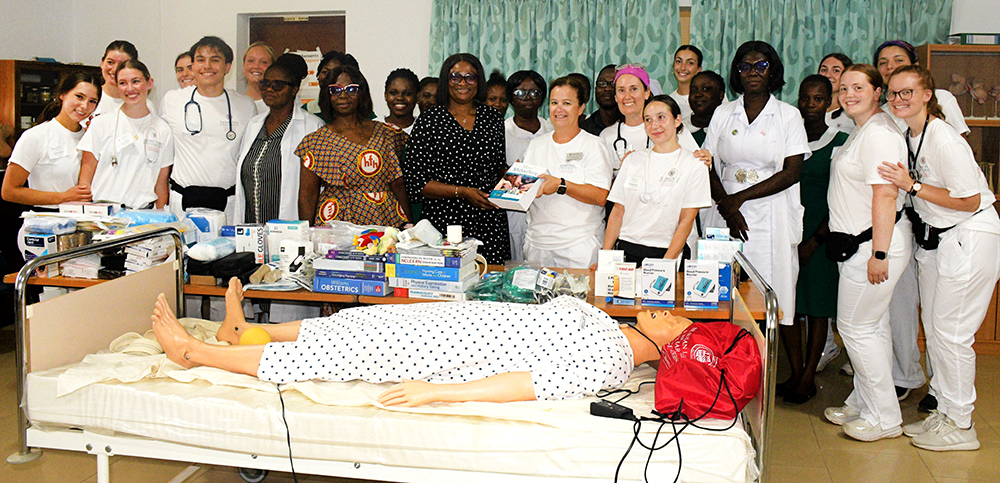
Post-Basic Nursing: The Ministry of Health Ghana has officially opened admissions for six post-basic specialised nursing programmes at selected health training institutions across the country.
The initiative forms part of the government’s healthcare strengthening agenda under the Ghana Medical Trust Fund (MahamaCares), aimed at improving specialised healthcare delivery and addressing the growing burden of complex diseases in Ghana.
According to an official announcement issued on March 4, 2026, applications will run from March 3 to March 26, 2026, giving qualified nurses the opportunity to upgrade their professional training in critical specialised fields.
Post-Basic Nursing: Specialised Nursing Programmes Available
The Ministry has introduced six specialised areas of nursing, designed to enhance the capacity of healthcare professionals in managing complex and chronic medical conditions.
The programmes include:
- Critical Care Nursing
- Emergency Nursing
- Cardiology Nursing
- Nephrology Nursing
- Endocrinology Nursing
- Oncology Nursing
These areas focus on treating life-threatening conditions such as heart disease, cancer, kidney failure, and diabetes, which are increasingly becoming major public health concerns in Ghana.
Training Institutions and Locations
The specialised programmes will be conducted at five accredited institutions across three major cities in Ghana.
The training centres include:
- Peri-Operative and Critical Care School – Korle Bu
- Nursing and Midwifery Training College – Korle Bu
- Nursing and Midwifery Training College – Kumasi
- Nursing and Midwifery Training College – Tamale
- Ear, Nose and Throat (ENT) School – Kumasi
Many of these institutions are affiliated with leading health facilities such as Korle Bu Teaching Hospital, which serves as one of the country’s premier training and referral centres.
Why the Programme Is Important
The Ministry of Health explained that the expansion of specialised nursing training is a response to two major challenges in Ghana’s healthcare system:
Rising Non-Communicable Diseases
The country has experienced a steady rise in conditions such as:
- Heart disease
- Diabetes
- Cancer
- Kidney failure
These conditions require highly trained specialists who can deliver advanced care.
Migration of Health Professionals
Ghana continues to experience migration of skilled healthcare workers to other countries in search of better opportunities. Expanding specialised training locally is expected to strengthen the workforce and improve service delivery nationwide.
Admission Requirements
Applicants interested in the programme must meet several professional and academic requirements.
Educational Qualification
Candidates must hold a diploma in one of the following fields:
- Registered General Nursing
- Midwifery
- Registered Mental Health Nursing
Professional Requirements
Applicants must also:
- Complete one-year rotation, internship, or national service
- Have at least two years of relevant work experience
- Possess a valid PIN from the Nursing and Midwifery Council of Ghana
- Be medically fit
- Be not more than 40 years old
How to Apply
Applications must be submitted online through the official Ministry of Health admission portal:
➡ https://register.healthtraining.gov.gh
Application Fee
Applicants are required to pay GH¢150.00 to obtain a voucher containing a unique PIN and serial number, which will be used to complete the application process.
Candidates must also upload scanned copies of:
- Academic certificates
- Professional certificates
- Residential address
- Ghana Post digital address
The online portal allows applicants to track the progress of their application after submission.
Programme Duration and Certification
The specialised training programme will run for four semesters.
Upon successful completion, graduates will:
- Receive a Bachelor of Science (BSc) degree awarded by University of Cape Coast
- Qualify for associate membership of the Ghana College of Nurses and Midwives
- Receive professional licensure from the Nursing and Midwifery Council of Ghana
Admitted candidates will also be granted study leave to enable them complete the programme without interruption.
Final Thoughts
The Ministry of Health’s decision to introduce new post-basic nursing specialisations marks a significant step toward strengthening Ghana’s healthcare system. By equipping nurses with advanced skills in critical areas such as oncology, cardiology, and emergency care, the initiative is expected to improve patient outcomes and expand the country’s capacity to manage complex health conditions.
With healthcare demands rising and specialised expertise becoming increasingly important, programmes like these will play a crucial role in shaping the future of Ghana’s medical workforce.
Source: MoH
Also read: UG Graduate Admissions University of Ghana Opens Graduate Admissions for 2026/2027 Academic Year
Continue Reading

How to Get Rid of Brain Fog: 9 Simple Ways to Improve Focus and Mental Clarity
Brain fog can make it difficult to concentrate, remember simple things or think clearly. While it is not a medical condition on its own, it can leave you feeling mentally slow and overwhelmed. The good news is that small changes to your daily routine may help improve focus, reduce mental overload and support better brain […]
 Frank Ocansey

What Screen Time Really Does to Children’s Brains: What the Science Says
Screen Time: Parents are repeatedly warned that smartphones, tablets, gaming and social media could damage children’s brains. But despite growing concern about screen use, researchers remain divided over how harmful it really is — and whether the amount of screen time matters as much as what children are actually doing online. Screen time has become […]
Frank Ocansey

Box Breathing for Stress: How the 4-4-4-4 Technique Helps Calm Your Nervous System
Box breathing has become one of the most popular breathing techniques for managing stress, anxiety and moments of intense pressure. Used by athletes, military personnel and people struggling with sleeplessness, the method is remarkably simple: breathe in, hold, breathe out and hold again for equal amounts of time. But what actually happens inside the body […]
Frank Ocansey