
US–China AI Race: A Deepening Global Tech Rivalry

Frank Ocansey
Editor, PulseView

China AI Race: In the second half of the 20th century, the world’s brightest scientific minds were consumed by a single goal: building nuclear weapons faster and more powerfully than their rivals. That contest, largely between the United States and the Soviet Union, defined global power for decades.
Today, a different kind of race is underway quieter, less visible, but potentially even more transformative. Once again, the United States finds itself in strategic competition, this time with China. The prize is not nuclear supremacy but dominance in artificial intelligence (AI); a technology expected to reshape economies, militaries, and everyday life.
This contest is not being fought on battlefields, but in research labs, university campuses, chip factories, and tech start-ups. It is being funded with trillions of dollars, overseen by governments, and driven by some of the most powerful companies in history.
And for now, each side appears to be winning a different part of the race.
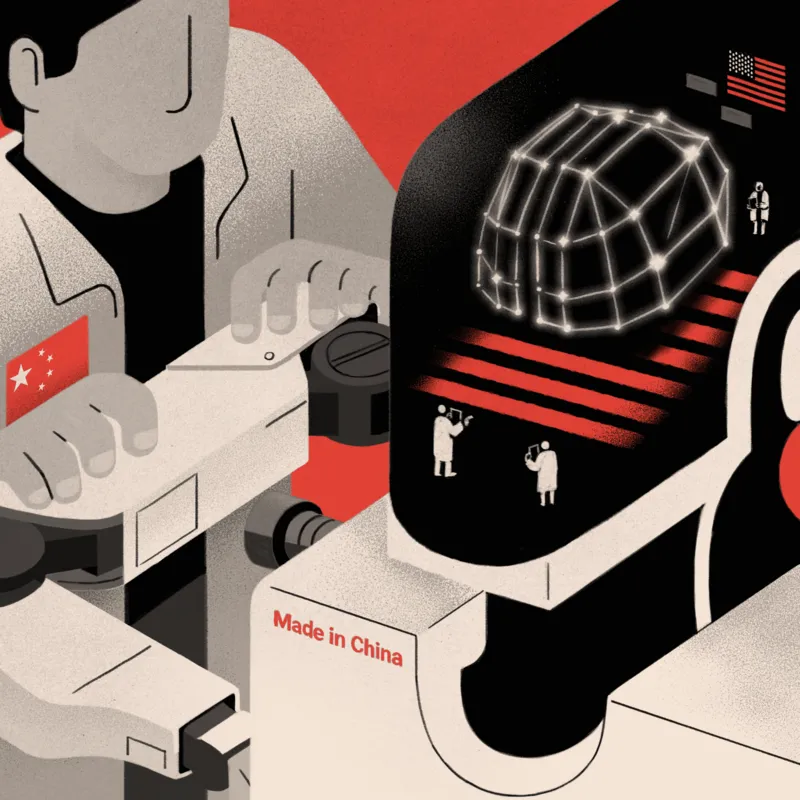
China AI Race: A tale of “brains” and “bodies”
To understand the competition, some experts describe it as a divide between AI “brains” and AI “bodies.”
The United States has traditionally led in the development of AI “brains” — systems that process information, generate language, and perform complex reasoning. These include chatbots, recommendation systems, and large language models.
Meanwhile, China has built a formidable advantage in AI “bodies” — the physical machines powered by AI, such as robots, drones, and automated manufacturing systems.
This distinction reflects deeper economic realities. The US has long been a software and innovation powerhouse, while China has become the world’s manufacturing hub, capable of producing and scaling hardware at extraordinary speed.
But as both nations push to dominate the full AI stack — from chips to software to robotics — those boundaries are beginning to blur.

The moment that changed everything
On 30 November 2022, the AI race entered a new phase with the public launch of ChatGPT by OpenAI.
The announcement itself was modest — just a few lines describing a system trained to “interact in a conversational way.” But the impact was immediate and global.
Within days, millions of people were experimenting with the chatbot — asking it to write essays, generate code, compose music, and answer complex questions. Social media platforms were flooded with examples of its capabilities.
For many, it felt like a glimpse into the future.
Large language models (LLMs) like ChatGPT work by analysing vast amounts of text data and learning patterns in how language is used. They can then generate responses that feel strikingly human.
Soon after, other American firms — including Google and Anthropic — began pouring billions into developing their own competing systems.
For a time, it seemed clear: the US had taken a commanding lead in AI “brains.”
The hidden advantage: chips
Behind these AI breakthroughs lies a less visible but crucial factor — computing power.
Training advanced AI systems requires enormous amounts of processing capability, provided by high-performance microchips. And here, the United States holds a powerful advantage.
The most advanced AI chips are designed by companies like Nvidia, whose products are essential for training large AI models. These chips are manufactured largely by Taiwan Semiconductor Manufacturing Company, a key US partner.
Washington has used this dominance strategically. Through export controls, it has restricted China’s access to cutting-edge chips and the tools needed to manufacture them — including equipment made by ASML, the only firm capable of producing certain critical machines.
The goal is simple: slow China’s progress in advanced AI.
For a time, the strategy appeared effective.
China’s counter-attack
But China has not stood still.
In early 2025, a Chinese-developed AI system called DeepSeek sent shockwaves through the global tech industry.
For users, DeepSeek felt similar to leading American models — capable of answering questions, writing code, and generating content. But what made it remarkable was its efficiency: it reportedly required far fewer computing resources to train.
The implications were profound.
If China could build competitive AI systems without relying on the most advanced chips, then US export controls might not be as decisive as once thought. In fact, some analysts argue that restrictions may have forced Chinese engineers to innovate more efficiently, accelerating their progress.
There is also a philosophical difference. While US companies tend to guard their AI models closely, many Chinese developers embrace a more open-source approach, sharing code that others can build upon. This can speed up innovation across the ecosystem.
The result is a narrowing gap. American models may still lead in performance, but Chinese alternatives are often cheaper and increasingly competitive.
The robot revolution
If the US leads in AI software, China’s strength in hardware is even more striking.
Over the past decade, Beijing has invested heavily in robotics, offering subsidies and support to manufacturers. Today, China is home to millions of industrial robots, used in factories, logistics, and even everyday services.
In some facilities — so-called “dark factories” — production is almost entirely automated. Robots and autonomous vehicles work around the clock, assembling products with minimal human involvement.
China has also surged ahead in the development of humanoid robots, machines designed to resemble and interact like humans. These robots are being explored for roles in manufacturing, healthcare, and elder care — a critical need as China’s population ages.
Visitors to cities like Shenzhen often encounter robots delivering food or managing warehouse operations, highlighting how deeply the technology is embedded in daily life.
The missing link: intelligence
Yet even the most advanced robot requires something more than mechanical precision — it needs intelligence.
Simple robots can perform repetitive tasks with basic programming. But more advanced systems require adaptive, decision-making capabilities, powered by sophisticated AI.
This is where the United States still holds an edge.
A growing area known as agentic AI focuses on systems that can plan, reason, and act independently. These “brains” allow machines to perform complex, multi-step tasks in dynamic environments.
Experts estimate that up to 80% of a robot’s value lies in its software — not its physical components.
In other words, while China may build the bodies, the US still largely builds the minds.
From warehouses to warfare
The convergence of AI and robotics is already reshaping industries — and raising difficult questions.
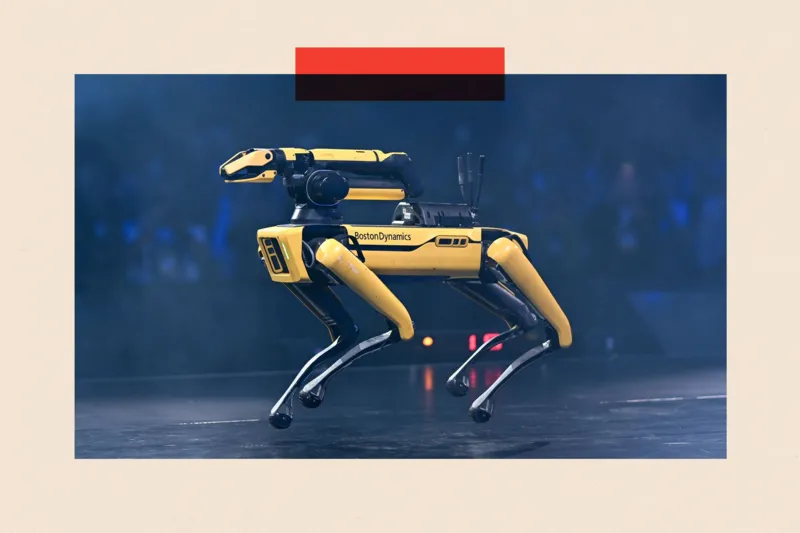
In the commercial world, companies like Boston Dynamics have developed robots capable of inspecting infrastructure, detecting hazards, and operating autonomously in complex environments.
In the military sphere, the implications are even more profound. AI-powered drones can identify targets, navigate terrain, and make decisions with minimal human input — technologies that are already being deployed in modern conflicts.
These developments underline the dual nature of AI: immense potential for progress, alongside significant ethical and security risks.
Two visions of the future
Beyond technology, the AI race reflects deeper ideological differences.
The United States champions a model driven by private companies, open markets, and rapid innovation.
China, by contrast, emphasises state oversight, long-term planning, and strategic coordination.
Each system has its strengths. The US model encourages creativity and competition, while China’s approach enables large-scale implementation and alignment with national priorities.
Which approach proves more effective may shape not only the future of AI, but the global order itself.
No clear finish line
Unlike the race to the Moon, there may be no single moment that defines victory in AI.
Instead, success will likely depend on sustained leadership:
- Who develops the most capable systems
- Who integrates AI across their economy
- Who sets global standards and norms
History suggests that adoption may matter more than invention. Just as electricity and the internet transformed societies not when they were invented, but when they were widely deployed, AI’s true impact will depend on how effectively it is used.

The stakes of the century
The outcome of this race will influence economic power, military strength, and technological leadership for decades to come.
It may determine:
- Which country sets the rules for AI governance
- Which companies dominate global markets
- How societies balance innovation with control
For now, the picture remains finely balanced.
The United States leads in AI “brains.”
China leads in AI “bodies.”
But in a race moving this quickly, those positions could change at any time.
And with so much at stake, neither side can afford to fall behind.
Source: BBC.com
Also read: Grok AI Backlash: Government Accused of Delaying Deepfake Law
Continue Reading

Gary Neville Urges Arsenal to Stay Calm Ahead of Title-Deciding Clash with Manchester City
Title-Deciding Clash: The Premier League title race has taken another dramatic turn, with Arsenal FC now under increasing pressure ahead of a crucial showdown against Manchester City. Former England defender Gary Neville has warned the Gunners that emotional control could be the key factor in determining the outcome of their season. With just a handful […]
 Junior Kojo

Youth Employment Agency urges beneficiaries awaiting payment alerts to remain patient as arrears are cleared
The Youth Employment Agency (YEA) has reassured its beneficiaries that efforts are ongoing to complete outstanding allowance payments, urging those yet to receive payment notifications to remain calm as arrears are being processed. In a statement issued by its Corporate Affairs Directorate, the Agency confirmed that the majority of beneficiaries have now received all outstanding […]
Frank Ocansey

Russian Submarines Missions Are Risking International Data Cables
Russian Submarines: The UK Ministry of Defence has accused Russia of carrying out a covert submarine operation targeting critical undersea infrastructure in waters north of the United Kingdom, raising fresh concerns about the vulnerability of global communications and energy networks. Speaking at a Downing Street press briefing, John Healey revealed that three Russian submarines were […]
Frank Ocansey