
Gianni Infantino: The Five Dramatic Days That Shook FIFA President and World Football

Frank Ocansey
Editor, PulseView

Gianni Infantino: One of the biggest crises in modern football governance unfolded over just five days, leaving FIFA President – facing intense criticism and raising fresh questions about the future of his leadership.
What began as an ambitious proposal to attract private investment into the FIFA World Cup quickly descended into one of the sport’s most controversial episodes.
The plan, which promised additional funding for national football associations, was withdrawn amid fierce opposition from football governing bodies, administrators, and stakeholders across the world.
The fallout has drawn comparisons with the failed European Super League (ESL) project of 2021, with many describing it as another attempt to reshape football without sufficient consultation or transparency.
Most significantly, UEFA publicly declared that it had “lost confidence” in Gianni Infantino’s leadership a rare and highly damaging rebuke that has intensified speculation about his future as FIFA president.
A Proposal That Sparked Global Backlash
The controversy centred on a FIFA proposal to secure private investment linked to future World Cup revenues.
Although FIFA did not publicly disclose every detail of the proposal, reports indicated that participating member associations would receive approximately $40 million each for football development if they agreed to the plan before a specified deadline.
The initiative was presented as an opportunity to generate additional funding for football development worldwide.
However, critics quickly questioned why FIFA needed outside investors at all.
As a non-profit organisation, FIFA is already one of the wealthiest sporting bodies in the world.
The organisation reportedly holds financial reserves exceeding $2 billion and is expected to generate record revenues of around $15 billion from the current World Cup cycle.
Given those figures, many football leaders argued there was little justification for bringing private investors into the governance of football’s biggest tournament.
Questions Over Transparency
As criticism intensified, another issue emerged that proved even more damaging than the proposal itself.
Many senior FIFA officials reportedly had no prior knowledge of the investment plan.
Vice-presidents, executive committee members, advisers, and senior administrators were allegedly unaware that negotiations had been taking place until reports appeared in the media.
That revelation sparked serious concerns about transparency and decision-making within FIFA.
Rather than focusing solely on the proposal itself, football leaders began questioning how such a significant initiative could have advanced without broader consultation among FIFA’s own leadership.
The lack of communication soon became one of the defining themes of the controversy.
UEFA Delivers a Devastating Blow
The strongest criticism came from UEFA.
In an unusually direct statement, European football’s governing body announced that it had lost confidence in Gianni Infantino’s leadership.
The statement accused FIFA of abandoning the promises of transparency and accountability that Infantino had made when he was first elected president in 2016.
UEFA reminded members that Infantino had previously pledged that FIFA’s money belonged to its national associations and should be used solely for developing football.
According to UEFA, the handling of the investment proposal contradicted those commitments.
The organisation also criticised what it described as “secret schemes” and “shabby” decision-making processes, language rarely used between football’s most powerful governing bodies.
The statement marked one of the most serious public challenges to a FIFA president in recent history.
Growing International Opposition
UEFA was far from alone.
Several influential football organisations also expressed concern over both the proposal and the manner in which it had been developed.
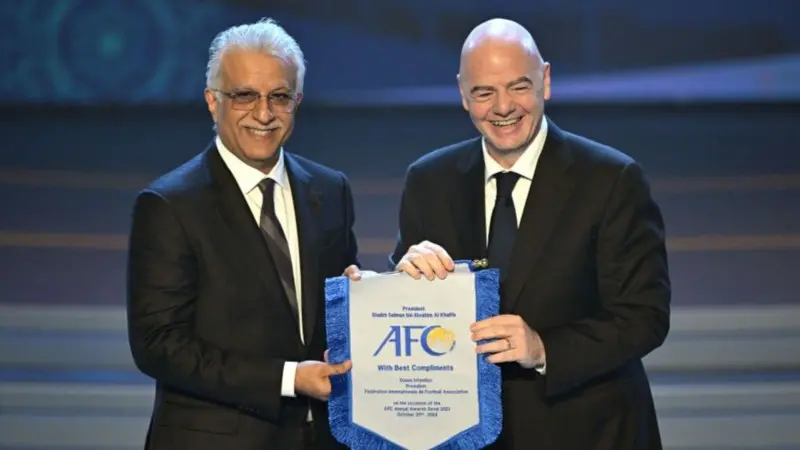
Asian Football Confederation (AFC) President Sheikh Salman bin Ibrahim Al Khalifa emphasised that any initiative capable of affecting global football should be discussed openly with member associations before decisions are made.
He stressed that football’s future should always be shaped through consultation, collective dialogue, and respect for established governance structures.
Football Australia Chair Anter Isaac echoed similar concerns.
While acknowledging that football must continue evolving, he argued that progress should never come at the expense of integrity, transparency, due process, or good governance.
The growing criticism suggested that concerns extended well beyond Europe and reflected a broader loss of confidence among football administrators worldwide.
Echoes of the European Super League
Many observers compared the controversy to the collapse of the European Super League in 2021.
The ESL proposal involved 12 of Europe’s biggest clubs attempting to establish a breakaway competition outside UEFA‘s control.
The project collapsed within days after widespread opposition from supporters, clubs, governments, and football authorities.
Similarly, FIFA’s investment proposal rapidly lost support after details became public.
In both cases, critics argued that fundamental changes to football had been developed behind closed doors without meaningful consultation.
There was, however, one important difference.
While fans largely drove opposition to the European Super League, resistance to FIFA’s proposal came primarily from football’s own governing institutions.
That internal opposition proved decisive.
FIFA’s Defence Comes Too Late
As criticism mounted, FIFA eventually defended the proposal.
The organisation argued that its planned consultation process had been disrupted by inaccurate media reports and insisted that stakeholders would have had opportunities to discuss the initiative.
However, by the time FIFA responded, opposition had already become overwhelming.
The organisation’s explanations failed to reverse public opinion or calm growing unrest among member associations.
Within days, FIFA confirmed that the proposal had been withdrawn.
The decision effectively ended one of the shortest—and most controversial—projects in the organisation’s recent history.
Internal Criticism Deepens the Crisis
Perhaps the most surprising development came from within FIFA itself.
Chief Operating Officer Kevin Lamour, widely respected throughout international football, publicly criticised the investment proposal.
In a strongly worded statement, Lamour reportedly described the initiative as “the project of one person”, suggesting it had not reflected the views of FIFA’s broader administration.
He also claimed that many FIFA employees had been misled during the process.
Lamour acknowledged that speaking publicly could place his own position at risk but said his loyalty ultimately lay with football and the values the organisation was supposed to uphold.
His comments represented one of the most extraordinary public criticisms ever directed at a sitting FIFA president by one of the organisation’s own senior executives.
Political Connections Under Scrutiny
The controversy also attracted political attention.
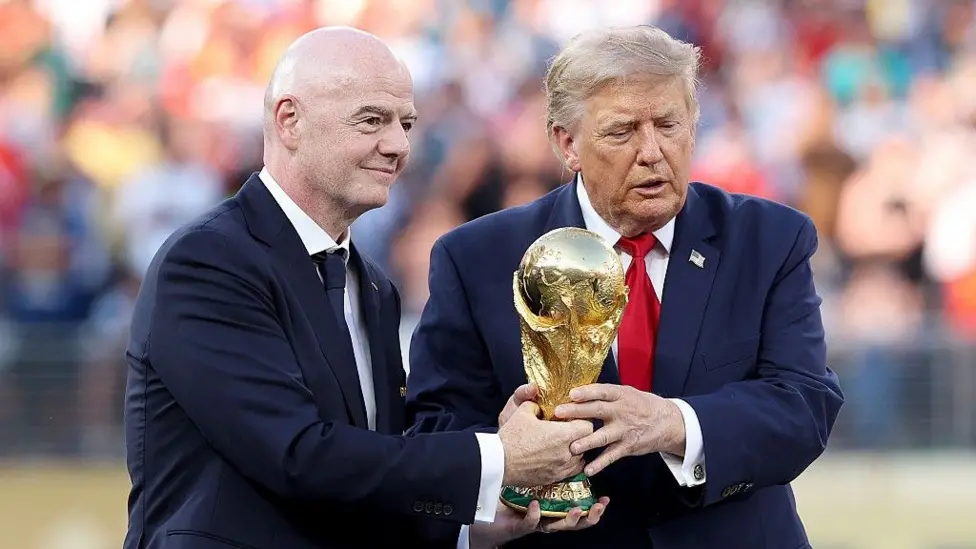
Infantino has developed a close relationship with United States President Donald Trump, with the pair recently appearing together during World Cup-related events.
However, when questioned about the investment proposal, Trump stated that he had not discussed the matter with the FIFA president.
Meanwhile, reports suggested that the proposed investor group would have involved Thrive Eternal, a venture capital firm founded by Joshua Kushner.
According to media reports, individuals associated with the project became increasingly concerned that the controversy had evolved into a significant reputational problem.
Although neither Trump nor Kushner played any direct role in FIFA’s decision-making, their names became part of the wider public debate surrounding the failed proposal.
Could Infantino’s Leadership Be Under Threat?
The collapse of the investment plan has inevitably fuelled speculation about Gianni Infantino’s political future.
Although he remains FIFA president, reports suggest support for his re-election campaign has weakened following the controversy.
Several football leaders have hinted that alternative candidates could emerge before the next FIFA presidential election.
UEFA Vice-President Laura McAllister indicated that football’s continental confederations would now begin considering possible future leadership options.
Whether that translates into a formal challenge remains uncertain, but the events of the past week have undoubtedly damaged Infantino’s standing within international football.
A Defining Moment for Football Governance
Beyond questions surrounding one individual, the controversy has highlighted broader concerns about governance within world football.
Many stakeholders accept that football must continue evolving commercially.
However, they also believe that major decisions affecting the global game should be made transparently and collaboratively.
The rapid collapse of the proposal demonstrated that football’s governing bodies remain unwilling to support reforms developed without broad consultation.
It also reinforced the importance of accountability within the sport’s most powerful institutions.
The dramatic collapse of FIFA’s private investment proposal represents one of the most significant governance crises of Gianni Infantino’s presidency.
Within five days, a plan intended to generate billions in new investment became a symbol of concerns over transparency, consultation, and leadership.
The proposal was abandoned, UEFA publicly declared it had lost confidence in FIFA’s president, and questions now surround the future direction of football’s world governing body.
Whether Infantino can rebuild trust remains to be seen.
What is already clear, however, is that the events of these five extraordinary days have become another defining chapter in the modern history of world football.
Source: BBC
Also read: Chelsea Confirm Danny Welbeck Signing from Brighton in Surprise Summer Transfer
Continue Reading

Ozempic and Mounjaro Not Banned by WADA in 2027: But Athletes Face Warning
Athletes will remain permitted to use weight-loss drugs such as Ozempic and Mounjaro under World Anti-Doping Agency rules in 2027, but WADA is continuing to monitor the medications amid concerns about possible performance benefits, health risks and misuse in elite sport. The rapidly growing use of GLP-1 weight-loss medications has created a new challenge for […]
Frank Ocansey

Chelsea Spent £349m: So Why Are Two Right-Backs Playing in Midfield?
Chelsea spent £349 million during the summer transfer window and signed 10 first-team players, yet their 2-1 defeat by Arsenal ended with Reece James and Malo Gusto two players who began their careers as right-backs operating together in midfield. It was a striking image that raised a difficult question: have Chelsea rebuilt almost everywhere except […]
Frank Ocansey

How Harry Kane Scored 73 Goals by Dropping Deeper Than Ever for Bayern Munich
Harry Kane has just produced the most prolific season of his career, scoring 73 goals for club and country. What makes that achievement even more remarkable is that the Bayern Munich striker has been operating deeper than ever before sometimes appearing in midfield and even close to his own penalty area. Rather than reducing his […]
Frank Ocansey