
Bank of Ghana Maintains Policy Rate at 14% as Inflation Remains Below Target

Junior Kojo
Editor, PulseView

The Bank of Ghana (BoG) has decided to maintain the country’s monetary policy rate at 14%, marking the third consecutive time the central bank has kept the benchmark rate unchanged.
The decision was announced by Bank of Ghana Governor Dr Johnson Pandit Asiama on Thursday, September 24, 2026, during the 132nd Monetary Policy Committee (MPC) press conference in Accra.
The decision comes as Ghana continues to record relatively low inflation, with headline inflation standing at 5% in August 2026.
According to the Bank of Ghana, inflation remains below the lower boundary of the central bank’s medium-term target range of 8% ± 2 percentage points, despite continued cost pressures in areas such as housing, transportation and services.
Bank of Ghana keeps policy rate unchanged
The Monetary Policy Committee reached a unanimous decision to maintain the policy rate at 14%.
The latest decision means the Bank of Ghana has now kept the rate unchanged for three consecutive MPC meetings.
The central bank’s decision reflects its assessment of current inflation conditions, exchange-rate developments, domestic economic activity and risks in the global economy.
The Bank of Ghana indicated that although there are still domestic cost pressures, the relative stability of the Ghanaian cedi has helped to limit imported inflation.
Inflation expectations have also reportedly eased across the groups surveyed by the central bank.
Ghana’s inflation remains at 5%
Headline inflation increased slightly from 4.6% in July to 5% in August 2026.
Despite this increase, the rate remains significantly below the central bank’s medium-term target range.
The August figure also brought an end to a prolonged period of declining inflation that had lasted for about 14 months.
Ghana’s inflation rate had previously reached a very high level of 54.1% in December 2022 before embarking on a sustained decline.
The current 5% inflation rate represents a substantial reduction compared with the levels recorded during the country’s earlier inflationary period.
However, the Bank of Ghana continues to monitor potential risks that could put upward pressure on prices.
These include developments in international oil markets, utility tariff adjustments, domestic liquidity conditions and exchange-rate movements.
Cedi stability helps contain imported inflation
One factor supporting the country’s inflation outlook is the relative stability of the Ghanaian cedi.
According to the Bank of Ghana, exchange-rate stability has helped contain inflation coming from imported goods and services.
This is important for Ghana because changes in the exchange rate can affect the cost of imported fuel, food, machinery, raw materials and other products.
However, the central bank continues to monitor pressure on the cedi.
The article notes that weaker gold prices and increased demand for foreign exchange have been identified as some of the risks that could affect exchange-rate stability.
Lending rates and private-sector credit
The Bank of Ghana also reported developments in the banking sector and credit conditions.
The average bank lending rate reportedly declined by 15.9%, indicating a reduction in the cost of borrowing from financial institutions.
At the same time, private-sector credit growth has rebounded.
A decline in lending rates can potentially make it easier for businesses and individuals to access credit, although the actual cost of borrowing depends on individual banks, loan products and other market conditions.
The development will therefore be closely watched by businesses seeking financing for expansion and investment.
Ghana’s banking sector remains stable
Governor Johnson Asiama also highlighted the condition of Ghana’s banking sector.
According to the Governor, the banking industry remains solvent, profitable and liquid.
The Non-Performing Loan (NPL) ratio has also declined to 15.7%.
A reduction in the NPL ratio indicates that the proportion of loans classified as non-performing has fallen, although the level of non-performing loans remains an important indicator for monitoring the health of the banking sector.
The Bank of Ghana’s assessment suggests that the banking system continues to maintain adequate financial strength while the economy undergoes changes in monetary and economic conditions.
Global economic uncertainties remain
The Monetary Policy Committee also considered developments in the global economy.
According to Governor Asiama, ongoing global tensions have placed pressure on international supply chains.
Disruptions to global supply chains can affect the availability and prices of commodities and manufactured goods, potentially creating inflationary pressures for countries that rely heavily on imports.
International oil prices are another factor being monitored by the Bank of Ghana.
The MPC had previously cited geopolitical tensions and crude oil prices of around $100 per barrel as potential risks to Ghana’s inflation outlook.
Why the policy rate was reduced significantly
Ghana’s current 14% policy rate represents a major reduction from the levels recorded at the beginning of 2025.
The Bank of Ghana had previously maintained a policy rate of 27% in early 2025 before embarking on a series of reductions.
The rate was subsequently reduced to:
- 21.5% in September 2025
- 18% in November 2025
- 15.5% in January 2026
- 14% in March 2026
The March 2026 reduction brought the policy rate to its lowest level since October 2021.
The Bank of Ghana previously described the cumulative reduction since July 2025 as 1,400 basis points of monetary easing.
Since reaching 14%, however, the MPC has opted to pause further reductions.
Why the Bank of Ghana is maintaining the 14% rate
The decision to keep the policy rate unchanged can be viewed in the context of the Bank of Ghana’s attempt to balance declining inflation with emerging economic risks.
Although inflation remains low, the central bank is monitoring several factors that could potentially reverse some of the recent gains.
These include:
- International crude oil prices
- Geopolitical tensions
- Utility tariff adjustments
- Exchange-rate developments
- Domestic liquidity conditions
- Foreign exchange demand
- Gold price movements
- International supply-chain disruptions
Previous MPC meeting minutes indicated that members considered maintaining the policy rate at 14% a cautious pause in the easing cycle.
The concern was that reducing interest rates too quickly and subsequently having to raise them sharply could undermine confidence in monetary policy.
Ghana’s foreign exchange reserves
Ghana’s international reserves have also been an important consideration in the country’s macroeconomic outlook.
The article reports that gross reserves were last reported at approximately $14.5 billion, equivalent to about 5.8 months of import cover in February.
Foreign exchange reserves provide an important buffer for a country’s external financial position and can help support confidence in the economy.
The Bank of Ghana is continuing to monitor reserve accumulation alongside developments in the foreign exchange market.
What the 14% policy rate means for the economy
The policy rate is one of the key tools used by the Bank of Ghana to influence economic activity and inflation.
When the policy rate is increased, borrowing costs generally tend to rise, which can reduce spending and investment and help control inflationary pressure.
When rates are reduced, borrowing conditions can become more supportive of economic activity.
With the policy rate now maintained at 14%, the latest decision indicates that the MPC is choosing to keep the current monetary policy setting while it assesses how inflation, exchange rates, economic activity and global developments evolve.
Inflation remains below the Bank of Ghana’s target
The August inflation figure of 5% remains below the Bank of Ghana’s target range of 6% to 10%.
This gives the central bank room to maintain its current policy position while continuing to assess whether the recent improvement in inflation can be sustained.
However, the slight increase from 4.6% in July to 5% in August shows that inflation has not continued to decline indefinitely.
The central bank will therefore have to monitor developments closely in the coming months.
What happens next?
For now, the Bank of Ghana has chosen to maintain the policy rate at 14%.
The MPC is expected to continue assessing inflation, exchange-rate movements, oil prices, domestic economic activity, liquidity conditions and developments in the global economy before making its next monetary policy decision.
The latest decision provides continuity in Ghana’s monetary policy after a series of significant rate cuts between 2025 and March 2026.
With inflation currently at 5%, the focus will now be on whether price stability can be maintained while economic activity and private-sector credit continue to recover.
Key Takeaways
- The Bank of Ghana has maintained the policy rate at 14%.
- The decision was announced by Governor Dr Johnson Pandit Asiama on September 24, 2026.
- This is the third consecutive MPC meeting at which the rate has been kept at 14%.
- Ghana’s headline inflation stood at 5% in August 2026, up from 4.6% in July.
- Inflation remains below the Bank of Ghana’s 6%–10% target range.
- The average banking lending rate reportedly declined by 15.9%.
- Private-sector credit growth has rebounded.
- The banking sector remains solvent, profitable and liquid, according to the Governor.
- The Non-Performing Loan ratio declined to 15.7%.
- Ghana’s policy rate has fallen from 27% in early 2025 to 14% in March 2026.
- The central bank continues to monitor oil prices, exchange-rate developments, utility tariffs, liquidity and global supply-chain risks.
- Gross international reserves were reported at approximately $14.5 billion, equivalent to 5.8 months of import cover in February.
Source: 3News.com
Also read: Aliko Dangote Praises Mahama Over Ghana’s Economic Turnaround
Continue Reading

Ato Forson Says Five Statutory Funds Receive Full Q3 2026 Payments
Finance Minister Dr Cassiel Ato Forson has announced that five major statutory funds in Ghana have received their third-quarter allocations for 2026 in full and on time. The funds support key sectors, including education, healthcare, road maintenance and local development. Finance Minister Dr Cassiel Ato Forson says the government has fulfilled its third-quarter 2026 payment […]
Junior Kojo

Ghana Government Pays GH¢24.8 Billion to Statutory Funds in 2026, Ato Forson Announces
Finance Minister Dr Cassiel Ato Forson has announced that the government has paid GH¢24.8 billion into various statutory funds since January 2026, insisting that the releases have been made on time and in full. The payments are intended to support education, healthcare, road maintenance, local government administration and other essential public services across Ghana. The […]
Junior Kojo
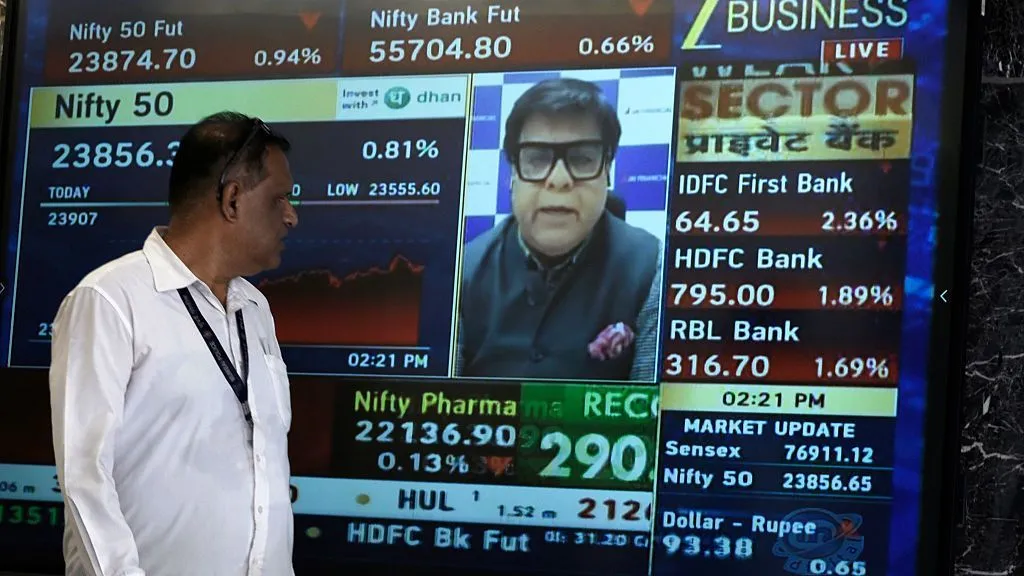
Why India Stock Market Is Falling Despite 7% Economic Growth
India Stock: India’s economy continues to expand at a pace that many countries would envy, yet its stock market is telling a very different story. The world’s fastest-growing major economy is expanding at more than 7%, despite energy shocks, higher global interest rates, trade uncertainty and weather-related disruptions. But Indian equities have become one of […]
 Frank Ocansey