
Court of Appeal Restores GN Savings and Loans Licence in Major Victory for Defunct Financial Institution

Samuel Stefano
Editor, PulseView

Court of Appeal restores the licence of GN Savings and Loans after ruling that the revocation was unfair and unreasonable, ordering the receiver to hand over company assets and operations to shareholders.
In a landmark ruling that could reshape Ghana’s financial sector clean-up debate, the Court of Appeal has unanimously overturned an earlier High Court decision that upheld the revocation of the licence of GN Savings and Loans Company Limited.
The ruling effectively restores the operating licence of the financial institution, marking a major legal victory for the company and its shareholders.
The three-member panel of justices ruled that the decision to revoke the company’s licence was “unfair and unreasonable. The court therefore quashed the previous judgment that had supported the Bank of Ghana’s action during the financial sector reforms.
According to the Court of Appeal, the process leading to the revocation failed to meet the standards of fairness expected under the law.
Court Orders Receiver to Hand Over Company Assets
As part of the ruling, the Court of Appeal directed the receiver to immediately hand over possession, management, and control of the company’s assets and operations back to the shareholders of GN Savings and Loans.
The court further clarified that any third-party interests created during the receivership process would be handled based on “good faith” considerations and assessed individually on a case-by-case basis.
“Any third party interest created shall be determined on good faith of third parties and case by case basis,” the court stated.
The ruling now paves the way for the company to potentially resume operations after years of regulatory shutdown.
Background to Ghana’s Financial Sector Cleanup
GN Savings and Loans was among several financial institutions affected during Ghana’s banking and financial sector cleanup exercise initiated by the Bank of Ghana in 2019.
At the time, regulators argued that some savings and loans companies and microfinance institutions were insolvent, undercapitalised, or operating in ways that threatened depositor funds and the stability of the financial system.
The clean-up exercise led to the revocation of licences of multiple institutions, triggering widespread controversy, legal battles, and concerns from customers and shareholders.
GN Savings and Loans, linked to businessman Dr. Papa Kwesi Nduom’s Groupe Nduom conglomerate, strongly challenged the revocation in court, insisting the action was unjustified and politically motivated.
Major Legal Turning Point
The latest Court of Appeal ruling now represents one of the most significant judicial reversals connected to Ghana’s financial sector reforms.
Legal analysts say the judgment could have broader implications for other institutions that were affected during the clean-up process and are still pursuing legal remedies.
The decision also raises questions about the legal and regulatory procedures used in revoking licences during the exercise.
Industry observers believe the ruling could trigger fresh discussions about compensation, restoration of assets, and the role of regulatory accountability in Ghana’s financial governance system.
Shareholders and Customers React
Although GN Savings and Loans has not yet issued a detailed public statement following the ruling, the judgment is expected to be welcomed by shareholders, customers, and workers who have long maintained that the institution was unfairly targeted.
Many customers affected by the shutdown had previously complained about delayed access to funds and disruptions to their businesses and livelihoods.
The restoration of the licence could potentially reopen discussions around customer claims, operational restructuring, and future regulatory compliance.
Questions Remain About Future Operations
Despite the court ruling, financial experts say several practical and regulatory questions remain unresolved.
These include:
- Whether the Bank of Ghana will challenge the ruling at the Supreme Court
- How assets managed during receivership will be transferred back
- Whether the institution still meets current capital and operational requirements
- How third-party agreements entered during the receivership period will be treated
The Court of Appeal’s mention of “good faith” protections for third parties suggests future legal disputes may still arise regarding ownership, contracts, and liabilities created during the period of state management.
Broader Debate on Regulatory Power
The ruling is also likely to reignite national debate about the balance between financial regulation and investor rights.
Supporters of the banking sector cleanup argue that the reforms helped stabilise Ghana’s financial system and protected depositors from widespread institutional failures.
Critics, however, maintain that some institutions were denied fair treatment and that due process was not consistently followed.
The Court of Appeal’s decision may therefore become an important legal reference point in future discussions about regulatory transparency, fairness, and accountability in Ghana’s financial sector.
Source: 3news
Also read: Short Term Employment Permits: STEP Permit Uncertainty Threatens Local Businesses
Continue Reading

Ato Forson Says Five Statutory Funds Receive Full Q3 2026 Payments
Finance Minister Dr Cassiel Ato Forson has announced that five major statutory funds in Ghana have received their third-quarter allocations for 2026 in full and on time. The funds support key sectors, including education, healthcare, road maintenance and local development. Finance Minister Dr Cassiel Ato Forson says the government has fulfilled its third-quarter 2026 payment […]
 Junior Kojo

Ghana Government Pays GH¢24.8 Billion to Statutory Funds in 2026, Ato Forson Announces
Finance Minister Dr Cassiel Ato Forson has announced that the government has paid GH¢24.8 billion into various statutory funds since January 2026, insisting that the releases have been made on time and in full. The payments are intended to support education, healthcare, road maintenance, local government administration and other essential public services across Ghana. The […]
Junior Kojo
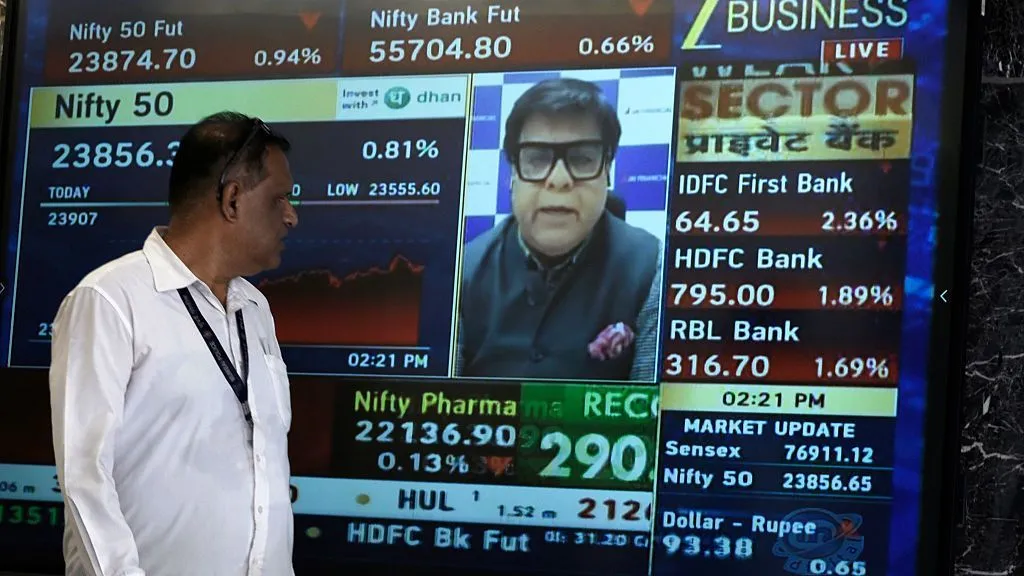
Why India Stock Market Is Falling Despite 7% Economic Growth
India Stock: India’s economy continues to expand at a pace that many countries would envy, yet its stock market is telling a very different story. The world’s fastest-growing major economy is expanding at more than 7%, despite energy shocks, higher global interest rates, trade uncertainty and weather-related disruptions. But Indian equities have become one of […]
 Frank Ocansey