
IMANI Africa Calls for Stronger Measures to Tackle Ghana’s Cocaine Transit Problem

Junior Kojo
Editor, PulseView
IMANI Africa has called for major changes in Ghana’s approach to combating cocaine trafficking, arguing that the country’s drug problem should be addressed as an organised-crime and security challenge rather than being reduced to partisan politics.
The policy think tank says Ghana has increasingly become an important transit corridor for cocaine trafficking, with criminal networks exploiting weaknesses within the country’s supply chain, ports, airports and other strategic points.
The call follows recent cocaine-related arrests involving drugs that were reportedly shipped from Ghana, raising renewed concerns about the country’s role in the international narcotics trade.
In a statement titled “The Last Word on Cocaine Politics – Wise Words from an IMANI Sage,” IMANI Africa argued that Ghana’s response should focus more on identifying and closing the gaps that allow international criminal networks to operate.
According to the organisation, the people behind major narcotics operations are not simply individual drug dealers but part of sophisticated international organised-crime networks.
The think tank therefore believes that Ghana must strengthen its systems and intelligence capabilities if it wants to prevent the country from being used as a corridor for cocaine trafficking.
Ghana is a transit point for cocaine trafficking
IMANI Africa maintains that Ghana should be recognised as a transit point in the international cocaine trade.
The organisation explained that the word “transit” means movement through a particular location. Therefore, attention should not only be placed on cocaine leaving Ghana but also on how narcotics enter the country in the first place.
The think tank believes that concentrating exclusively on drugs intercepted after they have already passed through Ghana leaves an important part of the problem unanswered.
IMANI argues that authorities must investigate the entire supply chain, including how cocaine enters the country, where it is stored, who facilitates its movement and how it eventually leaves Ghana.
The organisation described the problem as largely systemic, arguing that weaknesses in institutions and security systems can remain even when political administrations change.
Focus on organised crime rather than partisan politics
IMANI Africa also cautioned against making the cocaine issue primarily a political battle between Ghana’s major political parties.
According to the think tank, organised criminals are the ultimate beneficiaries when narcotics-related issues become dominated by political accusations.
The organisation argued that political governments come and go, but criminal networks can survive changes in administration if the systems that allow them to operate are not properly fixed.
It therefore called for greater attention to institutional weaknesses, security procedures and intelligence gathering.
The statement compared organised crime to a highly connected network that can stretch across different sectors and geographical locations.
IMANI’s position is that Ghana should concentrate on identifying the gaps within this network and closing them one after another.
IMANI questions the visibility of NACOC officers at ports
One of the most notable recommendations from IMANI Africa concerns the visibility of personnel from the Narcotics Control Commission (NACOC) at Ghana’s ports and airports.
The organisation questioned the practice of having NACOC personnel visibly identifiable through their uniforms while operating in sensitive locations such as ports.
IMANI suggested that NACOC officers involved in intelligence and narcotics investigations should adopt a more discreet approach rather than always appearing in identifiable uniforms.
The think tank argued that NACOC’s role involves intelligence gathering and detecting organised narcotics networks, meaning that officers may be more effective when their presence does not immediately reveal their identity or function.
The organisation questioned the rationale behind having visibly identifiable NACOC officers moving around ports and other locations where organised criminal networks could potentially operate.
It suggested that intelligence personnel should be able to work undercover when necessary.
Greater scrutiny at Ghana’s ports and airports
IMANI Africa also raised concerns about the number of people who have legitimate or semi-legitimate reasons to enter and operate within Ghana’s ports and airports.
According to the organisation, these facilities are not occupied only by passengers and people directly involved in air travel or shipping activities.
There are also logistics operators, warehouse workers, security personnel, facilitators and other individuals who have access to these sensitive environments.
The think tank believes that the presence of large numbers of people who are not directly travelling or performing clearly defined duties could create opportunities for organised criminal activities.
It therefore called for tighter monitoring of people who operate within ports, airports and warehouses.
Clock-in system proposed for security personnel
Another proposal contained in the IMANI statement is the introduction of a stricter attendance and movement-monitoring system for security personnel working around ports and airports.
The organisation suggested that security and service personnel should be required to clock in whether they are officially on duty or not.
IMANI further proposed that the clock-in system should be connected to the personnel’s headquarters so that their movements and official assignments can be properly monitored.
The think tank argued that such a system could help authorities determine who is legitimately present at sensitive facilities and why they are there.
This, according to IMANI, could also reduce opportunities for individuals to exploit their positions or access to restricted areas.
Intelligence should focus on wealthy communities
IMANI Africa also called for greater intelligence gathering in affluent communities where it believes cocaine may be stored or distributed.
The organisation argued that authorities should not only concentrate their narcotics investigations on ports, airports and other traditional entry points.
It suggested that intelligence agencies should also examine locations where large quantities of illegal drugs may potentially be stored.
The statement referred to properties surrounded by high walls in affluent communities and called for stronger intelligence-led monitoring.
IMANI also highlighted the importance of identity and background verification, referring to the Ghana Card as an important tool in establishing identities.
However, the broader point made by the organisation is that narcotics investigations should follow intelligence and evidence rather than simply focusing on particular social groups or locations.
Lessons should be learned from cocaine seizures abroad
The think tank further argued that every major cocaine seizure anywhere in the world should provide useful intelligence for Ghanaian authorities.
According to IMANI, when cocaine shipments connected to Ghana are intercepted outside the country, authorities should examine the circumstances surrounding those shipments.
Such seizures, it argued, can provide clues about the routes, individuals, companies, storage facilities and other components of international trafficking networks.
The organisation believes that Ghana should use information from international drug seizures to identify weaknesses within its own systems.
Rather than viewing each cocaine seizure as an isolated incident, authorities should use the information to strengthen the country’s overall anti-narcotics strategy.
IMANI says seized cocaine should not be treated mainly as financial value
Another point raised by IMANI concerns the way the value of seized cocaine is discussed.
The organisation argued that once cocaine has been successfully intercepted by authorities, its value to the criminal market becomes effectively zero.
It therefore cautioned against placing excessive emphasis on the supposed market value of seized narcotics.
According to the think tank, the more important issue is the quantity intercepted and the extent to which the seizure disrupts the criminal supply chain.
IMANI suggested that repeatedly measuring seized cocaine in terms of enormous monetary figures could create a misleading perception of the actual impact of the seizure.
The organisation believes the focus should instead be on disrupting trafficking networks and preventing future shipments.
Plug the gaps in the system
IMANI Africa used the analogy of Swiss cheese to explain how authorities can tackle the cocaine trafficking problem.
The idea is that criminal networks may succeed because they find several weaknesses or “holes” within the system.
If authorities identify each weakness and close it, the number of opportunities available to criminals will gradually decrease.
This could involve strengthening border controls, improving intelligence sharing, monitoring warehouses, tightening access to ports and airports, conducting better background checks and improving coordination among security agencies.
The think tank believes that systematically closing these gaps could make Ghana less attractive to international drug trafficking networks.
Cocaine trafficking is bigger than Ghana’s political parties
IMANI Africa strongly rejected the idea that Ghana’s cocaine problem should be viewed only through the activities of one political party or another.
The organisation argued that organised criminal networks can operate regardless of which political party is in power.
It warned that excessive political focus could distract the country from addressing the structural weaknesses that criminals exploit.
The think tank therefore called for a national security approach that extends beyond partisan politics.
According to the statement, the cocaine trade should be treated as an organised-crime issue requiring intelligence, law enforcement, border security and institutional reforms.
Concerns about election periods
IMANI Africa also raised concerns about the possibility of increased security vulnerabilities around election periods.
The organisation pointed to periods when government transitions, holidays and other major events may create distractions within the security environment.
It specifically referenced the period around November and December and argued that changes in government, holidays and reduced security attention could potentially create opportunities for organised criminal networks.
The think tank said Ghana should therefore avoid allowing changes in government or election-related activities to weaken vigilance at ports, airports and other strategic facilities.
International organised crime remains the central concern
At the centre of IMANI Africa’s argument is the belief that Ghana’s cocaine problem should be understood within the wider international organised-crime landscape.
The organisation argued that international criminal networks are capable of operating through multiple countries and using complex supply chains.
This means Ghana cannot effectively tackle the problem by focusing only on individual arrests or isolated drug seizures.
Instead, authorities need to identify the wider network behind the shipments and understand how the network operates.
That includes examining financing, transportation, storage, logistics, facilitation and international connections.
What Ghana could do to strengthen its anti-cocaine efforts
Based on the recommendations contained in the IMANI statement, several areas could receive greater attention.
These include:
- Strengthening intelligence gathering on international drug networks.
- Improving surveillance at ports, airports and warehouses.
- Monitoring individuals with access to sensitive facilities.
- Reviewing the visibility and operational methods of NACOC intelligence personnel.
- Introducing stronger clock-in and personnel-monitoring systems.
- Improving intelligence sharing between Ghanaian security agencies and international partners.
- Using information from cocaine seizures abroad to identify Ghana-linked trafficking routes.
- Strengthening identity verification and background checks.
- Investigating suspected storage locations through intelligence-led operations.
- Reducing political interference in narcotics investigations.
- Closing institutional gaps that organised criminal networks may exploit.
Ghana’s cocaine challenge requires a system-wide response
The latest concerns over cocaine trafficking have once again placed Ghana’s role in the international narcotics trade under public scrutiny.
IMANI Africa’s position is that the country should avoid treating every cocaine seizure as an isolated political controversy.
Instead, the organisation wants authorities to examine how criminal networks are able to move narcotics through Ghana and identify the institutional weaknesses that make such operations possible.
Its recommendations include stronger intelligence operations, better monitoring of ports and airports, improved personnel accountability and greater use of information from international drug seizures.
The think tank also believes that Ghana’s political parties should not be the primary focus of the discussion.
For IMANI Africa, the central challenge is the organised criminal network itself and the systems that allow such networks to operate.
The organisation’s broader message is that Ghana can reduce its vulnerability to cocaine trafficking by systematically identifying and closing the gaps within its security and logistics systems.
As the country continues to deal with cocaine-related arrests and international concerns, the effectiveness of its response will depend not only on the number of arrests or the quantity of drugs seized but also on how effectively authorities disrupt the networks responsible for moving narcotics through the country.
Source: 3News / IMANI Africa
Also read: Data Centre Backlash: Why AI’s Rapid Expansion Is Facing Local Opposition
Continue Reading
Ato Forson Says Five Statutory Funds Receive Full Q3 2026 Payments
Finance Minister Dr Cassiel Ato Forson has announced that five major statutory funds in Ghana have received their third-quarter allocations for 2026 in full and on time. The funds support key sectors, including education, healthcare, road maintenance and local development. Finance Minister Dr Cassiel Ato Forson says the government has fulfilled its third-quarter 2026 payment […]
Junior Kojo
Ghana Government Pays GH¢24.8 Billion to Statutory Funds in 2026, Ato Forson Announces
Finance Minister Dr Cassiel Ato Forson has announced that the government has paid GH¢24.8 billion into various statutory funds since January 2026, insisting that the releases have been made on time and in full. The payments are intended to support education, healthcare, road maintenance, local government administration and other essential public services across Ghana. The […]
Junior Kojo
Why India Stock Market Is Falling Despite 7% Economic Growth
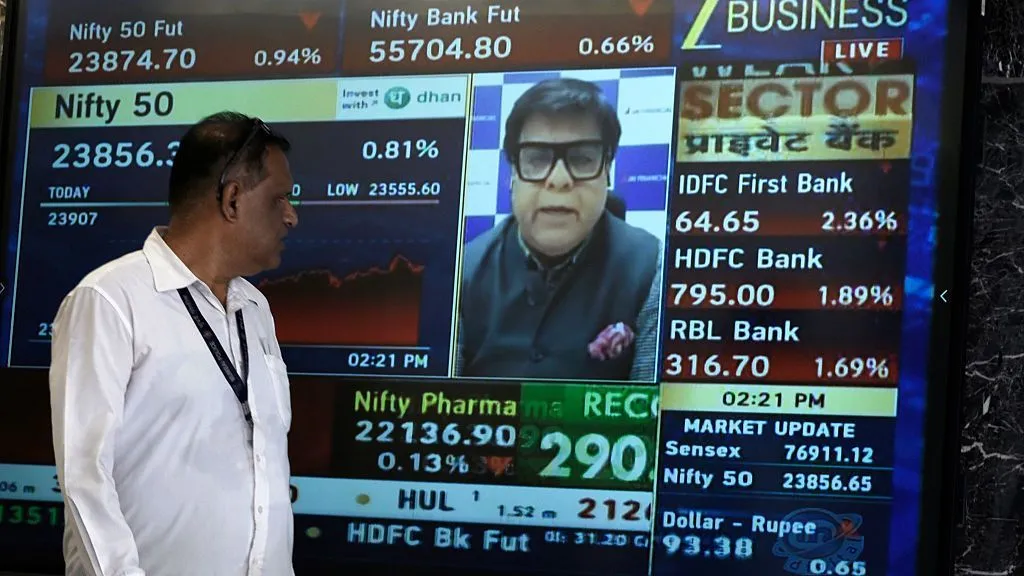
India Stock: India’s economy continues to expand at a pace that many countries would envy, yet its stock market is telling a very different story. The world’s fastest-growing major economy is expanding at more than 7%, despite energy shocks, higher global interest rates, trade uncertainty and weather-related disruptions. But Indian equities have become one of […]
 Frank Ocansey