
Why Ghana Needs a Stronger Health Workforce: The Key to Achieving Universal Health Coverage

Frank Ocansey
Editor, PulseView
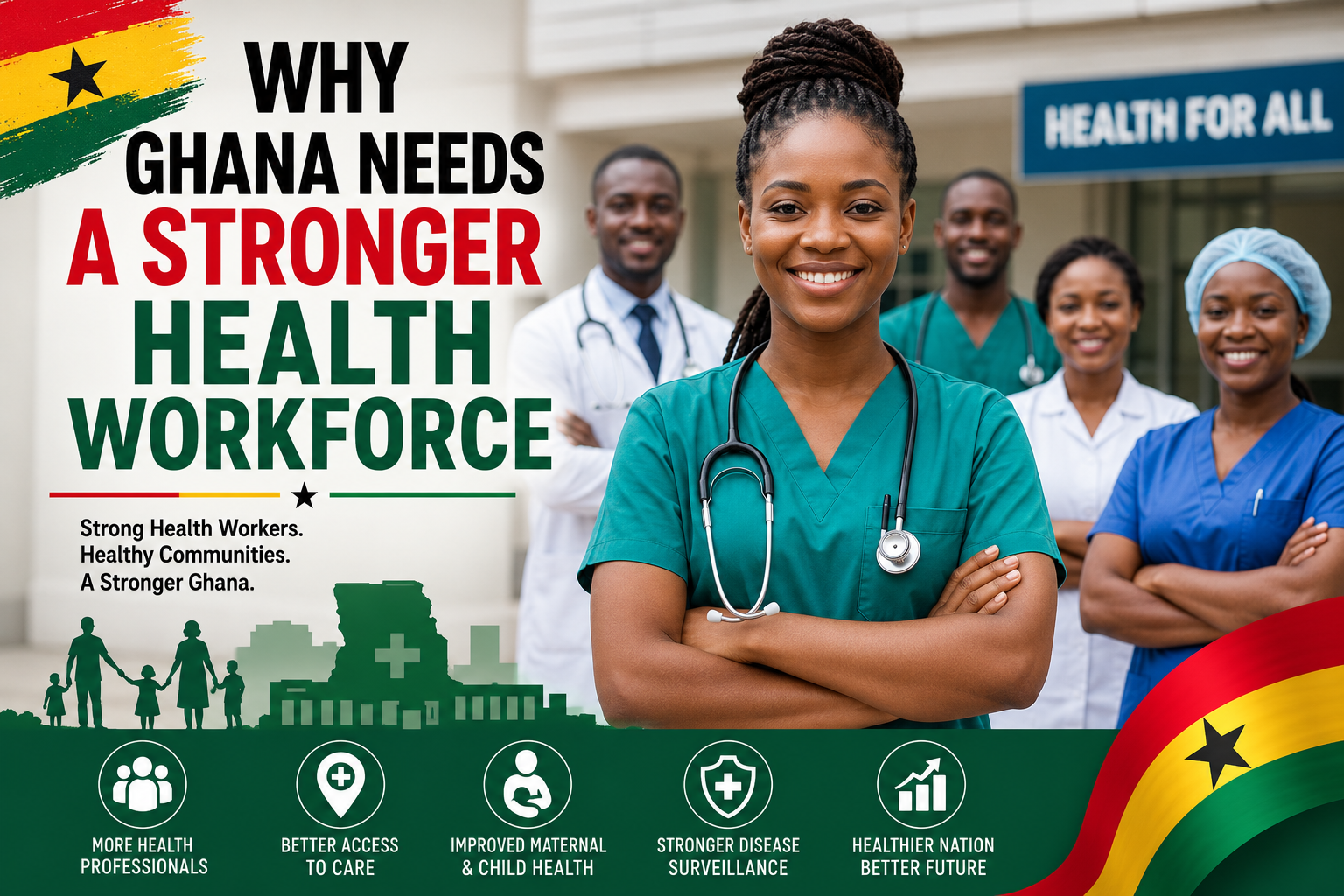
Healthcare systems are only as strong as the people who deliver care. While Ghana has made significant progress in improving access to healthcare over the past decades, one major challenge continues to threaten the country’s ability to provide quality health services for all: an inadequate and overstretched health workforce.
From Community-based Health Planning and Services (CHPS) compounds in rural communities to tertiary hospitals in major cities, healthcare workers remain the backbone of Ghana’s health system. Yet increasing disease burdens, population growth, migration of skilled professionals, and resource constraints are placing enormous pressure on the country’s health workforce.
As Ghana strives to achieve Universal Health Coverage (UHC) and the Sustainable Development Goals (SDGs), strengthening the health workforce is no longer an option; it is a necessity.
The Foundation of Every Health System
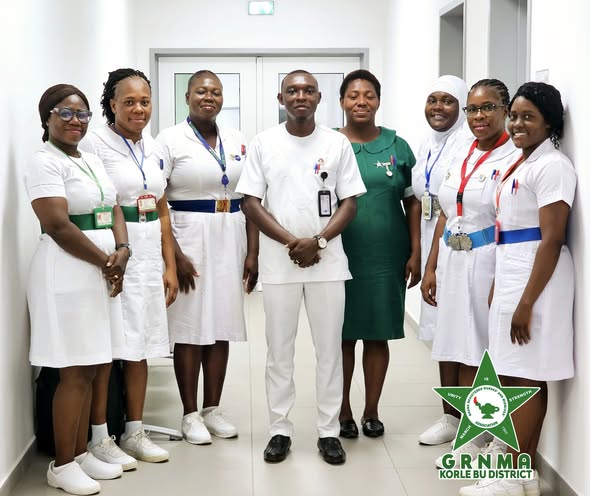
Doctors, nurses, midwives, public health professionals, laboratory scientists, pharmacists, disease control officers, nutritionists, health information officers, and community health workers all play critical roles in ensuring that healthcare services reach the population.
Without sufficient health workers:
- Patients wait longer for care.
- Health facilities become overcrowded.
- Preventive services decline.
- Disease surveillance weakens.
- Maternal and child health outcomes worsen.
- Emergency response systems become less effective.
Simply put, healthcare infrastructure alone cannot improve health outcomes if there are not enough trained professionals to operate and manage services.
Ghana’s Growing Healthcare Needs
Ghana’s population continues to grow rapidly, increasing demand for healthcare services.
At the same time, the country faces a double burden of disease.
While infectious diseases such as malaria, tuberculosis, HIV/AIDS, and cholera remain significant concerns, non-communicable diseases are also rising.
These include:
- Hypertension
- Diabetes
- Cancer
- Stroke
- Chronic kidney disease
- Mental health disorders
Managing these conditions requires a highly skilled and adequately staffed health workforce.
Unfortunately, many facilities continue to experience staff shortages, particularly in rural and underserved communities.
Rural Communities Continue to Face Staffing Challenges
One of Ghana’s most persistent healthcare challenges is the unequal distribution of health workers.
Many healthcare professionals prefer to work in urban centres where there are better living conditions, educational opportunities, and career advancement prospects.
As a result, rural communities often experience shortages of:
- Medical doctors
- Midwives
- Laboratory personnel
- Pharmacists
- Specialist nurses
In some remote areas, a single Community Health Officer may be responsible for serving thousands of people.
This places enormous pressure on frontline workers and can affect the quality and timeliness of care.

Maternal and Child Health Depends on Skilled Health Workers
A strong health workforce is essential for improving maternal and child health outcomes.
Skilled health professionals provide:
- Antenatal care
- Safe delivery services
- Postnatal care
- Immunization services
- Nutrition counselling
- Family planning services
Research consistently shows that countries with higher densities of skilled health workers achieve lower maternal and child mortality rates.
Although Ghana has made progress in reducing maternal and child deaths, gaps remain, particularly in rural districts where shortages of midwives and skilled birth attendants continue to affect service delivery.
Strengthening Disease Surveillance and Outbreak Response
Recent public health emergencies have demonstrated the importance of a strong health workforce.
Whether responding to outbreaks of cholera, meningitis, Ebola, COVID-19, or other emerging diseases, trained health professionals are essential for:
- Disease detection
- Case investigation
- Contact tracing
- Community education
- Data management
- Monitoring and evaluation
Public health nurses, disease control officers, laboratory personnel, and surveillance officers play critical roles in protecting communities from outbreaks.
Without adequate staffing and continuous training, disease outbreaks can spread rapidly before they are detected and contained.
Addressing the Brain Drain Challenge
One of the biggest threats to Ghana’s health workforce is the migration of skilled professionals.
Many healthcare workers leave the country in search of:
- Better salaries
- Improved working conditions
- Professional development opportunities
- Enhanced career prospects
Countries such as the United Kingdom, Canada, Australia, and the United States continue to recruit healthcare professionals from developing countries.
While migration is a personal right, the large-scale departure of trained professionals creates significant staffing gaps within Ghana’s healthcare system.
Retaining health workers will require improved remuneration, better working conditions, and clear career progression pathways.
Investing in Training and Capacity Building
Building a stronger health workforce begins with education.
Ghana has several reputable institutions training healthcare professionals, including:
- University of Health and Allied Sciences
- University of Ghana
- Kwame Nkrumah University of Science and Technology
- University of Cape Coast
However, increasing healthcare demands require continued investment in:
- Training institutions
- Clinical placements
- Continuing professional development
- Specialized training programmes
Healthcare workers must also be equipped with skills in emerging areas such as:
- Digital health
- Health informatics
- Artificial intelligence
- Telemedicine
- Advanced disease surveillance
Improving Working Conditions
A stronger workforce requires more than recruitment alone.
Healthcare workers need environments that enable them to perform effectively.
This includes:
- Adequate Equipment: Healthcare workers cannot provide quality care without essential equipment and supplies.
- Safe Working Environments: Occupational safety remains a major concern, particularly during infectious disease outbreaks.
- Housing and Incentives: Providing accommodation and rural incentives can encourage professionals to accept postings in underserved areas.
- Mental Health Support: Healthcare workers frequently experience stress, burnout, and emotional exhaustion.
Supporting their mental wellbeing is crucial for workforce retention and performance.
The Role of Technology
Technology can help address some workforce challenges.
Digital health innovations can support healthcare workers through:
- Electronic medical records
- Telemedicine consultations
- Mobile health applications
- Automated reporting systems
- Decision-support tools
These technologies can improve efficiency, reduce workload, and expand access to specialist expertise, particularly in remote communities.
However, technology should complement, not replace, human healthcare providers.

Why Investing in Health Workers Benefits the Economy
Health workforce investments are not simply expenditures; they are investments in national development.
A healthy population is more productive, more resilient, and better able to contribute to economic growth.
Strong healthcare systems also:
- Reduce healthcare costs
- Improve workforce productivity
- Increase life expectancy
- Enhance educational outcomes
- Strengthen national security
According to global health experts, investments in health workers generate significant social and economic returns.
A Shared Responsibility
Strengthening Ghana’s health workforce requires collaboration among:
- Government
- Development partners
- Educational institutions
- Professional associations
- Local authorities
- Communities
Policies must focus not only on training new professionals but also on retaining existing staff and ensuring equitable distribution across the country.
Conclusion
Ghana’s healthcare future depends largely on the strength of its health workforce.
From CHPS compounds serving remote villages to tertiary hospitals managing complex medical cases, healthcare workers remain the most valuable resource within the health system.
Addressing workforce shortages, improving training, enhancing working conditions, and retaining skilled professionals are critical steps toward achieving Universal Health Coverage and improving health outcomes nationwide.
A stronger health workforce means stronger communities, healthier families, and a more resilient nation.
As Ghana continues its journey toward sustainable development, investing in health workers may be one of the most important decisions the country can make.
Authored By: Ellen Akorli, University of Health And Allied Sciences
Also read: Kidney disease: The silent health threat Ghana cannot ignore
Continue Reading

How to Get Rid of Brain Fog: 9 Simple Ways to Improve Focus and Mental Clarity
Brain fog can make it difficult to concentrate, remember simple things or think clearly. While it is not a medical condition on its own, it can leave you feeling mentally slow and overwhelmed. The good news is that small changes to your daily routine may help improve focus, reduce mental overload and support better brain […]
Frank Ocansey

What Screen Time Really Does to Children’s Brains: What the Science Says
Screen Time: Parents are repeatedly warned that smartphones, tablets, gaming and social media could damage children’s brains. But despite growing concern about screen use, researchers remain divided over how harmful it really is — and whether the amount of screen time matters as much as what children are actually doing online. Screen time has become […]
Frank Ocansey

Box Breathing for Stress: How the 4-4-4-4 Technique Helps Calm Your Nervous System
Box breathing has become one of the most popular breathing techniques for managing stress, anxiety and moments of intense pressure. Used by athletes, military personnel and people struggling with sleeplessness, the method is remarkably simple: breathe in, hold, breathe out and hold again for equal amounts of time. But what actually happens inside the body […]
Frank Ocansey