
Artificial Intelligence Designs Brand-New Viruses in Scientific Breakthrough

Frank Ocansey
Editor, PulseView

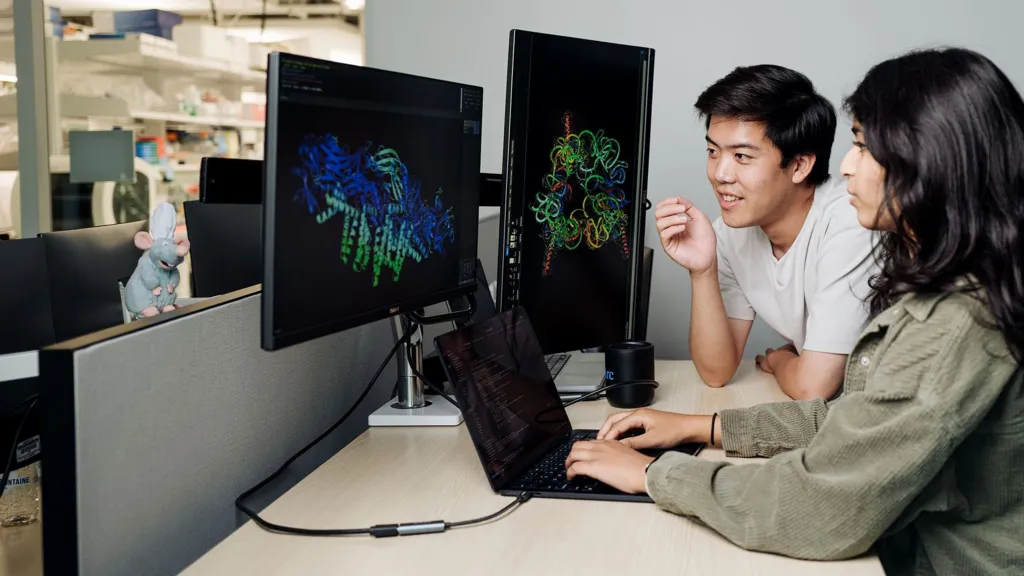
Artificial intelligence has reached another major milestone after researchers in the United States successfully used AI to design entirely new viruses capable of replicating in the laboratory.
Scientists at Stanford University announced that they had created 16 fully functional viruses using generative AI, marking the first time complete viral genomes have been designed by artificial intelligence and proven to work in real-world laboratory experiments.
The achievement is being hailed as a groundbreaking moment for medicine and biotechnology, with experts saying it could revolutionise treatments for antibiotic-resistant infections and accelerate the development of future therapies. At the same time, however, researchers are warning that the technology raises significant biosafety and biosecurity concerns if misused.
A New Era for Artificial Intelligence
Generative AI has already demonstrated its ability to write text, generate images, compose music and even design new antibiotics.
Designing an entirely new virus, however, represents a much greater scientific challenge.
Unlike previous AI applications, this breakthrough involved creating a complete genetic blueprint capable of producing viruses that can infect bacteria and reproduce naturally.
Stanford University’s Assistant Professor Brian Hie, who led the research, described the work as entering completely new scientific territory.
“This is the first time generative AI has been used to design a complete genome,” he explained. “It’s something that can replicate and have other functions inside cells. This was new territory for us.”
How the AI Created New Viruses
The research team used specialised AI systems known as Evo1 and Evo2, which operate similarly to large language models such as ChatGPT.
Instead of predicting words in a sentence, these Artificial Intelligence models predict sequences within genetic code the biological language that determines how living organisms function.
To achieve this, the systems were trained using enormous datasets containing genetic information from:
- Viruses
- Bacteria
- Plants
- Animals
- Humans
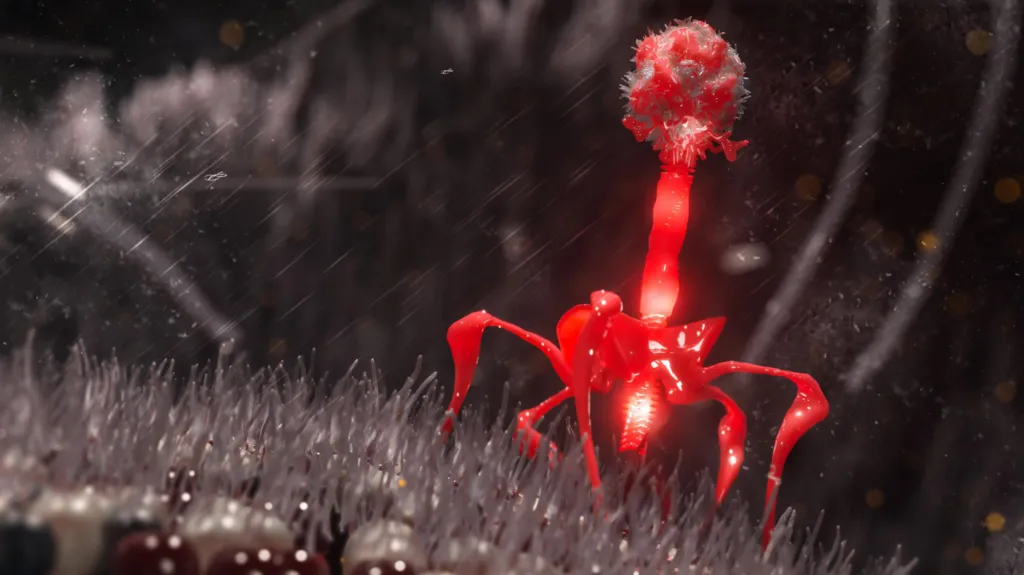
After learning patterns within DNA, the Artificial Intelligence was instructed to generate genomes for bacteriophages, commonly called phages.
Phages are viruses that infect bacteria rather than humans or animals, making them significantly safer to study.
The researchers deliberately limited the AI to designing only these bacteria-targeting viruses to reduce potential risks.
From Computer Design to Laboratory Success
Once the Artificial Intelligence generated hundreds of possible viral genomes, researchers selected 302 promising designs for laboratory testing.
Scientists chemically synthesised these genomes and introduced them into bacterial cultures.
The results exceeded expectations.
Out of the 302 candidates, 16 successfully produced fully functioning viruses capable of infecting and killing Escherichia coli (E. coli) a common bacterium widely used in laboratory research.
PhD researcher Samuel King recalled the excitement when the experiments finally worked.
The researchers observed clear circular patches forming on bacterial cultures evidence that the newly created viruses were successfully destroying bacteria.
“When we realised they were working,” King said, “it was an incredible moment.”
Professor Hie added that the laboratory erupted into applause after confirming the results.
Why This Matters
One of the most promising applications of the technology lies in combating antibiotic-resistant infections.
As bacteria continue evolving resistance to existing antibiotics, healthcare professionals worldwide are searching for alternative treatments.
One promising approach is phage therapy, which uses viruses to selectively attack harmful bacteria while leaving healthy human cells unaffected.
Unlike antibiotics, which often kill both beneficial and harmful bacteria, bacteriophages target only specific bacterial species.
AI-designed phages could allow scientists to rapidly develop personalised treatments for dangerous infections that no longer respond to conventional medicines.
Experts believe this could become an important weapon in the global fight against antimicrobial resistance.
Beyond Medicine
The breakthrough also demonstrates how artificial intelligence is beginning to influence synthetic biology the field focused on designing and engineering entirely new biological systems.
Researchers believe similar AI technology could eventually help create:
- New vaccines
- Advanced gene therapies
- Cancer-fighting antibodies
- Enzymes for treating inherited diseases
- More effective pharmaceutical drugs
Professor Marc Güell, from Pompeu Fabra University in Spain, described the research as a historic milestone.
“For the first time in history,” he said, “we are beginning to design biology on a computer.”
He believes the technology could help solve some of humanity’s greatest medical challenges.
Serious Safety Concerns
Despite the scientific excitement, many experts have urged caution.
Researchers from the Center for Health Security at Johns Hopkins University warned that AI-designed viruses raise urgent biosafety and biosecurity questions.
Their concern is not about the harmless bacteriophages created during this study but about the possibility that similar AI systems could eventually be used to design viruses capable of infecting animals or humans.
In commentary accompanying the publication in the journal Science, they argued that society must establish safeguards before the technology becomes more widespread.
The researchers stressed that creating viruses capable of causing disease in humans should never become an acceptable application of artificial intelligence.

Measures Taken to Reduce Risk
The Stanford research team emphasised that extensive safety precautions were built into the project.
Among them:
- Only bacteriophages were designed.
- Human-infecting viruses were excluded from the AI’s training data.
- All laboratory work took place in secure research facilities.
- Strict biosafety protocols were followed throughout the experiments.
Professor Hie believes these safeguards demonstrate that powerful AI can be developed responsibly while benefiting society.
Could AI Eventually Design Living Organisms?
Although the study marks a major advance, researchers say creating entire living organisms remains far more complicated.
The viruses designed in this research contain roughly 5,400 DNA base pairs.
By comparison:
- The simplest known living cells contain approximately 500,000 base pairs.
- The human genome contains around three billion base pairs.
Professor Hie acknowledged that designing complete living organisms using AI would require far greater computational power and scientific understanding.
However, he said it is not impossible in the future.
A Turning Point for Science
Many scientists view the achievement as one of the most significant advances in AI-assisted biology to date.
Professor Patrick Cai, Chair of Synthetic Genomics at the Manchester Institute of Biotechnology, believes the findings suggest AI is beginning to understand the principles encoded by evolution itself.
That understanding could eventually allow researchers to write entirely new genomes for a wide range of beneficial applications.
While important ethical and security questions remain, the study demonstrates how artificial intelligence is moving beyond analysing biology to actively creating it.
The successful creation of AI-designed viruses marks the beginning of a new chapter in biotechnology.
If carefully regulated, the technology could accelerate the development of life-saving medicines, combat antibiotic resistance, and transform how scientists approach infectious diseases.
However, experts agree that scientific progress must be accompanied by robust international oversight to ensure these powerful tools are used safely and responsibly.
As artificial intelligence continues to reshape medicine and biology, balancing innovation with security will become one of the defining scientific challenges of the coming decades.
Source: BBC
Also read: AI in healthcare: AI Could Transform Healthcare Faster Than Expected in 2026
Continue Reading

How to Exercise Safely in Air Pollution: 7 Ways to Reduce Exposure
Exercise Safely: Exercising regularly is one of the most effective ways to protect your health, but what happens when the air you breathe during a workout is polluted? For runners, cyclists and people who walk to work, traffic fumes and airborne particles can turn an otherwise healthy activity into a source of concern. During vigorous […]
Frank Ocansey

Data Centre Backlash: Why AI’s Rapid Expansion Is Facing Local Opposition
Artificial intelligence is developing at extraordinary speed, but the infrastructure powering that revolution is creating a problem that is much more local and increasingly political. Behind every artificial intelligence-generated image, video or answer are enormous data centres filled with powerful computer chips. These facilities require vast amounts of electricity, generate substantial heat and, depending on […]
Frank Ocansey
Can We Change How Our Brains Age? What Scientists Are Discovering
Brains Age: For decades, scientists have known that the way we live can influence how well our bodies age. But a more intriguing question is now gaining attention: could technology help us understand and potentially slow the ageing of the human brain? Researchers are increasingly combining artificial intelligence, brain imaging, sleep tracking, genetics and large […]
Frank Ocansey