
AI-Powered Plant Health Scanner Wins Prestigious Award at Chelsea Flower Show

Samuel Stefano
Editor, PulseView
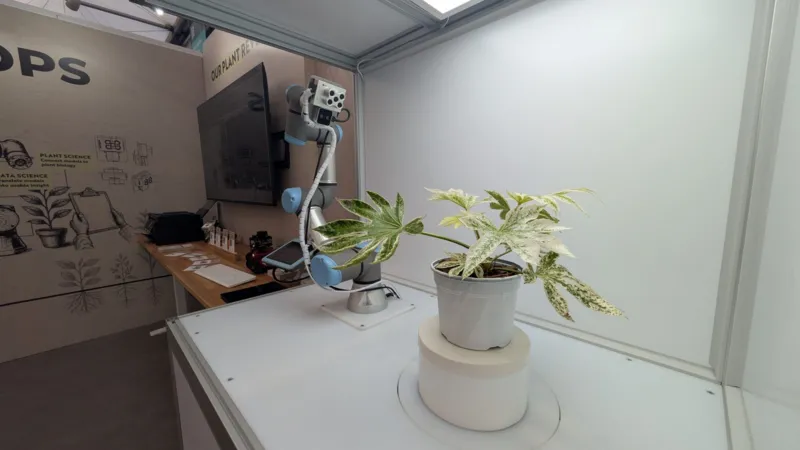
AI-Powered Plant: An innovative artificial intelligence-powered plant health exhibit developed by the University of Lincoln has earned major recognition at the world-famous Chelsea Flower Show after winning a Silver Gilt medal for its groundbreaking approach to plant science and agricultural technology.
The award-winning exhibition, titled “RoboCrops: Plant Selection, Beyond the Visible,” combines robotics, artificial intelligence, and advanced plant science to monitor plant growth, detect hidden diseases, and identify signs of stress that cannot normally be seen by the human eye.
The futuristic display attracted significant attention from visitors at the prestigious event, including London Mayor Sadiq Khan, who engaged researchers in discussions about the future of AI-driven agricultural innovation.

A Glimpse Into the Future of Farming
The exhibition was presented by the University of Lincoln through its Institute for Agri-Food Technology as part of the Chelsea Flower Show’s GreenSTEM zone — an area dedicated to science, technology, engineering, and mathematics innovations in horticulture.
At the centre of the display was a sophisticated plant monitoring system capable of conducting what researchers described as a “health scan” for plants.
Using advanced sensors, cameras, robotics, and AI-powered analysis, the system can monitor:
- Plant growth patterns
- Structural development
- Stress responses
- Early disease indicators
- Nutrient deficiencies
- Environmental impacts invisible to the naked eye
The technology works by capturing detailed visual and data-based information about plants and analysing it in real time using artificial intelligence algorithms.
Researchers say this could revolutionise modern farming by allowing farmers and horticulturists to detect plant health issues much earlier before crops are severely damaged.
Why the Technology Matters
Experts behind the RoboCrops project believe the technology could help address some of the biggest global challenges facing food production and sustainable agriculture.
Climate change, crop diseases, water shortages, and declining agricultural productivity continue to threaten global food security. Researchers say AI-assisted farming tools could become essential in helping farmers improve efficiency while reducing waste and environmental damage.
The system’s ability to identify hidden plant stress before visible symptoms appear could significantly reduce crop losses and improve food production outcomes.
According to the university, the project represents a major step toward precision agriculture, where technology is used to make farming smarter, more efficient, and environmentally sustainable.
AI-Powered Plant: Visitors Drawn to the AI Plant Scanner
The exhibition became one of the standout technology-focused displays at the Chelsea Flower Show, attracting curious visitors eager to see how robotics and artificial intelligence are being integrated into plant science.
London Mayor Sadiq Khan was among the high-profile guests who visited the stand and discussed the broader future applications of the technology.
The university said many attendees, especially younger visitors, showed strong interest in the fusion of science and agriculture.
Professor Simon Pearson, who leads the institute, described the public response as encouraging and inspiring.
“One of the most rewarding aspects we’ve already seen this week has been the level of curiosity and engagement from visitors, particularly young people, around how robotics, AI and plant science can work together to address some of the major challenges facing horticulture and food production,” he said.
Chelsea Flower Show Expands Beyond Traditional Gardening
The recognition of the RoboCrops exhibit highlights how the Chelsea Flower Show is increasingly embracing innovation and sustainability alongside traditional horticulture.
Known globally for its elaborate garden displays and floral artistry, the show has in recent years expanded its focus to include environmental science, green technology, and climate-conscious solutions.
The GreenSTEM zone was specifically designed to showcase how scientific innovation can support the future of gardening, farming, and biodiversity conservation.
The success of the University of Lincoln’s exhibit demonstrates how artificial intelligence is now becoming an important tool not only in industry and business, but also in agriculture and environmental management.
AI and Agriculture: A Growing Partnership
The use of artificial intelligence in agriculture is growing rapidly worldwide.
AI systems are increasingly being used to:
- Detect crop diseases
- Predict weather patterns
- Monitor soil quality
- Automate irrigation systems
- Improve harvesting efficiency
- Reduce pesticide use
- Increase crop yields
Researchers believe these technologies could become especially important as the global population grows and pressure increases on food production systems.
The RoboCrops project reflects a broader shift toward integrating digital technology into farming to create more resilient and sustainable agricultural systems.
Silver Gilt Recognition
Winning a Silver Gilt medal at the Chelsea Flower Show is considered a significant achievement, particularly for first-time or highly technical exhibits competing alongside world-renowned horticultural displays.
The award recognises not only creativity and presentation but also innovation and educational value.
For the University of Lincoln, the honour represents growing recognition of the institution’s contribution to agricultural research and technological advancement.
The success of RoboCrops may also encourage greater investment and public interest in AI-driven farming technologies in the years ahead.
Source: BBC
Also read:
Continue Reading

Data Centre Backlash: Why AI’s Rapid Expansion Is Facing Local Opposition
Artificial intelligence is developing at extraordinary speed, but the infrastructure powering that revolution is creating a problem that is much more local and increasingly political. Behind every artificial intelligence-generated image, video or answer are enormous data centres filled with powerful computer chips. These facilities require vast amounts of electricity, generate substantial heat and, depending on […]
 Frank Ocansey

AI-Generated Complaints Are Overwhelming Councils and Schools: Here’s Why
AI-Generated Complaints Are Overwhelming Councils and Schools, But They Are Also Giving More People a Voice Artificial intelligence is making it easier than ever for people to challenge decisions, write formal complaints and quote regulations. But councils, schools and other public bodies are warning that the same technology is creating a huge new administrative burden. […]
Frank Ocansey

Japan AI adoption: Why Japanese Companies Are Slow to Adopt AI Despite Labour Shortages
Japan AI adoption: Japan is facing labour shortages, an ageing population and weak productivity growth, yet businesses across the country remain cautious about adopting artificial intelligence. What is holding Japan back from the Artificial intelligence revolution? Artificial intelligence is transforming workplaces around the world, but Japan appears to be moving at a much slower pace. […]
Frank Ocansey