
Gianni Infantino Faces Growing Revolt as FIFA Opponents Threaten Non-Cooperation

Frank Ocansey
Editor, PulseView

A deepening power struggle within world football has intensified after opponents of FIFA President Gianni Infantino threatened to stop cooperating with the sport’s governing body unless he steps down.
According to senior sources within UEFA, several football associations involved in the growing rebellion believe there is “no going back” while Infantino remains in office. The unprecedented standoff follows the collapse of FIFA’s controversial plan to sell minority stakes in its flagship competitions to private investors a proposal that has sparked one of the biggest governance crises in modern football history.
The latest developments come as UEFA continues to consider legal action against FIFA, while several national football associations have withdrawn their support for Infantino ahead of next year’s presidential election.
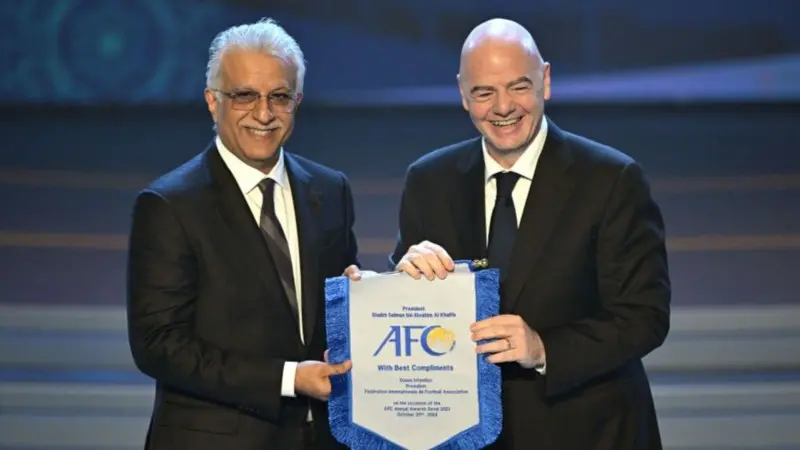
A Growing Divide in World Football
The conflict has exposed deep divisions within international football governance.
Senior UEFA figures have warned that if Infantino refuses to resign, member associations opposed to his leadership may adopt a policy of “non-cooperation” with FIFA.
Although the full details of the proposed action have not yet been made public, one senior football official suggested that member associations could refuse to participate in FIFA meetings and other governance activities.
Such a move would represent one of the most serious acts of institutional resistance ever directed at a sitting FIFA president.
The threat illustrates the level of frustration among football leaders who believe FIFA’s recent decision-making has lacked transparency and proper consultation.
The Investment Proposal That Triggered the Crisis
The controversy centres on FIFA’s now-abandoned proposal to establish a new commercial subsidiary known as FIFA Forward Enterprise (FFE).
Under the plan, FIFA intended to transfer the commercial rights of its biggest competitions, including the FIFA World Cup into the new company.
External investors would then have been invited to purchase minority, non-controlling stakes in the business.
FIFA argued that the investment would generate billions of dollars in additional revenue that could be distributed among its 211 member associations to support football development around the world.
To encourage support, Infantino reportedly promised each association US$40 million (£30 million) if they backed the proposal, with an initial payment of US$20 million (£15 million) available before a 19 September deadline.
Instead of securing widespread backing, however, the proposal triggered fierce criticism from football authorities across Europe and beyond.
Within days, FIFA withdrew the plan.
UEFA Escalates Pressure
UEFA has emerged as the strongest opponent of Infantino’s leadership.
European football’s governing body has already confirmed that it is considering:
- Legal proceedings
- Arbitration
- Regulatory complaints
against FIFA over the failed proposal.
In a strongly worded letter sent to Infantino, UEFA demanded that FIFA preserve all documents relating to the investment project.
The request covers:
- Emails
- WhatsApp messages
- Signal communications
- Microsoft Teams conversations
- Slack messages
- SMS texts
- Meeting notes
- Financial documents
- Legal advice
- Correspondence with sponsors, broadcasters, financial institutions, consultants and member associations
UEFA has also requested written confirmation within five working days that no relevant material will be destroyed.
The unusually broad request highlights the seriousness of the dispute and suggests legal proceedings remain a genuine possibility.
Football Associations Withdraw Support
Support for Infantino has continued to weaken across Europe.
Several football associations have now publicly withdrawn their backing for the FIFA president.
These include:
- Wales
- Serbia
- Sweden
- Finland
The English Football Association is also expected to formally withdraw its support.
Meanwhile, sources indicate that the Scottish Football Association remains aligned with UEFA’s position that it has lost confidence in Infantino’s leadership.
The growing list of dissenting nations increases political pressure ahead of FIFA’s presidential election next year.
Support Remains Strong in Other Regions
Despite mounting criticism in Europe, Infantino continues to enjoy significant backing elsewhere.
Countries publicly supporting his continued leadership include:
- Morocco
- Qatar
- Lebanon
- Kuwait
- Sri Lanka
In addition, while the Asian Football Confederation (AFC) has expressed solidarity with UEFA and CONCACAF regarding governance concerns, it has not formally withdrawn support for Infantino.
Similarly, football authorities in Africa, South America and Oceania have not publicly criticised the investment proposal.
These regional differences mean that world football remains sharply divided over Infantino’s future.
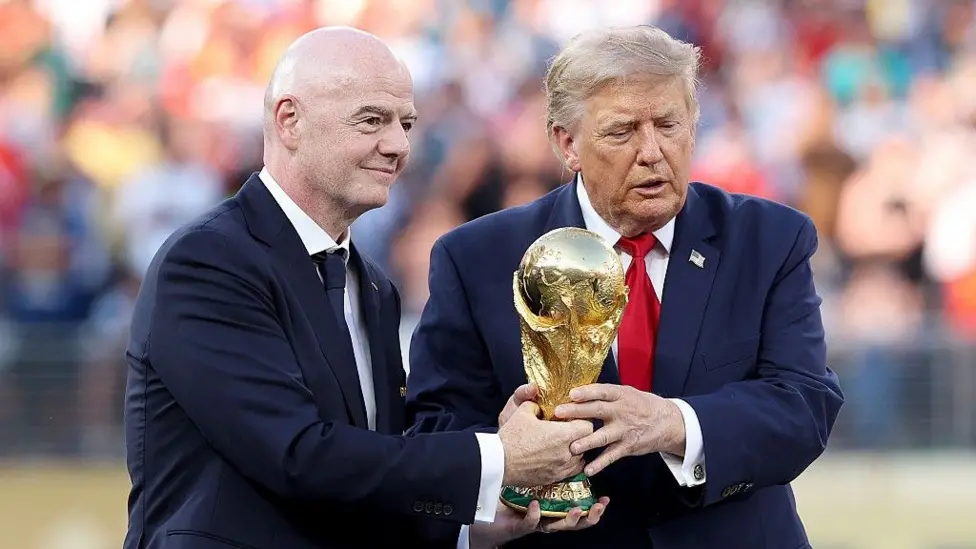
Can Infantino Still Win Re-election?
Infantino is expected to seek a fourth and final term as FIFA president in March 2027.
To retain office, he will need the support of at least 106 of FIFA’s 211 member associations.
The current voting balance among FIFA’s six continental confederations is:
- UEFA – 55 votes
- CAF (Africa) – 54 votes
- AFC (Asia) – 46 votes
- CONCACAF – 35 votes
- OFC (Oceania) – 11 votes
- CONMEBOL – 10 votes
Although opposition within Europe has intensified, UEFA alone does not possess enough votes to block Infantino’s re-election.
Winning support from associations in Africa, Asia and South America will therefore be crucial for both sides.
Emergency FIFA Council Meeting Still Possible
Another potential challenge to Infantino’s leadership could come through the FIFA Council.
Under FIFA statutes, an emergency council meeting can be called if 19 of the council’s 37 members request one.
If convened, such a meeting could discuss whether Infantino should remain in office.
The council currently consists of:
- UEFA – 9 members
- AFC – 7 members
- CONCACAF – 5 members
- CAF – 6 members
- CONMEBOL – 5 members
- OFC – 3 members
It also includes FIFA President Gianni Infantino and Secretary General Mattias Grafström.
At present, there is no indication that enough council members have agreed to trigger an emergency session.
UEFA Calls for Accountability
UEFA Vice-President Laura McAllister described the proposed legal action as a necessary response to what she called a deeply flawed governance process.
She argued that football must learn lessons from the failed investment proposal to ensure stronger accountability in future decision-making.
McAllister also expressed hope that additional football associations would withdraw their support for Infantino before next year’s election.
According to her, the crisis represents a defining moment for football governance.
She stressed that football authorities cannot continue responding to major initiatives that are introduced without meaningful consultation.
The Role of Thrive Eternal
The proposed investment vehicle was expected to be led by Thrive Eternal, an American venture capital firm founded by Joshua Kushner.
Kushner is the brother of Jared Kushner, the son-in-law of former United States President Donald Trump.
Although the investment proposal never progressed beyond the planning stage, the involvement of a high-profile investment firm attracted considerable international attention.
A Battle for FIFA’s Future
Analysts believe the current dispute is no longer simply about the abandoned investment proposal.
Instead, it has become a wider debate over FIFA’s governance, transparency and leadership.
According to observers, UEFA’s strategy appears designed to gradually isolate Infantino politically while encouraging football associations outside Europe to reconsider their support.
Asia is increasingly viewed as a key battleground, with both supporters and opponents of the FIFA president seeking to influence undecided member associations.
However, Infantino still enjoys considerable backing in parts of Africa and South America, making any challenge to his leadership far from certain.
Gianni Infantino is facing the most significant political challenge of his presidency as opposition to his leadership continues to grow following FIFA’s abandoned investment proposal.
With UEFA threatening legal action, several national associations withdrawing their support, and opponents considering a policy of non-cooperation, tensions within world football have reached unprecedented levels.
While Infantino retains strong support in several regions, the months leading up to the next FIFA presidential election are likely to determine not only his future but also the direction of governance in global football.
Source: BBC
Also read:
Continue Reading

Ozempic and Mounjaro Not Banned by WADA in 2027: But Athletes Face Warning
Athletes will remain permitted to use weight-loss drugs such as Ozempic and Mounjaro under World Anti-Doping Agency rules in 2027, but WADA is continuing to monitor the medications amid concerns about possible performance benefits, health risks and misuse in elite sport. The rapidly growing use of GLP-1 weight-loss medications has created a new challenge for […]
Frank Ocansey

Chelsea Spent £349m: So Why Are Two Right-Backs Playing in Midfield?
Chelsea spent £349 million during the summer transfer window and signed 10 first-team players, yet their 2-1 defeat by Arsenal ended with Reece James and Malo Gusto two players who began their careers as right-backs operating together in midfield. It was a striking image that raised a difficult question: have Chelsea rebuilt almost everywhere except […]
Frank Ocansey

How Harry Kane Scored 73 Goals by Dropping Deeper Than Ever for Bayern Munich
Harry Kane has just produced the most prolific season of his career, scoring 73 goals for club and country. What makes that achievement even more remarkable is that the Bayern Munich striker has been operating deeper than ever before sometimes appearing in midfield and even close to his own penalty area. Rather than reducing his […]
Frank Ocansey