
Why IVF Still Fails for So Many Couples: The Groundbreaking New Research Scientists Hope Could Change Everything

Samuel Stefano
Editor, PulseView

More than four decades after the birth of the world’s first IVF baby, millions of couples still enter fertility clinics hoping for a miracle only to discover that success is far from guaranteed.
Despite advances in reproductive medicine, scientists say in vitro fertilisation remains emotionally exhausting, physically demanding, and financially draining, with many treatment cycles ending in heartbreak rather than pregnancy.
Now, researchers across the world are racing to improve the odds. From magnetic nanoparticles and AI-powered embryo analysis to futuristic methods of creating eggs and sperm from skin cells, scientists are developing new technologies they hope could transform fertility treatment forever.
IVF Success Has Improved — But Failure Rates Remain High
Since the birth of Louise Brown in 1978, more than 10 million babies have been born globally through IVF. The procedure has become one of the most significant medical breakthroughs in modern reproductive health. In countries such as the United States, IVF now accounts for roughly 2% of all births annually.
Yet behind those success stories lies a difficult reality.
For many women under the age of 35, the chance of a successful live birth from one IVF embryo transfer cycle still hovers around only 30% to 40%. For older women, the odds decline even further. This means many couples undergo multiple rounds of treatment, spending thousands of dollars while enduring emotional stress, painful hormonal injections, and repeated disappointment.
Experts say one of the biggest misconceptions about IVF is that technological sophistication automatically guarantees success.
The “High-Tech” IVF Add-On That May Not Actually Work
One of the most widely promoted IVF technologies in recent years is time-lapse embryo imaging. Fertility clinics often market it as a cutting-edge method that allows embryologists to monitor embryo development continuously through special microscopes and cameras.
The technology sounds promising. Tiny cameras capture images of developing embryos every few minutes, allowing specialists to observe growth patterns without disturbing them.
But according to a major 2024 study published in The Lancet, the expensive procedure may not significantly improve the chances of having a baby. Researchers analysed outcomes from more than 1,500 IVF procedures and found “no significant difference” in live birth rates between patients who used time-lapse imaging and those who did not.
Despite this, some clinics still charge hundreds of extra dollars for the service.
Professor Priya Bhide, one of the researchers involved in the study, said many clinics adopted the technology before robust scientific evidence proved its effectiveness.
Scientists Are Developing New Ways to Retrieve Better Eggs
One of the major challenges in IVF is collecting healthy eggs without damaging them.
Researchers at the University of Oxford and the University of Nottingham are now testing a specially designed needle that may improve egg retrieval during IVF procedures. The device creates tiny circular fluid currents inside ovarian follicles, helping doctors collect eggs more effectively while reducing physical trauma to the cells.
Scientists believe retrieving more high-quality eggs could increase the number of viable embryos available for implantation, potentially improving success rates.
Although the technology has so far been tested in cows, researchers hope human trials could begin within the next few years.
Magnetic Nanoparticles Could Revolutionise IVF Laboratories
In Spain, researchers are experimenting with another unusual innovation: magnetic nanoparticles.
Scientists at the University of Murcia have developed microscopic magnetic particles that attach specifically to mature eggs. Using magnets, embryologists can move these eggs gently without physically touching or damaging them.
The technology works almost like sorting ripe fruit from unripe fruit. Mature eggs stay attached while immature eggs are washed away.
Researchers believe this method could reduce the risk of damaging fragile eggs and embryos during laboratory handling — one of the hidden challenges in IVF treatment. Early experiments involving rabbit embryos have shown encouraging results, though scientists caution that more studies are needed before the technique can be applied to humans.
AI and Light-Based Technology Could Help Select Better Embryos
Another area of intense research focuses on identifying which embryos are most likely to result in a healthy pregnancy.
In Australia, scientists are using specialised light technology to analyse fat molecules, known as lipids, inside embryos. The idea is that healthier embryos may have different metabolic activity compared to weaker ones.
Researchers say this could help fertility specialists choose embryos with the greatest chance of successful implantation and development.
Artificial intelligence is also increasingly being explored in fertility medicine. Some researchers are using AI systems to optimise hormone treatment plans and analyse embryo quality more accurately.
However, experts warn that IVF history is full of promising technologies that ultimately failed to deliver meaningful improvements in birth rates.
Why IVF Is So Emotionally Difficult
For many couples, IVF is not simply a medical procedure — it becomes an emotional journey marked by anxiety, hope, grief, and uncertainty.
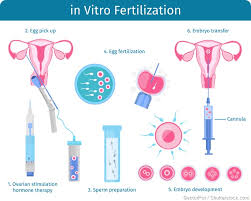
Women often endure weeks of hormone injections designed to stimulate egg production, followed by invasive surgical procedures to retrieve eggs. Couples then face tense waiting periods as they hope embryos develop successfully.
Repeated failed cycles can place severe strain on mental health, finances, and relationships.
Professor Joyce Harper of University College London, who herself underwent multiple rounds of IVF before eventually having children, described the process as “heart-breaking.” She says many people underestimate how fragile embryos actually are.
“Embryos are just not very good,” she explained, noting that many naturally contain genetic abnormalities or fail to develop properly.
The Future of IVF May Involve Creating Eggs and Sperm From Skin Cells
Perhaps the most futuristic and controversial research area is a technique known as In Vitro Gametogenesis (IVG).
Scientists are investigating whether ordinary cells — such as skin cells — could one day be transformed into sperm or eggs in the laboratory.
If successful, the technology could revolutionise fertility treatment by helping people who cannot naturally produce eggs or sperm, including cancer survivors and individuals with certain medical conditions.
The implications are enormous.
In theory, same-sex couples could potentially have biologically related children without donor sperm or donor eggs. Researchers have even discussed the possibility of a single person generating both sperm and eggs from their own cells.
However, scientists caution that the ethical concerns surrounding IVG are significant. Questions about genetic safety, consent, regulation, and misuse remain unresolved.
Human application of the technology is still believed to be years away.

Experts Say There Is No “Magic Fix” Yet
Despite the excitement surrounding these emerging technologies, fertility experts remain cautious.
Professor Tim Child, an IVF specialist at the University of Oxford, says progress in fertility medicine usually happens through small, gradual improvements rather than dramatic breakthroughs.
“There are small gains being made, but it’s very unusual that there’s a complete eureka moment,” he explained.
Still, for millions of couples struggling with infertility, even small improvements could make an enormous difference.
And despite the pain and uncertainty associated with IVF, researchers say the technology has already transformed countless lives — offering hope where none previously existed.
For many families, that hope remains worth fighting for.
Source: BBC
You may also like:
Continue Reading

How to Exercise Safely in Air Pollution: 7 Ways to Reduce Exposure
Exercise Safely: Exercising regularly is one of the most effective ways to protect your health, but what happens when the air you breathe during a workout is polluted? For runners, cyclists and people who walk to work, traffic fumes and airborne particles can turn an otherwise healthy activity into a source of concern. During vigorous […]
 Frank Ocansey

Can We Change How Our Brains Age? What Scientists Are Discovering
Brains Age: For decades, scientists have known that the way we live can influence how well our bodies age. But a more intriguing question is now gaining attention: could technology help us understand and potentially slow the ageing of the human brain? Researchers are increasingly combining artificial intelligence, brain imaging, sleep tracking, genetics and large […]
Frank Ocansey

Getting Hands Dirty Could Boost Your Health, Scientists Say
Getting Hands Dirty: Touching soil, grass, trees and other natural materials may do more than connect us with the outdoors. Emerging research suggests that regular contact with nature can increase the diversity of microbes living on our skin and may influence how the immune system functions. For many people, getting dirty is something to avoid. […]
Frank Ocansey